
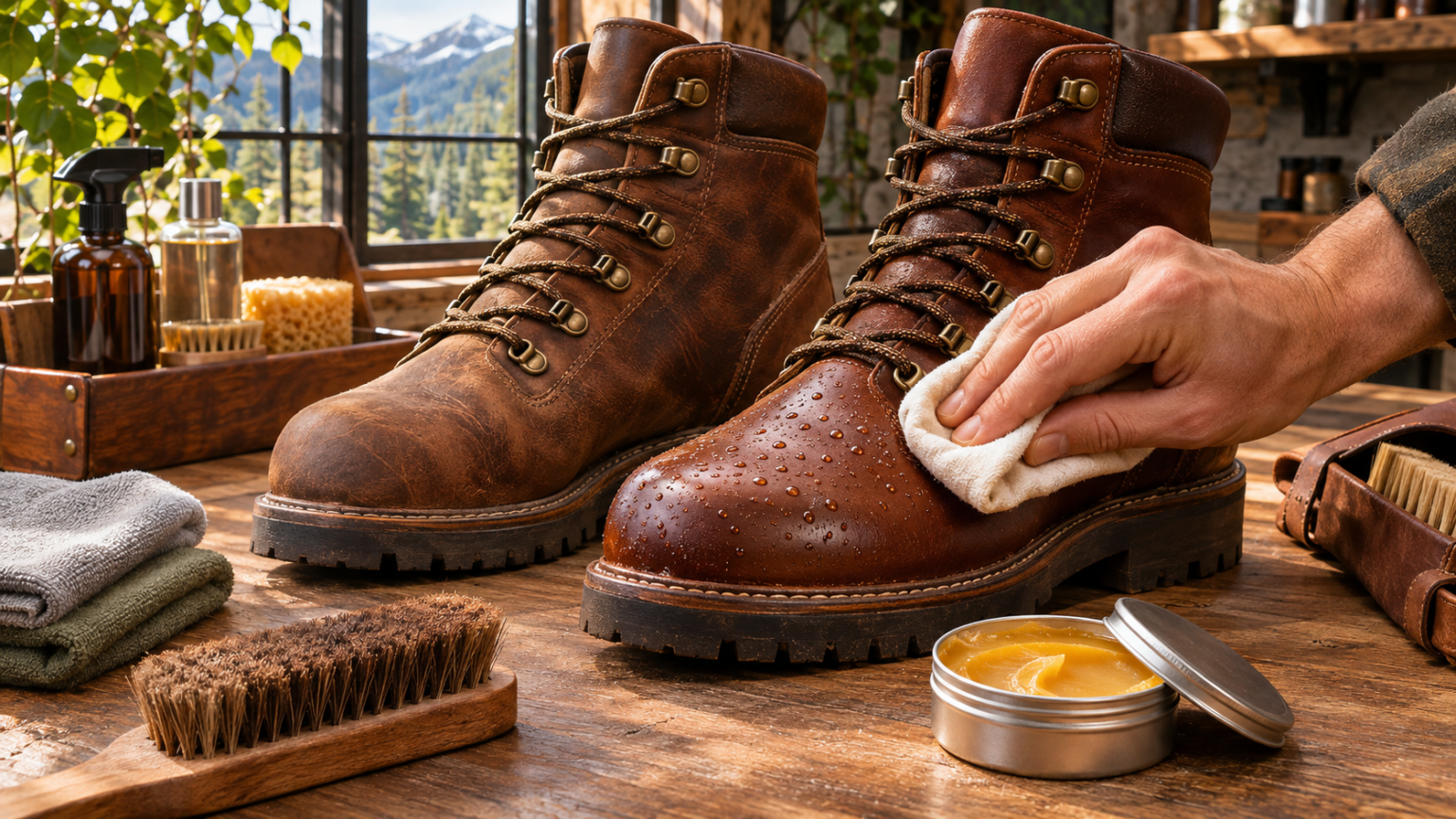
Leather boots are popular for outdoor work, hiking, gardening, and everyday wear because they offer durability, comfort, and a traditional appearance. However, repeated exposure to rain, mud, and damp conditions can affect their performance and appearance. Using beeswax for waterproofing boots is one way to improve the water resistance of suitable smooth leather footwear. When applied correctly, a compatible wax treatment can help water bead on the surface instead of immediately soaking into the leather. Nevertheless, the results depend on the leather type, product formulation, boot construction, and maintenance routine.
Beeswax has been used in leather care products for many years. Today, manufacturers continue to include it in certain boot waxes and conditioning formulations.
However, not every boot should receive wax. Some modern footwear requires specialised water repellent products, while suede and nubuck can lose their original texture after waxing.
This guide explains how beeswax works, which boots can benefit, how to apply it correctly, and what to avoid when protecting leather footwear from moisture.
Does Beeswax Really Waterproof Boots?
Beeswax can improve water resistance on compatible smooth leather boots. However, applying wax does not necessarily make the entire boot waterproof.
Beeswax is naturally water repellent. When incorporated into a suitable leather treatment, it helps create a protective surface that reduces how readily water enters the material.
As a result, light rain and splashes may form droplets on treated leather rather than soaking in immediately.
Nevertheless, water can still enter through damaged seams, stitching, gaps around the tongue, or other parts of the footwear.
Therefore, it is important to distinguish between water resistant leather and a boot designed with a complete waterproof construction.
Waterproof vs Water Resistant Boots
Water resistant footwear can resist moisture under certain conditions. However, protection may decrease during prolonged exposure or heavy rainfall.
Waterproof footwear is designed to prevent water from entering under specified conditions. Some boots use specialised membranes and sealed construction to provide this protection.
A wax treatment supports the outer leather surface. It does not replace damaged waterproof membranes or repair failed seams.
For that reason, beeswax should be considered a maintenance treatment rather than a guarantee of completely dry feet.
How Beeswax Protects Leather Footwear
Leather contains a network of natural fibres. Although properly manufactured leather can resist some moisture, its surface protection may decline through regular wear.
Dirt, abrasion, and repeated exposure to wet conditions can affect the performance of existing protective treatments.
Beeswax based products help restore water repellency to suitable leather surfaces.
Creating a Water Repellent Surface
When a compatible treatment is applied, the wax forms a protective coating across the leather.
This coating can make it more difficult for water droplets to wet the surface.
Consequently, moisture may bead and roll away during ordinary exposure.
However, the effectiveness depends on the treatment, how evenly it is applied, and the condition of the boot.
Supporting Leather Care
Some commercial beeswax treatments also contain conditioning ingredients.
For example, Danner produces a boot wax containing beeswax and vegetable based oils for full grain leather.
The wax contributes water protection, while the additional ingredients help maintain leather flexibility.
Pure beeswax does not automatically provide every conditioning benefit of a carefully formulated leather product.
Therefore, it is important to choose a product designed for the specific footwear.
Which Types of Boots Are Suitable for Beeswax?
The material is the most important consideration when deciding whether to wax boots.
A product that works well on one leather finish may cause unwanted changes to another.
Smooth Full Grain Leather Boots
Smooth full grain leather is commonly suitable for compatible leather wax treatments.
Many work boots, outdoor boots, and traditional leather footwear use this material.
A suitable product can help maintain water repellency while preserving the leather’s appearance.
However, always follow the manufacturer’s instructions because some footwear brands discourage wax even on leather boots.
Waxed and Oiled Leather Boots
Certain boots already have waxed or oiled finishes.
These materials may be compatible with maintenance products designed for their original finish.
For example, Timberland identifies its beeswax based Waximum treatment as suitable for waxed and oiled leather.
Nevertheless, the recommended treatment should match the manufacturer’s care guidance.
Suede and Nubuck Boots
Suede and nubuck have textured surfaces that create their distinctive appearance.
Applying traditional wax can flatten the texture, darken the colour, and permanently change the finish.
Therefore, conventional beeswax treatment is generally unsuitable when preserving their original appearance is important.
Instead, use a product specifically designed for suede or nubuck.
Fabric and Synthetic Boots
Boots made from canvas, synthetic textiles, or combinations of different materials require additional care.
A beeswax leather treatment should not automatically be applied across fabric panels.
Instead, choose a waterproofing product approved for the complete footwear construction.
This is particularly important for modern hiking boots with several material types.
7 Proven Tips for Using Beeswax for Waterproofing Boots
The following practices can help achieve better results while reducing the risk of damaging footwear.
1. Confirm the Manufacturer Allows Wax Treatment
Before applying anything, identify the boot’s leather type and review its care instructions.
This step matters because manufacturers may recommend different treatments for seemingly similar boots.
For example, some full grain leather footwear is designed for wax based care.
In contrast, LOWA advises against beeswax and other wax based treatments for certain boots, recommending its approved care products instead.
Therefore, never assume that every leather boot benefits from beeswax.
Check the Boot Care Information
Look for guidance about:
- Leather type and surface finish
- Approved cleaning products
- Recommended waterproofing treatments
- Restrictions involving oils or wax
- Drying and storage requirements
If instructions are unavailable, contact the manufacturer before experimenting with an expensive pair of boots.
2. Clean Your Boots Before Applying Wax
Dirt and dried mud can interfere with the application of leather care products.
Additionally, abrasive particles may scratch the surface when rubbed into the leather.
Begin by removing the bootlaces when practical.
Next, use a soft brush to remove loose soil around the upper, seams, and tongue.
For more thorough cleaning, use a product approved for the leather type.
Avoid aggressive detergents or household chemicals that may affect the existing finish.
Finally, prepare the leather according to the wax manufacturer’s directions.
Some treatments require clean, dry leather. Others are designed for use on damp leather.
The product label should determine the correct preparation.
3. Test the Beeswax on a Hidden Area
Wax treatments can change the appearance of leather.
For example, a light brown boot may become noticeably darker after treatment.
Some finishes may also develop a smoother or slightly shinier appearance.
Therefore, test the product on a small, inconspicuous section before treating the entire boot.
Apply a small amount according to the instructions.
Then, inspect the area after the recommended settling and drying period.
If the colour or texture changes are unacceptable, do not continue.
This precaution is especially valuable for decorative leather, expensive footwear, and boots with unusual finishes.
4. Apply a Thin and Even Layer
Using too much wax is a common mistake.
Excessive application may create a sticky surface, uneven appearance, or unnecessary buildup.
Instead, apply a small amount using the method recommended for the product.
For a suitable wax balm, a clean soft cloth or approved applicator may work well.
Spread the treatment evenly across the smooth leather.
Pay attention to areas exposed to rain and ordinary wear.
However, do not force wax into the material with aggressive pressure.
A controlled application is generally preferable to applying a thick coating.
5. Pay Attention to Seams and Flex Areas
Moisture often reaches footwear around seams, stitching, and areas where the upper flexes.
Therefore, these sections deserve careful inspection during boot maintenance.
Where the manufacturer permits, apply the treatment evenly near the leather seams.
Avoid unnecessarily coating rubber components, adhesives, or other materials.
Additionally, examine the area where the upper joins the sole.
Visible gaps or damage may require professional repair.
Wax alone cannot reliably restore a failed waterproof joint.
6. Allow Proper Drying and Buffing
After application, follow the product’s directions for removing excess treatment.
Some leather wax products require a short settling period followed by buffing with a clean cloth.
Others have different drying requirements.
Therefore, avoid using one universal method for every wax formulation.
Allow the boots to dry naturally at room temperature.
Do not place them beside radiators, open flames, or other intense heat sources.
Excessive heat may dry the leather, damage bonded components, or affect the boot’s structure.
Once the treatment has settled, inspect the surface for unwanted residue.
7. Reapply Only When Necessary
Regular maintenance helps preserve water repellency, but excessive waxing is not beneficial.
Instead of applying another layer after every outing, examine the condition of the footwear.
Look for signs that the existing protection is declining.
For example, water may stop beading on the surface and begin soaking into the leather.
However, dirt alone can also interfere with water repellency.
Therefore, clean the boots first and reassess their performance.
If the manufacturer recommends further treatment, apply the appropriate product.
This approach helps avoid unnecessary buildup.
How to Apply Beeswax to Leather Boots at Home
A practical home treatment does not need complicated equipment. However, preparation and product compatibility remain essential.
Step 1: Prepare a Suitable Work Area
Choose a clean, ventilated space with enough room to inspect both boots.
Protect the work surface from potential staining.
Gather a soft brush, clean cloths, and the manufacturer approved treatment.
Step 2: Examine the Boots
Check the leather, stitching, eyelets, and sole connections.
If the footwear is damaged, determine whether repair is necessary before treatment.
Waterproofing products should not be used to conceal structural defects.
Step 3: Clean and Prepare the Leather
Remove loose dirt and clean the surface with an approved product.
Then, follow the waterproofing product’s instructions regarding moisture and drying.
Avoid applying wax over heavy mud or unknown residues.
Step 4: Apply the Recommended Treatment
After a successful patch test, spread a thin, even layer over the permitted leather areas.
Use the amount and technique specified by the manufacturer.
Do not heat the boots or melt pure wax onto them unless the boot and treatment manufacturers specifically approve that process.
Step 5: Finish and Inspect
Remove excess product as directed.
Next, allow the leather to settle and dry naturally.
Finally, examine the surface for even coverage and visible changes.
Once the treatment is ready for use, the boots can return to their normal maintenance routine.
Pure Beeswax vs Commercial Waterproofing Wax
Some people consider melting pure beeswax and applying it directly to leather.
However, pure beeswax and a formulated leather care product are not equivalent.
Pure beeswax can be relatively firm at room temperature. This may make it difficult to spread evenly without additional preparation.
Furthermore, heating the leather or using uncontrolled homemade mixtures creates unnecessary risks.
Commercial boot waxes may combine beeswax with other ingredients selected for consistency, application, and conditioning.
For example, certain products include oils that help maintain leather flexibility.
Nevertheless, formulations vary considerably.
Therefore, a footwear specific product approved by the boot manufacturer is generally a more predictable choice than an untested homemade recipe.
Can Beeswax Damage Leather Boots?
Beeswax itself is not automatically harmful to leather. However, an unsuitable treatment can affect the boot’s appearance and performance.
Changes in Colour and Texture
Wax may darken leather or change its surface finish.
This effect can be particularly noticeable on light coloured footwear.
Therefore, patch testing is essential.
Reduced Breathability
Some heavy wax formulations may affect the way moisture vapour moves through leather.
However, not every wax treatment behaves identically.
Certain specially formulated waterproofing wax products are designed to maintain breathability.
The outcome depends on the product and boot construction.
Problems With Future Repairs
Wax residue can interfere with adhesives used during some footwear repairs.
REI specifically advises caution with wax based treatments when owners intend to have hiking boots resoled later.
Consequently, repairability should be considered before applying heavy wax treatments.
Incompatibility With Certain Boots
Some footwear manufacturers advise against wax because of its effect on the materials and construction they use.
For that reason, approved care instructions should always take priority over general online advice.
Beeswax vs Other Boot Waterproofing Treatments
Different treatments are designed for different footwear materials and performance requirements.
Beeswax Based Boot Treatments
These products can provide useful water repellency on compatible smooth leather.
They may suit traditional work boots and certain outdoor leather designs.
However, they can change the leather’s appearance and are not suitable for every boot.
Water Based Leather Waterproofers
Some modern waterproofing products use water based formulations.
These may be designed to maintain the flexibility and breathability of particular leather materials.
For example, Nikwax offers a waterproofing wax product formulated for smooth leather footwear.
Nevertheless, compatibility should be checked for the exact boot.
Suede and Nubuck Waterproofing Sprays
Textured leather generally requires products designed to preserve its surface characteristics.
Suitable sprays or specialised treatments may help restore water repellency without intentionally creating a smooth waxed finish.
Follow manufacturer instructions and test before wider application.
Waterproof Membrane Footwear
Boots containing waterproof membranes rely on internal protective construction.
A suitable exterior treatment may help prevent the outer material from becoming saturated.
However, surface waterproofing cannot repair a damaged internal membrane.
Therefore, choose a compatible treatment rather than assuming traditional beeswax is always the best option.
How Long Does Beeswax Waterproofing Last?
There is no universal duration for beeswax protection.
Its effectiveness depends on the product, leather condition, frequency of wear, and environmental exposure.
For example, boots used regularly in wet mud may need attention sooner than footwear worn occasionally in dry conditions.
Repeated abrasion can also reduce surface protection.
Signs That Boots Need Attention
Watch for:
- Reduced water beading on clean leather
- Increased absorption of light moisture
- Uneven surface protection
- Accumulated dirt or worn finish
- Manufacturer recommended maintenance intervals
However, a failure to bead water does not always mean another wax layer is immediately necessary.
Clean the leather first and assess whether its existing treatment remains effective.
How to Maintain Waxed Boots in Wet Weather
Regular maintenance can help preserve the benefits of waterproofing.
After outdoor use, remove mud and debris before storing the boots.
If they become wet, allow them to dry naturally in a ventilated location.
Remove insoles where the manufacturer recommends it.
Additionally, absorbent paper may help remove moisture from the interior.
Replace damp paper as necessary.
Avoid placing boots directly beside heaters or fires.
According to REI and several footwear manufacturers, rapid drying can damage leather and bonded components.
Finally, store boots in a cool, dry environment rather than leaving them in a damp vehicle or poorly ventilated space.
Common Mistakes to Avoid When Waterproofing Boots With Beeswax
The first mistake is applying wax without identifying the footwear material.
This can permanently alter suede or nubuck.
Another mistake is using excessive product.
Thick coatings may leave residue without providing a proportional improvement in protection.
Additionally, some people apply wax over dirty leather. This can interfere with even application.
Using intense heat is another unnecessary risk.
Although certain traditional methods involve warming wax, heat should never be used contrary to the footwear manufacturer’s instructions.
Finally, avoid assuming a waxed boot is ready for unlimited water exposure.
Water can still enter through damaged seams, openings, or construction weaknesses.
Appropriate footwear selection remains important for prolonged wet conditions.
When Should You Choose Professional Boot Care?
Home maintenance is often suitable for ordinary smooth leather boots with clear care instructions.
However, some situations require specialist attention.
For example, valuable leather footwear may have delicate finishes that need specific cleaning products.
Similarly, boots with damaged stitching or separating soles may require repair before waterproofing.
Professional assessment can also be useful when a previous treatment has caused significant discolouration.
A qualified leather care or footwear repair specialist can explain suitable restoration options.
Nevertheless, not every stain or material change can be reversed.
Preventive care remains the most reliable approach.
Frequently Asked Questions
Is beeswax good for waterproofing leather boots?
Yes. Compatible beeswax based treatments can improve water repellency on suitable smooth leather boots, although they do not guarantee complete waterproof protection.
Can I use pure beeswax on my boots?
Pure beeswax may be difficult to apply evenly. A footwear specific commercial formulation is generally preferable when approved by the boot manufacturer.
Does beeswax make leather boots darker?
Yes, some beeswax treatments can darken leather or change its finish. Always test a hidden area before treating the entire boot.
Can I use beeswax on suede or nubuck boots?
Generally, no. Traditional wax can flatten the textured finish and cause visible changes. Use a treatment designed for suede or nubuck instead.
How often should I apply beeswax to leather boots?
Reapply according to manufacturer guidance and actual wear conditions. Clean the boots first and check whether the water repellent finish needs renewal.
Does beeswax work on waterproof hiking boots?
It depends on the construction and manufacturer’s instructions. Some boots accept suitable wax treatments, while others specifically prohibit them.
Conclusion
Beeswax for waterproofing boots can be a useful leather care option when applied to compatible smooth leather footwear. A suitable treatment may improve water repellency, but it cannot replace sound boot construction or repair damaged waterproof components. Choosing the correct product, testing it first, applying it sparingly, and allowing natural drying are essential steps. With proper maintenance and attention to manufacturer guidance, leather boots can remain better protected against everyday moisture and wear.
