
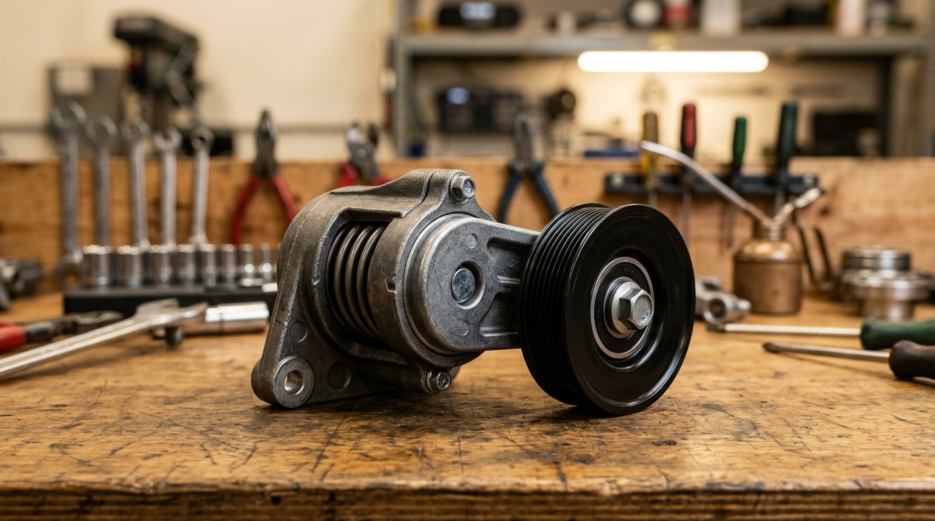
A drive belt tensioner is one of those engine components that never draws attention until it fails, and then it affects almost everything the engine drives. It keeps the serpentine belt at the correct tension, which in turn keeps the alternator charging, the power steering responsive, the air conditioning cold, and the water pump circulating. When a belt tensioner wears out, the warning signs are easy to miss or dismiss, and the consequences of ignoring them can be far more expensive than the part itself. This guide explains what a belt tensioner does, how to recognise the symptoms of failure, when and how to replace it, and how a parts supplier such as Metav Parts NZ fits into the buying decision.
What a Belt Tensioner Does
Before the symptoms, it helps to understand the job the component performs, because its importance is easy to underestimate.
Modern engines drive most of their accessories from a single serpentine belt that snakes around the alternator, power steering pump, air conditioning compressor, and water pump. That belt must be held at a precise tension. If it is too loose, it slips and the accessories lose drive. If it is too tight, it strains the bearings in every component it wraps around.
The belt tensioner solves this automatically. It is a spring-loaded arm with a pulley on the end, and it applies constant, correct tension to the belt while absorbing the vibration and load changes that occur as the engine revs and the accessories cycle. In other words, the tensioner is a small, constantly working part that protects a large and expensive system.
As a result, when the tensioner wears, the effects ripple outward. The belt slips, the accessories underperform, and eventually the belt itself can be thrown, which strands the vehicle. The tensioner is a textbook case of a cheap part that prevents an expensive failure.
The Warning Signs of a Failing Belt Tensioner
Recognising a failing tensioner early is the difference between a simple replacement and a breakdown, and the symptoms are consistent.
The most common sign is a squealing or chirping noise from the front of the engine, particularly on start-up, when cold, or when the air conditioning engages. This noise is the belt slipping as the tensioner loses its ability to hold it firm. It is often dismissed as “just a belt,” but a squeal that returns after the belt is replaced usually points to the tensioner rather than the belt.
The second sign is visible movement. A failing tensioner arm will bounce or chatter while the engine runs, a movement you can observe with the engine idling and the bonnet open. The third sign is belt wear that appears uneven or rapid, because a tensioner that no longer tracks straight will cause the belt to wear on one edge or glaze on its surface.
Additional symptoms follow the accessories. Dimming lights or a weak battery suggest the alternator is not being driven properly. Heavy steering suggests the power steering pump is losing drive. Weak air conditioning suggests the compressor is slipping. Any of these, combined with a squeal, points squarely at the tensioner.
Why You Should Not Ignore It
The tensioner is a case where procrastination carries a steep and predictable cost.
When a tensioner fails completely, the serpentine belt is thrown. On many engines, that same belt drives the water pump, which means the engine can overheat within minutes of the belt coming off. The result can be a warped head or a seized engine, repairs that cost thousands, from a part that typically costs a fraction of that.
There is also a compounding effect. A weak tensioner accelerates wear on the belt, the idler pulleys, and the bearings of the accessories it drives. Therefore, replacing the tensioner early protects the whole front of the engine, while waiting converts a cheap fix into a cascade of replacements.
In short, the tensioner is not a part to gamble on. When the symptoms appear, the sensible move is to inspect it, and if it is worn, replace it, along with the belt it has been stressing.
When to Replace the Belt Tensioner
Knowing when, and what to replace alongside it, keeps the repair both effective and economical.
The tensioner should be inspected whenever the serpentine belt is inspected or replaced. Most manufacturers recommend checking it with every major service, and the part itself is typically expected to last somewhere around 80,000 to 160,000 kilometres depending on the vehicle and driving conditions. However, age and environment matter as much as distance, and heat, dust, and moisture all shorten the tensioner’s life.
As a rule, when the tensioner shows any play, noise, or visible wear, it should be replaced rather than nursed. It is also standard practice to replace the belt at the same time, because the old belt has been running at incorrect tension and is likely glazed or worn. Replacing both together restores the entire drive system in a single job and avoids paying for the labour twice.
How the Replacement Is Done
For owners deciding whether to tackle the job themselves, it helps to understand what the replacement involves.
On most vehicles, the job is mechanically straightforward: release the tension on the old belt using the tensioner’s built-in release point, remove the belt, unbolt the old tensioner, bolt in the new one, and refit the belt in the correct routing. Many tensioners are held by a single bolt, and the job can often be done with basic hand tools.
However, the job is not without its challenges. Belt routing must be correct, and a misrouted belt will fail quickly or damage components. Access can be tight on modern engine bays, particularly on front-wheel-drive cars where the belt faces the inner guard. And torque matters, because the tensioner bolt must be tightened to specification.
For a confident DIYer with the correct routing diagram, it is a realistic job. For anyone unsure, the labour cost of a professional fitting is modest and well worth the certainty, especially given the consequences of getting it wrong.
Buying the Right Belt Tensioner
The critical factor in buying is fitment, and it is where the most mistakes happen.
Belt tensioners are not universal, despite how similar they look. Each is engineered for a specific engine, and the mounting points, spring rate, and pulley size all vary between models. A tensioner that physically bolts on but applies the wrong tension will cause exactly the problems it is meant to prevent. Therefore, the purchase must be matched to the vehicle’s make, model, engine, and year.
This is why parts retailers organise tensioners by vehicle rather than by a generic category. Metav Parts NZ, for example, carries 194 drive belt tensioner products, each listed with the specific vehicles and engines it fits, from a Holden Rodeo RA 3.6L V6 to a Volkswagen Golf 2.0L, a Jeep Wrangler TJ 4.0L, a Peugeot 306 and 406 2.0L, and cross-brand fits such as a unit covering Audi A3, Skoda Octavia, and Volkswagen Caddy and Passat.
The listings also illustrate the price range. The Jeep Wrangler tensioner is listed around $112, a Ford and Mazda shared-fit unit around $173, a Holden Astra and Captiva unit around $187, a Peugeot unit around $214, a Holden Rodeo unit around $216, and Nissan Maxima and Murano V6 units up to around $290. All prices are in New Zealand dollars as listed at the time of writing, and fitment should always be confirmed against the vehicle before ordering.
What to Look for in a Supplier
Beyond the part itself, the supplier determines whether the purchase goes smoothly, and a few checks help.
Fitment guidance is the most important, because a supplier that helps you confirm the part fits your vehicle prevents the most common and most expensive mistake. Look for listings that state the specific models, engines, and years the part covers, as Metav Parts NZ’s listings do, and use the vehicle selector where one is provided.
Range matters next, because the right tensioner for a rare or older vehicle is often the one a specialist stocks. A catalogue of 194 tensioners is the difference between finding an exact match and settling for a near-equivalent. Finally, consider the practical details of buying in New Zealand: local stock, delivery times, and a returns process that works if a part does not fit. These are the factors that make an online parts purchase reliable rather than risky.
A New Zealand Option: Metav Parts NZ
For drivers in New Zealand, Metav Parts NZ is an automotive parts retailer with a dedicated drive belt tensioner category within its engine range. The company lists 194 tensioner products, each with a specific vehicle fitment, spanning brands such as Nissan, Peugeot, Volkswagen, Holden, Audi, Skoda, Ford, Mazda, and Jeep, among others.
The store is organised by vehicle systems, from engine and electrical parts to suspension, steering, and 4×4 accessories, which makes it straightforward to find related parts in the same place. The company offers a 5% discount on the first order for customers who join its VIP list, and it maintains a contact form and a brands directory for further support. As with any parts purchase, the sound approach is to confirm the exact fitment for your vehicle’s make, model, engine, and year before ordering, and to verify current pricing and availability directly.
Extending the Life of Your Drive System
Replacement is only part of the story, and a few habits extend the life of the new tensioner and the belt it drives.
Inspect the belt and tensioner at every major service, and listen for the first sign of a squeal rather than waiting for it to become constant. Keep the engine bay reasonably clean, because grit and oil contamination accelerate wear on both the belt and the pulley bearings. And when any component in the drive system is replaced, check the others at the same time, because they wear together and replacing them together is cheaper in the long run.
These habits cost little, and they convert a belt tensioner from a part that fails unexpectedly into one that is replaced on schedule, which is exactly how a well-maintained vehicle should behave.
Conclusion
In conclusion, the belt tensioner is a small part with an outsized job, holding the serpentine belt at the correct tension so every accessory on the engine keeps working. Its failure is easy to recognise, a squeal, a bouncing tensioner arm, uneven belt wear, and easy to ignore, but the cost of ignoring it can run from a thrown belt to an overheated engine. The right response is to inspect at the first symptom, replace the tensioner and belt together, and buy a part matched precisely to the vehicle. For New Zealand drivers, a specialist such as Metav Parts NZ, with its 194-product tensioner range and clear vehicle fitment, makes that matching process straightforward. In the end, the tensioner is the cheapest insurance on the front of the engine, and treating it that way keeps the whole drive system dependable.
Frequently Asked Questions
1. What are the symptoms of a failing belt tensioner?
The main symptoms are a squealing or chirping noise from the engine, a bouncing tensioner arm, uneven belt wear, and failing accessories such as dim lights or heavy steering.
2. How long does a belt tensioner last?
A belt tensioner typically lasts around 80,000 to 160,000 kilometres, depending on the vehicle, driving conditions, and environment.
3. Should I replace the belt when I replace the tensioner?
Yes, replacing the serpentine belt at the same time is standard practice, because the old belt has been running at incorrect tension and is likely glazed or worn.
4. Can I replace a belt tensioner myself?
On many vehicles it is a realistic DIY job with basic tools, provided you follow the correct belt routing and torque specifications, but professional fitting is a sensible option if unsure.
5. How much does a belt tensioner cost in New Zealand?
Prices vary by vehicle; Metav Parts NZ lists tensioners from around $112 to $290 depending on the make and model.
6. How do I know which belt tensioner fits my car?
Match the part to your vehicle’s make, model, engine, and year, and use a supplier’s vehicle fitment details or selector to confirm before ordering.
