
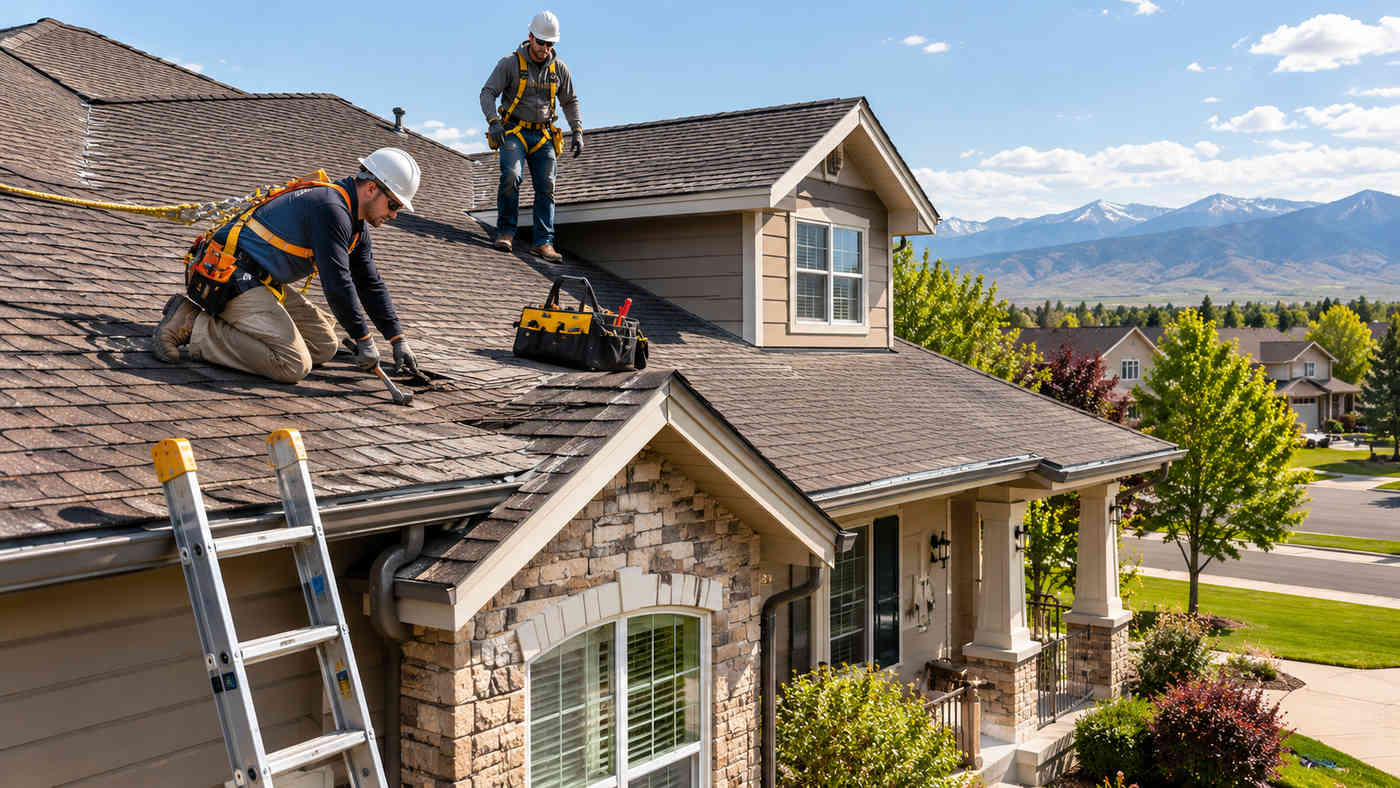
Homeowners along Colorado’s Front Range know that a roof faces more than ordinary rain. Hail, high winds, snow, strong sunshine, and sudden temperature changes can all expose weaknesses in an aging roofing system. Understanding broomfield roofing helps property owners identify meaningful damage, compare repair and replacement options, and hire qualified local contractors without making rushed decisions after a storm.
A dependable roof is a complete weather-protection system. Shingles or panels are only the visible layer; underlayment, flashing, ventilation, drainage, decking, and installation details all affect performance. A missing shingle may be a straightforward repair, while widespread hail impact or recurring water intrusion can justify a more extensive assessment.
This guide explains how to evaluate roof condition, what Broomfield requires for re-roofing permits, how insurance-related projects differ from ordinary maintenance, and what to ask before signing a roofing contract.
Why Roofing in Broomfield, Colorado, Needs Local Planning
Broomfield sits within Colorado’s Front Range, where roof performance must account for seasonal hail, gusty weather, winter snow, and intense summer sunlight. These conditions do not mean every storm damages every roof, but they make material choice, installation details, and preventive inspections especially important.
Hail, Wind, and Seasonal Exposure
Hail can damage some roof coverings, metal components, skylights, and gutters. Wind may lift weakly fastened shingles or expose failing edges and flashing. Snow and repeated freezing and thawing can highlight existing drainage or insulation problems. Solar exposure also affects the long-term condition of some roofing materials.
For broomfield roofing projects, the assessment should consider the roof’s age, slope, material, previous repairs, and exposure rather than assuming the same solution suits every house.
The Roof Is More Than Its Shingles
A contractor should review roof penetrations, valleys, flashing, ventilation openings, and roof-to-wall junctions. Problems can develop at these transitions even when most shingles look serviceable. Gutters, attic insulation, and drainage also deserve attention because moisture can enter or accumulate through several routes.
Why a Ground-Level View Is Not Enough
Photos taken from the yard may reveal missing shingles or damaged gutters, but they cannot establish whether every roof component is sound. Detailed decisions should come from a qualified inspection using safe access methods. Homeowners should avoid walking on steep, wet, icy, or storm-damaged roofing themselves.
Common Signs That a Roof Needs Inspection
Warning signs include shingles lying in the yard, exposed roof edges, bent flashing, new ceiling stains, damp attic materials, or water entering around chimneys and vents. After hail, dents in soft metal components may help establish that a property experienced impact, but they do not prove an entire roof must be replaced.
Distinguish Cosmetic Marks From Functional Damage
Discoloration, ordinary weathering, and hail impact can look similar in photographs. Impact marks on shingles require interpretation in context, including material condition and whether the protective surface has been compromised. An experienced inspector should document findings rather than announce that every dark mark is storm damage.
Address Active Water Intrusion Promptly
If water is entering the home, protect occupants and belongings and seek a qualified contractor for temporary protection and repairs. Avoid entering unstable roof areas or working near electrical hazards. Photograph the affected rooms when safe and keep records of actions taken.
19 Proven Ways to Make Better Broomfield Roofing Decisions
1. Start With a Safe, Evidence-Based Roof Inspection
A good broomfield roofing assessment begins with the homeowner’s observations, roof age, prior repair history, and recent weather. Ask the contractor to document slopes, valleys, flashing, penetrations, and accessible attic conditions. Request photographs of specific concerns, not only general images of the roof. A written explanation helps you understand what is damaged, what remains serviceable, and what cannot be determined without further inspection.
2. Record Storm Damage Before Cleaning Up
After a storm, take photographs from safe ground-level positions. Record fallen branches, displaced materials, bent downspouts, ceiling leaks, and other visible damage. Note the approximate storm date and keep receipts for emergency protective work. This documentation supports conversations with a roofer or insurer without requiring you to climb onto the roof.
3. Do Not Assume Every Hailstorm Requires Replacement
Hail size, wind, roofing material, age, and the angle of impact affect outcomes. A local hail report cannot prove that a particular house has covered damage. Request a condition-based evaluation. If the roof is intact and not leaking, you usually have time to compare professional findings rather than signing a contract with the first person who knocks on the door.
4. Inspect Flashing and Roof Penetrations
Roof leaks often appear around chimneys, plumbing vents, skylights, and roof-to-wall connections. Flashing should be compatible with the surrounding roof system and installed according to applicable standards. Ask whether replacement work includes necessary flashing repairs rather than simply laying new material around old problem areas. Proper attention to transitions helps protect the building envelope.
5. Review Gutters, Downspouts, and Drainage
Clogged gutters can overflow against fascia and walls. Poor downspout discharge may contribute to water near the foundation. During broomfield roofing maintenance, check gutters for debris and loosened attachments, and verify that drainage directs water away from vulnerable areas. Dented gutters after hail also deserve documentation, although the extent of damage determines whether repair or replacement makes sense.
6. Check Attic Ventilation and Air Leakage
Attic performance depends on roof design, insulation, air sealing, and ventilation. Warm indoor air leaking into a cold roof space can contribute to moisture problems, while blocked intake or exhaust vents may limit the intended airflow. A qualified professional should assess the entire assembly rather than recommending extra vents without understanding the existing design.
7. Investigate Moisture Before Replacing Roofing Materials
Staining, mold-like growth, soft decking, or damp insulation can signal past or active water entry. Identify the source before enclosing materials. During a major broomfield roofing project, damaged decking may become visible only after existing coverings are removed. The contract should explain how concealed deterioration will be documented, approved, and priced.
8. Compare a Targeted Repair With Full Replacement
A localized leak or isolated missing shingle does not automatically require a new roof. Conversely, extensive damage or severe deterioration may make repeated patching uneconomical. Ask for both options where technically appropriate, with expected limitations and warranty terms. The best decision considers condition, age, matching materials, and the likelihood of further repairs.
9. Evaluate Impact-Resistant Asphalt Shingles
Some asphalt shingles carry a Class 4 impact-resistance classification under a recognized test method, which may be appealing in hail-prone regions. That rating does not mean the roof is hail-proof or that every insurer will offer a discount. Compare manufacturer documentation, available warranties, and local installation requirements. Also evaluate wind classification, underlayment, and fastener details; impact performance is only one part of the system.
10. Consider Metal Roofing Without Overlooking Tradeoffs
Metal roofing can offer durable finishes and a distinctive appearance, but performance depends on panel type, coating, fastening, flashing, and installation. Hail can still cause cosmetic dents or other damage, depending on the material and storm. Homeowners considering broomfield roofing upgrades should compare total installed costs, acoustics, structural suitability, and maintenance rather than relying on simple lifespan claims.
11. Select Underlayment and Edge Details Carefully
Underlayment provides an additional layer of protection beneath roof coverings but is not a substitute for correctly installed primary roofing. Drip edges, valley details, and flashing must suit the material and applicable code. Ask a bidder to specify these components, not just the shingle brand. Manufacturer installation instructions and current local requirements should guide the work.
12. Confirm Broomfield’s Re-Roofing Permit Requirements
The City and County of Broomfield requires building permits for replacing roofing materials, and it publishes a re-roofing permit application. Its 2024 International Code adoption took effect on April 15, 2026. Before starting broomfield roofing replacement, ask who will obtain the permit, what inspections are required, and how final approval will be documented. Confirm special conditions with the Building Division rather than relying on an outdated online checklist.
13. Verify the Contractor’s Local License
Broomfield requires contractors performing paid construction work to hold the appropriate local contractor license. Colorado does not have one universal statewide roofing license that substitutes for local requirements. Request the company’s legal name and license information, then verify it with the city. Check current liability insurance and any applicable worker coverage as well; a business card or truck decal is not proof of standing.
14. Understand Insurance Deductibles and Claim Boundaries
Colorado law prohibits roofing contractors from offering to pay, waive, or rebate an insurance deductible for covered residential roofing work. Avoid any offer described as a free insurance roof. A roofer can document damage and discuss repair scope, but should not misrepresent itself as your public adjuster. Review your policy’s deductible, roof settlement method, and claim requirements directly with the insurer or a qualified adviser.
15. Compare Detailed Written Roofing Estimates
For broomfield roofing replacement, ask at least a few qualified companies to quote the same scope. Compare roof area, tear-off, disposal, decking allowances, underlayment, ventilation, flashing, materials, permit responsibility, cleanup, and warranties. The lowest bid may omit work another bidder includes. An itemized estimate makes differences visible and supports informed questions before a contract is signed.
16. Put Scope, Schedule, and Changes in the Contract
A written agreement should describe materials, dates or scheduling assumptions, payment stages, change-order procedures, warranty terms, and how unexpected decking repairs are approved. Clarify who protects landscaping and who removes nails and debris. Be skeptical of pressure to sign before you have read cancellation terms. Requirements for insurance-funded residential roofing contracts should be reviewed with attention to applicable Colorado consumer protections.
17. Plan Around Weather and Roof Exposure
Installation schedules depend on material requirements, weather, crew availability, and the extent of work. Cold temperatures, high winds, precipitation, and unsafe roof surfaces can affect installation or delay it. Ask how the contractor protects exposed areas during an interruption. A realistic schedule is more valuable than a promise to finish regardless of conditions.
18. Check Workmanship Before Final Payment
Review visible flashing, straight roof lines, ventilation details, gutter condition, and site cleanup from safe positions. Request photos of work completed in locations you cannot see. Confirm required inspections have been scheduled or finalized, and obtain the product information and workmanship warranty. Do not climb the roof to conduct your own final inspection.
19. Maintain the Roof Between Major Storms
Regular broomfield roofing maintenance can include safe ground-level observations, gutter cleaning, checking attic moisture, and arranging professional inspections when there are concerns. Keep branches managed by qualified workers and retain repair records. Maintenance cannot prevent every hail event, but it can reveal drainage and flashing problems before small defects become expensive interior damage.
What Does Broomfield Roofing Cost?
The cost of broomfield roofing varies with roof area, pitch, material, number of existing layers, access, decking condition, and the amount of flashing or ventilation work. A complex multi-gabled roof may require more labor and material than a simple roof of similar square footage. Removal, permits, disposal, and specialty details also affect the total.
Repair Costs Versus Replacement Costs
A small leak repair typically involves a different scope from a complete tear-off and installation. For a broomfield roofing project, a low initial patch cost is not necessarily the best value when the surrounding roof is severely deteriorated. Ask for a documented repair recommendation and for the contractor to explain any uncertainty about concealed damage.
Roofing Material Choices and Budget
Architectural asphalt shingles are common in residential projects, but impact-resistant variants, metal systems, and other coverings may be considered depending on the house. Compare the complete installed system, not just price per bundle. Structural loading, roof slope, appearance, and local approval may limit certain products.
Avoid Unsupported Price and Lifespan Guarantees
Online averages may not reflect your roof’s design or current labor and material prices. Obtain current local quotes for a meaningful budget. Likewise, an advertised product warranty does not guarantee that a roof will perform for the full period without maintenance or weather-related damage.
How the Roof Replacement Process Usually Works
A typical broomfield roofing replacement begins with an inspection and an agreed written scope. For a broomfield roofing replacement, the contractor measures roof areas, reviews existing coverings and drainage, and identifies known repairs. The team then arranges permits and material delivery before removing the old roofing as required for the selected system.
Tear-Off, Decking Review, and Installation
Once existing materials are removed, installers assess the exposed roof deck. Damaged areas may require approved additional work before underlayment, flashing, and the new covering are installed. Broomfield roofing installation details should match the manufacturer instructions and applicable building code. Work is not simply the placement of new shingles over a visible surface.
Inspection, Cleanup, and Handover
The project should end with required inspections, appropriate debris removal, and a homeowner walkthrough. Obtain receipts, warranty documentation, product details, and permit records. Before closing a broomfield roofing project, ask how any outstanding punch-list items will be corrected and whom to contact if a leak appears later.
Roof Hail Damage and Insurance Claims in Colorado
After a significant storm, document damage safely and review the policy before assuming the insurer will replace the roof. Coverage depends on the actual cause, policy exclusions, deductible, age or depreciation rules, and the insurer’s claim assessment. Some policies settle roof losses at actual cash value rather than full replacement cost, and wind or hail deductibles may be calculated as a percentage of insured value.
Keep Contractor and Insurer Roles Separate
A roofing contractor can supply a factual repair estimate and photographs of observed damage. The insurer decides coverage under the policy, subject to applicable rules. If there is a dispute, use the insurer’s review process or seek appropriate licensed advice. Avoid signing over control of a claim merely because a salesperson promises a larger payout.
What to Do After Door-to-Door Solicitation
Storms can bring legitimate local contractors and opportunistic sellers. Verify licensing and insurance, request written terms, and decline high-pressure offers. Remember that promises to absorb your deductible are prohibited under Colorado law for insurance-funded residential roofing. For broomfield roofing insurance projects, transparency is more valuable than claims of a guaranteed free replacement.
How to Choose a Reliable Broomfield Roofing Contractor
Focus on contractors who can describe the specific work your home needs. Ask about experience with the chosen roofing system, local licensing, insurance, permits, project supervision, and how installation details are checked. Review photographs and references for comparable jobs, but do not assume online ratings independently verify every claim.
Questions Worth Asking Before You Sign
A useful conversation covers whether the roof can be repaired, what material and underlayment will be used, what happens if decking is damaged, who handles permits, whether subcontractors will perform the work, and how warranties are divided between workmanship and manufacturer coverage. Ask who will be available after installation if a problem arises.
Signs of an Unclear or Risky Proposal
Be cautious when a proposal lacks material specifications, omits permit responsibility, changes prices verbally, or requires unusually large payments without safeguards. A contractor unwilling to provide a clear business identity or local license information deserves closer scrutiny. Compare documented facts, not just the most confident sales pitch.
Seasonal Roofing Maintenance for Broomfield Homes
Spring inspections may identify winter-related drainage or flashing issues. Summer attention often follows hail or wind events. Autumn is a useful time to check gutters and address leaks before colder conditions arrive. Winter inspections should prioritize safety and indoor warning signs; do not attempt DIY work on icy roofing.
For broomfield roofing maintenance, use a simple log of inspection dates, repairs, photographs, and invoices. A record helps future contractors distinguish new storm damage from older wear. It also supports more informed decisions when comparing maintenance, targeted repairs, and eventual replacement.
Frequently Asked Questions
1. How much does broomfield roofing cost?
The total depends on roof size, slope, materials, tear-off, decking repairs, permits, and access. Request itemized local estimates rather than relying on a universal online price.
2. Do I need a permit to replace a roof in Broomfield?
Yes. The City and County of Broomfield requires permits for replacement of roofing materials. Confirm application and inspection requirements with its Building Division.
3. Does hail damage always mean I need a new roof?
No. The need for repair or replacement depends on the actual damage, roofing material, age, and overall condition. Arrange a qualified inspection before deciding.
4. Are impact-resistant shingles worth considering in Colorado?
They may be useful for hail-prone sites, but no shingle is hail-proof. Compare impact test ratings, installation requirements, price, and relevant warranty terms.
5. Can a Colorado roofer pay my insurance deductible?
No. Colorado law prohibits roofing contractors from paying, waiving, or rebating deductibles for applicable insurance-funded residential roofing work.
6. How do I find a qualified Broomfield roofing contractor?
Verify the company’s current Broomfield contractor license, insurance, relevant experience, written scope, permit plan, and workmanship warranty before signing.
Conclusion
Good broomfield roofing decisions begin with a careful inspection, a clear understanding of weather-related risks, and realistic repair-versus-replacement comparisons. Local permits, qualified contractors, suitable materials, and detailed written contracts all matter as much as the visible roof covering. After hail or wind, document damage and follow your insurance policy rather than relying on pressure-driven promises. With proper installation and ongoing maintenance, homeowners can protect their property and make roofing expenses easier to plan.
