
How to Choose an AI Digital Marketing Agency in the Age of Generative Engine Optimization
Digital marketing has evolved from simple banner ads and basic search campaigns into a complex system of channels, data, and automation that touches almost every part of a business. In this environment, many organizations are looking for an ai digital marketing agency that can help them keep pace with rapid changes in search, content, and customer behavior. At the same time, the rise of generative engine optimization is forcing marketers to think beyond traditional rankings and consider how their brand appears inside AI generated answers.
The choice of partner matters more than it used to.
An agency that treats artificial intelligence as a buzzword will produce very different results from one that builds AI into the core of its strategy, measurement, and execution.
What Is an AI Digital Marketing Agency
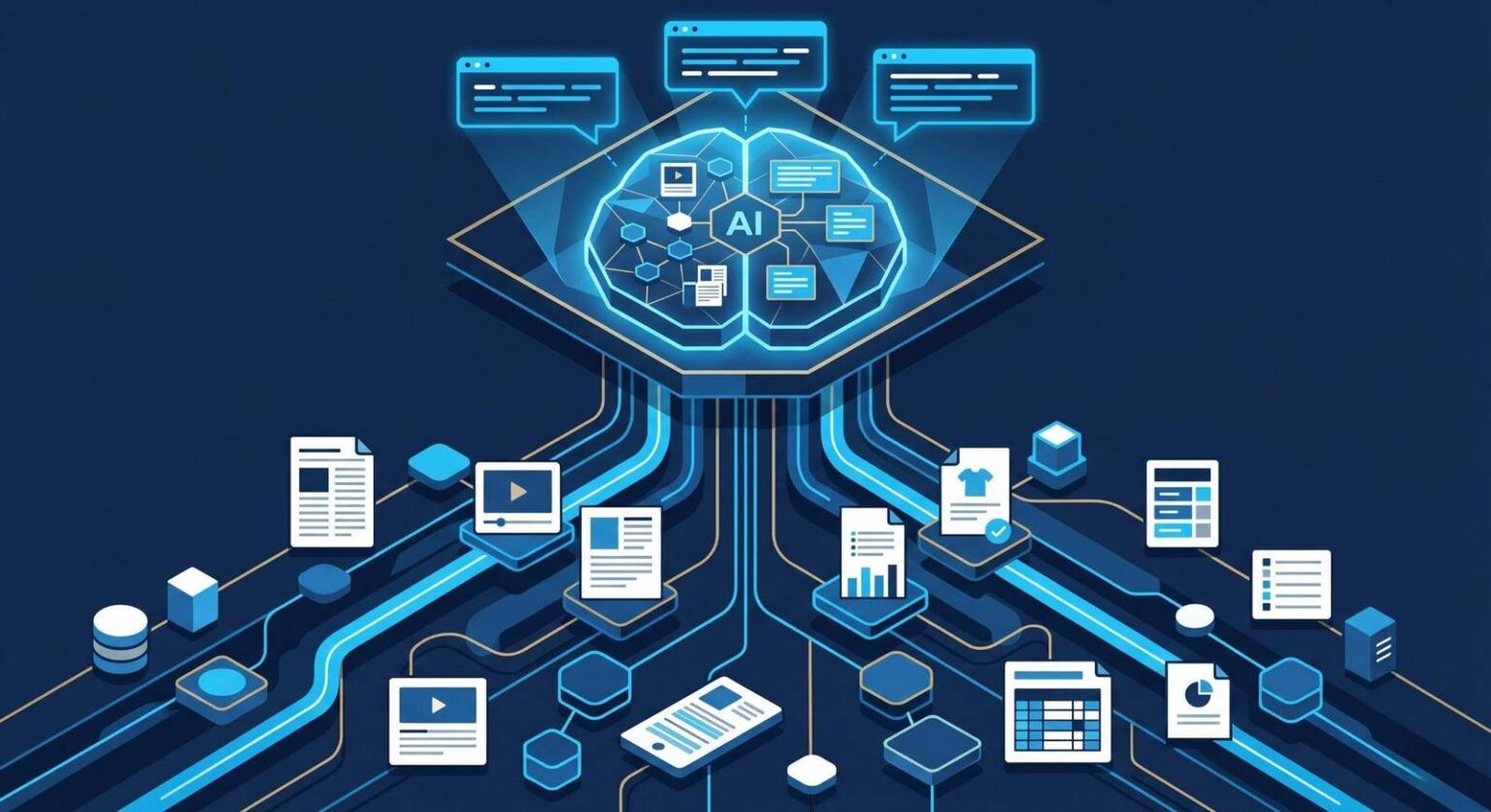
An AI digital marketing agency applies artificial intelligence and machine learning across the full marketing stack instead of treating them as isolated tools. In practice, that means using AI to identify where a brand’s digital presence is weak or inconsistent, structuring content to match how search engines and AI systems interpret and categorize information, and ensuring that the signals a brand sends across the web are accurate, authoritative, and aligned. These capabilities go well beyond traditional campaign management.
Traditional digital marketing relies heavily on manual decisions and historical best practices. AI driven approaches still build on those foundations, but they add a layer of pattern recognition that surfaces problems and opportunities a manual audit would miss. For most organizations, the real question is not whether AI is being used somewhere in the process. It is whether it actually changes anything.
Why AI Is Reshaping Search and Content
For most of its history, search engine optimization followed a predictable logic. Crawl pages, index them, return a ranked list of links. That still happens. It just no longer describes the full picture. Today, many people expect something different, they type or speak a question and receive a synthesized answer that blends information from multiple sources. In Google’s own documentation, AI features in Google Search are presented as part of how search now helps users reach the gist of complex questions and explore supporting links. Large language models do this by retrieving relevant pages, extracting key facts, and composing a concise response that the user reads without ever clicking through to a website.
For the user, this is convenient and for brands, it is a new choke point in the path to discovery. This shift carries real consequences for any organization relying on organic visibility. Ranking in classic search results still matters, but it is no longer the only visibility layer that counts. Well structured, clearly written content is more likely to be cited or summarized by AI systems, while conflicting or outdated information can push those same systems toward inaccurate outputs. An AI digital marketing agency that understands this dual landscape treats organic visibility not only as a matter of page rank, but as a question of how content is interpreted, trusted, and reused by generative systems.
Core Capabilities to Look For
Not every agency that uses the word “AI” in its positioning actually applies it in a meaningful way. When evaluating potential partners, it helps to break down the role of an artificial intelligence marketing agency into specific capabilities and ask direct questions about how each one is implemented in practice.
Data Infrastructure and Measurement
High quality data is the foundation of any effective AI driven strategy. A capable partner should be able to audit how a brand currently appears across search engines, third-party publications, directories, and AI-generated answers, then identify exactly where signals are inconsistent, outdated, or missing. Without that baseline, any optimization effort is essentially guesswork and most agencies skip it. Clear performance benchmarks tied to visibility, authority, and brand representation are a basic expectation, not an advanced feature reserved for larger clients.
Search and Content Expertise
Content has not become less important. It has become harder to get right. AI changes how it needs to be built, not whether it needs to exist.The strongest approach combines AI-driven analysis of topical gaps and search intent with the editorial discipline to produce content that genuinely earns authority. That means publishing structured, well-researched material across high-authority platforms, not just on a brand’s own domain, and ensuring that every piece reinforces a consistent, credible signal about what the brand does and why it belongs in the conversation.
This is also where generative engine optimization enters the picture. Agencies that understand GEO structure content so that it can be easily parsed, cited, and summarized by AI systems, increasing the chance that a brand appears in AI powered answers for relevant queries. A digital marketing agency using AI for both classic SEO and GEO will have a clear advantage as more user journeys begin and end inside AI interfaces.
AI Assisted Creative and Testing
AI can help identify which topics, angles, and structures are most likely to gain traction in both search results and AI-generated answers. A capable partner will use these insights to guide editorial decisions rather than replacing human judgment with automated output. The most effective approach combines strategic oversight from experienced writers and editors with AI tools that surface data about content gaps, keyword opportunities, and how existing material is being interpreted by search and AI systems. Brands working with a performance creative agency are often better positioned to turn these AI-driven insights into creative strategies that improve engagement and campaign performance. The output is content that holds up editorially and performs technically. Those two things are not in conflict. They just rarely get built together.
Reputation Management and Narrative Control
Visibility and reputation are not the same thing, even though most agencies treat them as if they are. A brand can rank well in search results while still being described inaccurately or unfavorably inside AI-generated answers, on third-party review platforms, or in high-authority editorial coverage. Managing this requires active intervention: identifying where negative or misleading content is gaining traction, building a stronger counterweight of authoritative material, and ensuring that the narrative surrounding a brand reflects the reality of what it delivers. This is why many organizations look to the best reputation management companies for strategies that address both search visibility and the broader perception of their brand. In sectors where trust is a commercial prerequisite, such as finance, healthcare, and professional services, this layer of work is often what separates brands that grow from those that stall.
How Generative Engine Optimization Fits In
Generative engine optimization focuses on how content is surfaced and represented inside AI driven experiences, not only in traditional search engine results pages. A useful companion concept is entity-first optimization, which emphasizes clarity around people, products, and relationships so search and AI systems can place content correctly within semantic networks. While classic SEO aims to improve rankings for specific queries, GEO asks a different question: when a user asks an AI assistant about a product category or a solution to a problem, which brands appear in the answer and which sources does the AI treat as authoritative?
The stakes here are higher than they might initially appear. A brand that ranks on the first page of Google but is absent or poorly represented inside AI generated answers is already losing ground in the discovery process. AI systems do not simply mirror search rankings. They weight sources differently, favor certain content structures, and draw from a web of third-party references that most brands have never actively managed. An AI marketing agency with genuine GEO expertise understands this ecosystem and builds a presence within it deliberately.
When AI surfaces an answer, the brand is part of it. And the context around it is accurate.
Building a Future Proof Digital Strategy
The shift toward AI driven search is not approaching. It is already determining which brands get found and which ones do not. Digital marketing is one of the fields where this transformation is most visible, and the pace of change shows no sign of slowing. Choosing the right AI digital marketing agency is therefore less about following a trend and more about building a structure that can adapt as new tools and behaviors emerge.
Organizations that invest early in strong data foundations, high quality content, and thoughtful generative engine optimization are likely to see compounding benefits over time. Those that delay may find that, even with a solid website and conventional SEO, their presence inside AI powered answers is weaker than they expect. Selecting a partner is not a one time decision.
It is the starting point for a collaboration that needs to evolve as the market does. Strategy, technology, and execution all shift. The right agency shifts with them
