
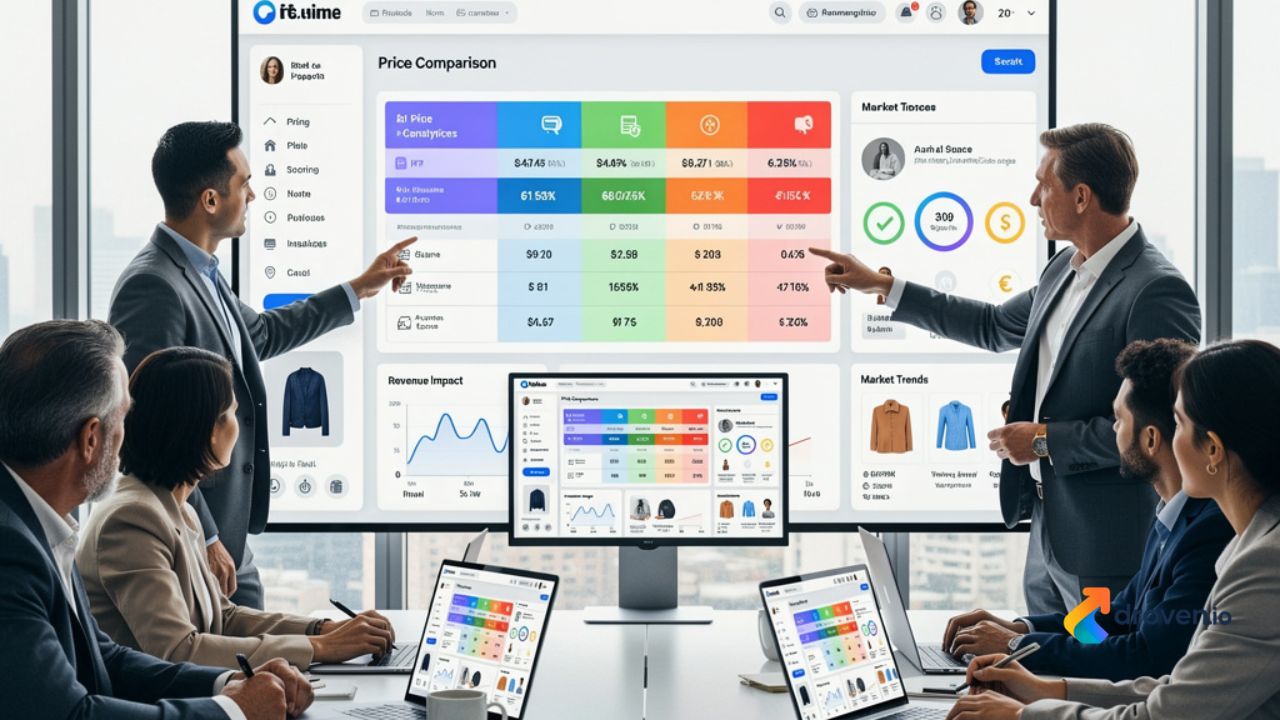
Pricing is one of the most influential factors affecting customer purchasing decisions and business profitability. In competitive markets, manually monitoring prices across multiple competitors can be time-consuming and difficult to manage. Competitive Pricing Software helps businesses automate price monitoring, analyze market trends, and make informed pricing decisions based on real-time data. Whether you operate an eCommerce store, manage retail products, or sell through online marketplaces, pricing software can support a more efficient and data-driven pricing strategy.
As online competition continues to increase, businesses that respond quickly to market changes are often better positioned to attract customers while protecting profit margins.
What Is Competitive Pricing Software?
Competitive pricing software is a digital solution that helps businesses monitor competitor prices, analyze market conditions, and manage pricing strategies more efficiently. Instead of manually checking competitor websites, the software collects pricing data and presents it through dashboards, reports, or automated alerts.
Some platforms also allow businesses to automate pricing updates according to predefined rules, although the available features vary by provider.
Why Pricing Matters
Pricing directly influences sales performance, customer perception, and overall profitability. Setting prices too high may reduce demand, while prices that are too low can negatively affect profit margins.
A well-planned pricing strategy helps businesses:
- Stay competitive
- Protect profitability
- Respond to market changes
- Increase customer confidence
- Improve pricing consistency
Access to accurate market data allows businesses to make decisions based on evidence rather than assumptions.
How Competitive Pricing Software Works
Although every platform is different, the general process follows several steps.
The software typically:
- Collects publicly available pricing information.
- Organizes competitor data.
- Compares prices across products.
- Generates reports or dashboards.
- Sends alerts when significant changes occur.
- Supports pricing decisions through analytics.
Businesses then review the data and determine whether pricing adjustments are appropriate.
Key Features
Competitor Price Monitoring
One of the primary functions is tracking competitor pricing across selected products.
This helps businesses stay informed about market conditions without manually reviewing multiple websites.
Automated Price Alerts
Many platforms notify users when:
- Competitor prices change
- Products go on sale
- Pricing thresholds are reached
Alerts help businesses respond more quickly to market developments.
Analytics and Reporting
Reporting tools allow businesses to evaluate pricing trends over time.
Reports may include:
- Price comparisons
- Historical pricing
- Market positioning
- Product performance
These insights support strategic decision-making.
Pricing Rules
Some software solutions allow users to establish automated pricing rules based on predefined conditions.
Businesses remain responsible for reviewing automated strategies and ensuring they align with legal, commercial, and business objectives.
Benefits of Competitive Pricing Software
Save Time
Automation eliminates much of the manual work associated with monitoring competitor pricing.
Employees can focus on broader pricing strategy rather than repetitive research.
Improve Decision-Making
Access to organized pricing data helps businesses evaluate market conditions more objectively.
Respond Faster
Real-time monitoring allows companies to identify market changes sooner than manual methods.
Protect Profit Margins
Pricing decisions can balance competitiveness with sustainable profitability rather than relying solely on discounting.
Who Uses Competitive Pricing Software?
Many industries benefit from pricing intelligence.
Examples include:
- eCommerce retailers
- Consumer electronics
- Fashion retailers
- Home goods suppliers
- Automotive parts distributors
- Wholesale businesses
- Manufacturers
Businesses selling products in competitive online markets often find pricing tools particularly valuable.
Choosing the Right Software
When evaluating pricing platforms, consider several factors.
Data Accuracy
Reliable pricing decisions depend on accurate and up-to-date information.
Integration
Many businesses prefer software that integrates with:
- eCommerce platforms
- Inventory systems
- ERP software
- Product databases
Integration reduces manual data entry.
Ease of Use
User-friendly dashboards make it easier for pricing teams to interpret data and identify opportunities.
Scalability
Choose software capable of supporting your business as product catalogs and sales channels expand.
Best Practices
Businesses can maximize value by:
- Monitoring key competitors consistently.
- Reviewing pricing strategy regularly.
- Considering factors beyond price, including customer service and product quality.
- Evaluating profitability before making adjustments.
- Combining pricing data with broader market research.
Pricing decisions should support long-term business goals rather than short-term reactions.
Pricing Is More Than Competition
While competitor monitoring is valuable, pricing should also reflect:
- Product quality
- Brand positioning
- Customer experience
- Operating costs
- Market demand
Competing solely on price is not always the most effective business strategy.
Future Trends
Pricing technology continues to evolve alongside advances in artificial intelligence and analytics.
Emerging developments include:
- AI-assisted pricing recommendations
- Predictive pricing models
- Dynamic pricing
- Customer segmentation
- Real-time market analysis
These innovations continue expanding the capabilities of pricing management platforms.
Frequently Asked Questions
What is competitive pricing software?
Competitive pricing software helps businesses monitor competitor pricing, analyze market trends, and support pricing decisions using automated data collection and reporting.
Who should use competitive pricing software?
Retailers, eCommerce businesses, wholesalers, manufacturers, and organizations operating in competitive markets can benefit from pricing intelligence tools.
Can pricing software automatically change product prices?
Some platforms support automated pricing based on predefined business rules. Businesses should carefully review automation settings and ensure they align with legal and commercial requirements.
Does competitive pricing software improve profitability?
Pricing software provides data that supports informed pricing decisions. Profitability depends on many factors, including pricing strategy, operating costs, market demand, and business objectives.
What should I look for when choosing pricing software?
Evaluate data accuracy, reporting capabilities, integration options, scalability, ease of use, customer support, and how well the software matches your business needs.
Conclusion
Competitive pricing software helps businesses navigate increasingly dynamic markets by providing timely pricing intelligence, market visibility, and decision-support tools. Rather than relying on manual competitor research, organizations can use automated data collection and analytics to make more informed pricing decisions while balancing competitiveness with profitability. By combining pricing insights with a broader understanding of customer value, product quality, and market positioning, businesses can develop pricing strategies that support sustainable growth and long-term success.
