
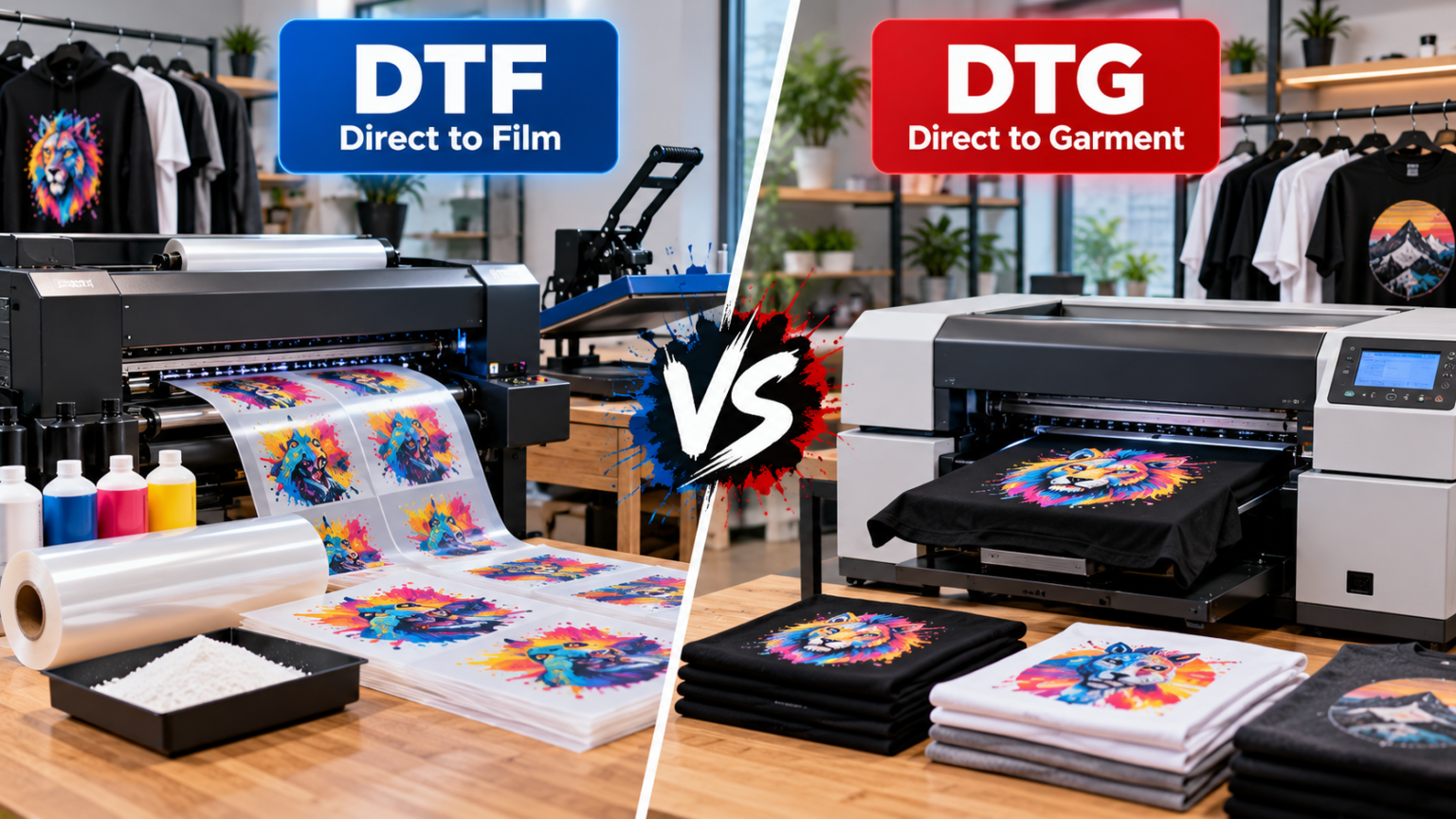
DTF is usually the more flexible starting point for businesses decorating a varied mix of compatible fabrics, while DTG deserves closer consideration when the core product is cotton-rich apparel and print feel is a priority. The right choice depends on your garments, designs, order volume, and available production time.
For an online clothing brand or local print studio, this is a production decision with consequences beyond the equipment budget. It affects which orders you can accept, how employees handle them, and what customers receive.
Before comparing machines, look at the products you expect to sell. A catalog of mixed-fabric promotional clothing creates different requirements from a collection of illustrated cotton T-shirts.
Where DTF Fits a Mixed Product Range
Direct-to-film printing separates image production from garment decoration. Artwork is printed onto transfer film, coated with adhesive powder, and cured before being applied to a compatible textile with a heat press.
That separation is useful when a business handles different garment types. Imagine a studio preparing cotton event shirts, polyester teamwear, and canvas bags for several customers. DTF is worth investigating because it supports a broad range of compatible fabrics without printing directly onto each item.
Procolored’s European collection is one starting point for businesses evaluating a dtf printer for mixed-fabric orders. The purchase decision should include the entire setup: suitable film, ink, powder, curing equipment, and a heat press.
Fabric versatility still has limits. Check the transfer supplier’s instructions and each garment’s heat tolerance before accepting a job. Test the actual blanks you intend to use, including their color and surface finish.
For occasional orders, buying prepared transfers and applying them yourself can also help test demand before investing in printing equipment.
Where DTG Fits a Cotton-Focused Brand
Direct-to-garment printing applies textile ink directly to the garment. It avoids the separate transfer-film stage, although preparation and heat curing remain part of the production process.
Consider an independent label selling illustrated cotton T-shirts in small runs. The owner wants detailed artwork, consistent placement, and a finish that works with the feel of the fabric. DTG is a relevant option to sample for that product range.
A business evaluating a dtg printer can use Procolored’s European range as a reference for cotton-focused printing. The brand recommends high-cotton fabrics, so buyers should assess their intended blanks against the specific machine and ink requirements.
Dark garments typically require pretreatment and a white ink layer beneath the colors. These steps affect preparation time, material use, and the finished print.
Direct printing therefore does not mean placing any shirt into a machine and immediately packing the result. Operators still need a repeatable process for preparing, positioning, printing, and curing garments.
Testing a few dependable garment styles first gives the business a clearer basis for judging color consistency, customer feedback, and preparation time. Expand the collection once those products can be produced reliably.
Judge Print Quality on the Finished Garment
Both methods can produce detailed, multicolor graphics. The more useful comparison is how a particular design looks and feels on the garment you plan to sell.
DTF creates an image layer bonded to the fabric. Large, solid designs can feel more noticeable than small logos or artwork with open spaces. DTG can offer a softer finish on suitable cotton, particularly where heavy ink coverage is unnecessary, but fabric, pretreatment, and white ink coverage influence the result.
Ask suppliers for samples using the same artwork and comparable garments. Include fine lettering, gradients, and a solid color area rather than choosing an image that flatters only one process.
Examine the samples in daylight, handle the printed area, and wash them according to the recommended care instructions. These checks provide a better basis for product promises than photographs alone.
Measure Complete Orders, Not Just Print Speed
A printer’s advertised speed describes only part of the work. Your business earns revenue from finished products, so measure the process from approved artwork to a garment ready for packing.
For DTF, account for film preparation, printing, powder application, curing, trimming, positioning, and pressing. With DTG, include pretreatment where required, garment loading, printing, curing, and unloading.
A useful trial might involve thirty shirts with several sizes and two designs. Record active labor separately from machine running time, and note where unfinished work accumulates.
If transfers wait beside an occupied heat press, faster printing may not solve the delay. If garment preparation holds up a DTG operation, that stage needs attention before adding printer capacity.
Use the same order assumptions when comparing systems. Different artwork sizes or quality settings can make headline speed figures misleading.
Plan the Digital Workflow and Daily Upkeep
The printer should fit the way your business receives and prepares orders. Before purchasing, check the included print software, supported operating systems, file requirements, and any ongoing licensing costs.
Keep approved artwork, garment details, print dimensions, and placement instructions together. For personalized orders, establish a clear naming convention so an employee can distinguish the customer’s final design from an earlier version.
A simple order tracker can record whether each job is awaiting approval, ready for production, or complete. Do not assume that a printer automatically connects with your online store; confirm any integration separately.
Maintenance also belongs in the schedule. Both DTF and DTG systems using white ink require model-specific care, including nozzle checks and cleaning routines. Ask what happens during quiet weeks as well as busy periods.
Finally, plan space for supporting equipment and follow the manufacturer’s ventilation and handling instructions. The printer’s footprint is not the footprint of the complete production setup.
Calculate the Cost per Sellable Item
The purchase price alone cannot tell you which process will be more economical.
Request a written list of included equipment and software, training requirements, and consumables before comparing quotations. A printer-only price and a complete production package are not equivalent purchases. Check whether essential accessories require separate orders.
For DTF, include transfer film, powder, ink, pressing labor, curing, and spoiled transfers. For DTG, include ink, pretreatment where needed, garment handling, curing, and rejected prints. Both calculations should allow for cleaning supplies, replacement parts, staff time, and equipment costs.
Use realistic quantities and actual designs. A large print with extensive coverage has different material requirements from a small chest logo. An order containing several personalized names also introduces preparation work that a repeated design may not require.
Compare your estimates with outsourcing the same work. Internal production may provide scheduling control, but an underused machine still creates costs and responsibilities.
For a new business, a limited trial range is a sensible starting point. Measure completed orders, reprints, labor, and customer feedback before expanding the equipment budget.
Choose Around Your Core Orders
DTF is worth prioritizing when compatible fabric variety and a transfer-based workflow match your customer demand. DTG is worth testing when cotton-rich garments and the desired print finish define your collection.
There is no need to buy both systems immediately. A studio can produce its core range internally and outsource unfamiliar materials or less frequent requests.
Choose the method that performs reliably on your real products, within your available time and budget. A successful equipment purchase should make the orders you already understand easier to deliver.
