
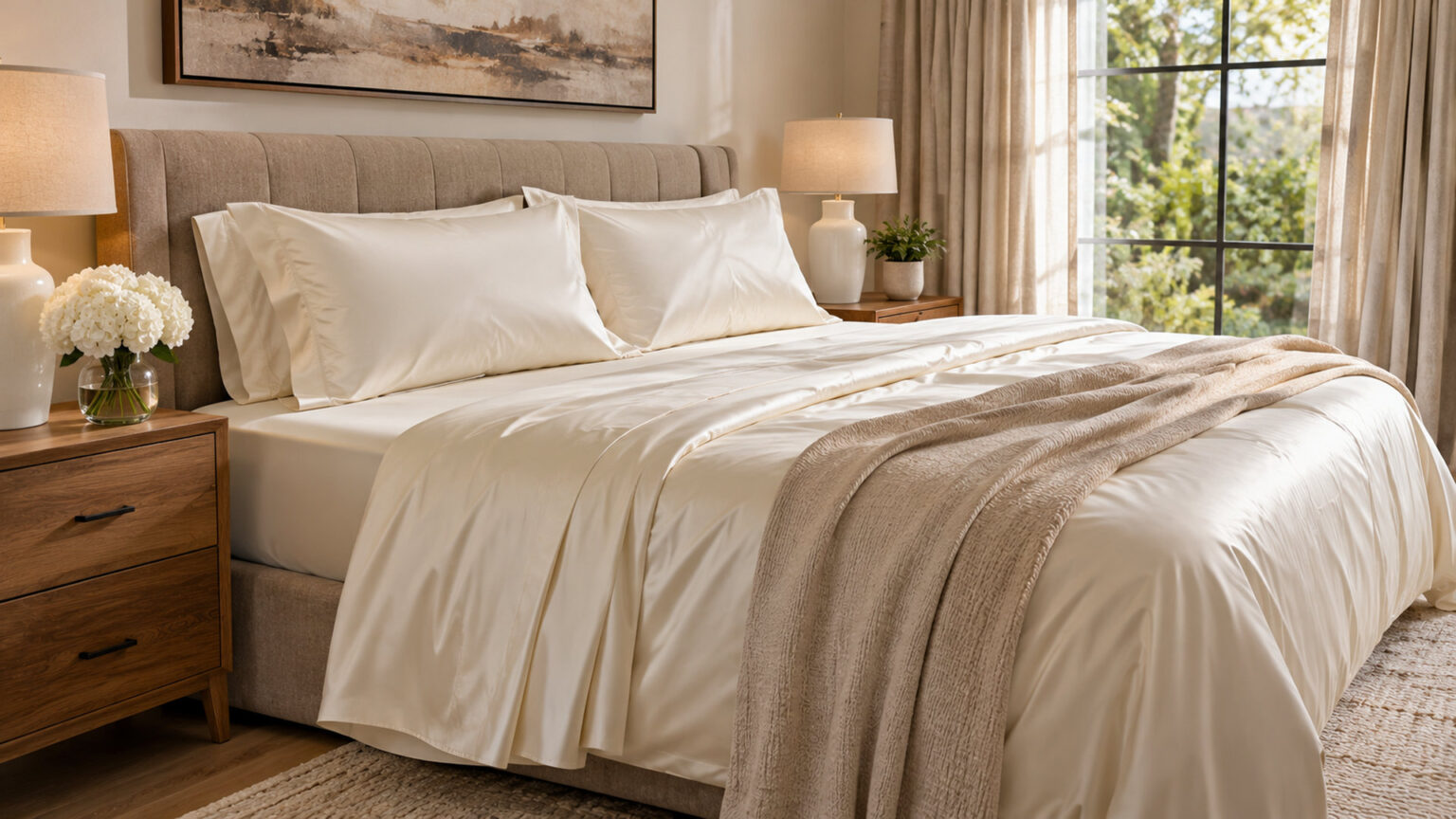
Egyptian cotton sateen sheets appeal to sleepers who want a smooth surface, graceful drape, and a refined look without switching to a synthetic fabric. The appeal comes from two different qualities: Egyptian cotton describes where the fibre was grown, while sateen describes how yarns are woven. Neither label guarantees exceptional sheets on its own. Staple length, yarn quality, finishing, construction, honest labelling, and everyday care all influence how the fabric feels after months of use. Knowing what to check helps you avoid paying a premium for a description rather than genuine quality.
A good purchase should fit the mattress, suit your preferred sleeping temperature, withstand regular washing, and come with clear product specifications. This guide explains fourteen decisions that make comparing bedding easier, including authenticity checks, thread count, care, and the differences between sateen and percale.
What Makes Egyptian Cotton Sateen Sheets Different?
Egyptian cotton refers to cotton grown in Egypt. The country’s cotton industry is associated with long and extra long staple varieties, but the geographic name alone does not establish the staple length of every product. Longer cotton fibres can be spun into fine, strong yarns when properly processed. The resulting fabric quality still depends on the yarn, weave, and manufacturing standards.
Sateen is a weave structure that places more yarn across the fabric surface, creating a smoother hand and a gentle sheen. Cotton sateen is not the same as silk satin, although the surfaces can look similar. Sateen typically feels supple and drapes closely around the body, while cotton percale has a crisper, more matte character. Neither weave is universally better for every sleeper.
Why Fibre and Weave Must Be Evaluated Together
A sheet can be made from genuine Egyptian cotton and still feel disappointing if the yarn is coarse or the finish is poor. Conversely, well made cotton sateen from another origin may feel excellent. Compare the complete product rather than treating the words Egyptian, luxury, or hotel as independent evidence of quality.
14 Smart Checks Before Buying Cotton Sateen Bedding
1. Verify the Cotton Origin Claim
Look for a precise material description. A label claiming 100 percent Egyptian cotton should refer to Egyptian cotton throughout the claimed fibre content, not a blend that includes cotton from other origins. The Egyptian Cotton Association licenses an Egyptian Cotton trademark and maintains ways to check eligible businesses. A credible traceability claim is more useful than a picture of a pyramid or a glamorous product name. If the seller cannot clarify origin, treat the statement as unverified rather than proven false.
2. Read the Full Fibre Composition
A product described as Egyptian cotton feel might contain polyester or other fibres. That does not automatically make it unusable, but it changes what you are purchasing. Read the sewn label or complete specifications for the percentages and types of fibre. In the United States, textile advertising must not misrepresent cotton composition. Ask about any discrepancy between the product title and its fibre label before ordering.
3. Understand Staple Length Without Assuming Perfection
Staple length is the length of the individual cotton fibres. Longer fibres can permit finer yarns with fewer loose ends, potentially contributing to smoothness and strength. However, staple length is not a complete quality grade. Yarn spinning, weaving, finishing, and laundering also shape the final result. A seller that explains actual fibre characteristics offers more useful information than one that simply repeats the word premium.
4. Choose Sateen for the Feel You Actually Prefer
Sateen is usually chosen for a smooth surface, soft drape, and slight lustre. If you enjoy the crisp, fresh sensation of a traditional hotel style sheet, percale may be closer to your preference. Sateen can feel somewhat warmer because of its construction, although weight, room conditions, and the entire bedding setup matter. Try to feel a sample or rely on a return policy that allows a meaningful evaluation.
5. Treat Thread Count as One Detail
Thread count describes the number of lengthwise and crosswise yarns in a square inch of woven fabric under a stated counting method. Higher numbers do not consistently mean softer or more durable sheets. Some unusually large claims may reflect multi ply yarn counting, making direct comparisons misleading. Examine yarn quality and weave construction alongside the count. For sateen, a moderate, honestly stated count can be preferable to an inflated headline figure.
Why a Very High Number Can Mislead
A label alone cannot reveal whether the fabric is breathable, easy to wash, or pleasant after repeated use. If two products have dramatically different thread counts, ask whether the counting method and yarn ply are comparable. Avoid assuming that the most expensive or highest numbered set must feel the best.
6. Inspect Fabric Weight and Drape
Some sateen sheets feel airy and fluid, while others have a substantial, enveloping feel. More weight is not automatically a sign of better cotton. If a fabric weight specification is provided, compare it with samples or reviews that describe real use. A sheet that seems luxurious in a cool showroom may feel too warm in a heavily insulated bedroom. Consider the temperature where you sleep and whether you prefer light or substantial bedding.
7. Examine Stitching and Finishing
Check that hems lie flat, seams are secure, and the edges are evenly finished. A neatly sewn pillowcase can be a useful clue about overall attention to construction, though it cannot prove fibre authenticity. Pay particular attention to fitted sheet corners and the attachment of elastic. Look at detailed photographs showing stitching rather than relying only on a styled bed image. Weak seams can shorten service life regardless of cotton origin.
8. Measure the Mattress and Topper Together
Before choosing a fitted sheet, measure the mattress width, length, and total height including any topper. Compare these with the product’s stated dimensions and pocket depth. A deep pocket label is not a standard size across all brands. Excess material can bunch at the corners, while a shallow pocket may repeatedly slip off. Also check whether the elastic runs around the full edge or only the corners.
9. Check What the Set Actually Includes
A sheet set may include a fitted sheet, flat sheet, and pillowcases, but contents vary by seller and region. Some bundles omit the flat sheet, while larger sizes may include different pillowcase dimensions. Confirm every component, especially when buying for a split mattress, adjustable bed, or unusually sized pillows. Compare prices on equivalent contents so a seemingly cheaper set does not require expensive additions later.
10. Think About Sleeping Temperature and Humidity
Cotton can absorb moisture, but that does not guarantee a cool night for every person. Sateen’s surface and drape may feel warmer than a lighter percale weave. Room ventilation, blanket weight, humidity, and personal preferences all affect comfort. For people who frequently overheat, test lighter sateen or compare percale before buying multiple sets. For cooler rooms, the smooth and slightly enveloping feel of sateen may be especially appealing.
11. Consider Colour, Sheen, and Bedroom Lighting
White and pale shades can emphasise a clean, hotel inspired appearance, while darker colours may create a more dramatic look. Sateen’s subtle sheen changes with light, so images on a phone may not represent the colour accurately. Request a fabric swatch where possible, particularly when matching a duvet cover or upholstered headboard. Check whether special washing instructions apply to dark or highly saturated colours.
12. Compare Price With Expected Use
Premium prices can reflect traceable materials, skilled manufacturing, construction, or brand positioning. A higher price does not guarantee better sleep. Divide the purchase price by a realistic expected number of uses to compare long term value, while remembering that durability cannot be predicted precisely from a listing. A practical budget also allows for a second set so one can be washed without rushing to make the bed.
13. Review Returns, Testing, and Product Claims
Online buying makes physical inspection difficult. Read whether the seller allows returns after opening or washing, who pays return postage, and what constitutes a defect. Claims about harmful substance testing, cotton origin, and environmental impact refer to different things. A chemical safety certification does not by itself authenticate Egyptian origin. Ask which claim a named certification actually supports and whether it applies to the finished product.
14. Plan for Easy Washing Before You Commit
The best sheets are ones you can maintain consistently. Check the care label for washing temperature, drying method, and restrictions on bleach or fabric treatments. If your household relies on hot wash cycles or tumble drying at high heat, select bedding whose instructions accommodate that routine. Buying a delicate luxury set that cannot fit your practical care habits may lead to disappointment even when its initial feel is excellent.
Egyptian Cotton Sateen Versus Percale: Which Should You Choose?
Egyptian cotton sateen sheets and Egyptian cotton percale sheets can share the same fibre origin. The main distinction is the weave, not necessarily the cotton source. Sateen generally feels smoother, has a subtle sheen, and drapes fluidly. Percale feels crisp, with a matte appearance and a different type of surface texture. People who like a smooth, soft bed often favour sateen, while those who prefer crispness may choose percale.
Is Sateen Better for Hot Sleepers?
Not automatically. Some sateen fabrics are light and comfortable, but others can feel warmer than comparable percale. Temperature perception also depends on your duvet, mattress protector, room humidity, and airflow. If you already sleep hot, prioritize breathability and sample the weave before committing to a full luxury bundle.
Is Sateen the Same as Satin?
No. Sateen commonly refers to a satin style weave made with cotton or other spun fibres, while satin in bedding often refers to a smooth fabric made from filament fibres, frequently synthetic or silk. Product descriptions sometimes use the words loosely. Check fibre composition and weaving details to understand what you are actually buying.
How to Spot Authentic Egyptian Cotton Claims
For Egyptian cotton sateen sheets, authenticity begins with clear labelling, not with an exceptionally soft feel. A genuinely soft sheet could be made from cotton grown elsewhere, while an authentic Egyptian cotton product may feel different depending on processing. Look for specific fibre statements, the manufacturer’s identity, and credible sourcing information. Where the Egyptian Cotton trademark is used, verify that the relevant supplier or brand is appropriately licensed rather than assuming that a printed logo alone is sufficient.
Warning Signs Worth Investigating
Be cautious when listings use terms such as Egyptian style, Egyptian quality, or luxury cotton without confirming actual origin. Conflicting fibre descriptions, unexplained price differences, and vague claims about extreme thread counts merit further questions. These signs do not conclusively prove a product is counterfeit. They indicate that you need more evidence before paying a premium for authenticity.
A Quick Product Listing Check
A useful listing should disclose the fibre composition, weave, thread count when claimed, available sizes, fitted sheet depth, included pieces, cleaning instructions, and return terms. Traceability details or trademark verification add confidence when origin is a major part of the price. Missing information is a reason to ask questions, not a reason to guess.
How to Wash Egyptian Cotton Sateen Sheets Properly
For Egyptian cotton sateen sheets, always follow the sewn care label first. In many cases, a cool or warm wash with a suitable mild detergent is a practical starting point. Avoid overloading the machine, which can increase friction and prevent thorough rinsing. Separate sheets from clothing with rough zippers or hook and loop fasteners that might catch the weave.
Drying Without Unnecessary Wear
Where permitted, low heat tumble drying or careful line drying can help limit damage from excessive heat. Remove sheets promptly to reduce wrinkles and avoid repeatedly overdrying them. Do not assume all cotton bedding has identical heat tolerance, because dyes, treatments, elastic, and garment construction differ. If line drying outdoors, consider whether prolonged direct sun affects the colour.
Do You Need Fabric Softener?
Usually you should not rely on fabric softener to make good cotton feel luxurious. Some products leave a residue that changes how textiles handle moisture or feel over time. Check the manufacturer’s advice before using additives. A suitable detergent, appropriate loading, and complete rinsing are more important than applying several laundry treatments at once.
Handling Wrinkles and Small Snags
Some wrinkling is normal for cotton. Smooth the sheets when making the bed and use the recommended ironing setting if a crisp appearance matters. If a yarn snags, avoid pulling it across the fabric. Assess whether the defect can be handled without worsening the weave, and contact the retailer when it appears to be a manufacturing fault.
How to Compare Fabric Samples Before Buying
For shoppers comparing Egyptian cotton sateen sheets, a sample can reveal the texture and drape better than product photographs. Place two swatches under the same daylight and gently move them between your fingers. Notice whether the surface feels smooth, heavy, slippery, or overly stiff. Do not use a swatch to judge cotton origin: touch cannot authenticate where a fibre was grown. Ask whether the sample reflects the same finish and construction as the full sheet set. If samples are unavailable, prioritize detailed specifications and a transparent return policy.
What to Check After the First Wash
The first wash is a useful practical test of Egyptian cotton sateen sheets. Follow the label exactly, then check for unexpected shrinkage, twisting seams, loose stitching, and whether the fitted corners still reach beneath the mattress. Some change in hand feel or wrinkling is normal, but significant distortion or a failed seam deserves a conversation with the seller. Photograph any suspected defect and retain the order details and care instructions. Keeping those records is particularly important when a retailer sets a time limit for reporting problems.
How Long Should Quality Sateen Sheets Last?
There is no reliable universal lifespan. The outcome depends on yarn construction, frequency of use, washing methods, pets, friction from sleep, and the strength of the sheet seams. Rotating two or more sets can distribute wear. Watch for thinning areas, persistent pilling, seam separation, and elastic that no longer holds the corners securely.
Why Pilling Happens
Pilling occurs when loose fibres gather into small balls on the fabric surface. Fibre length, yarn formation, friction, and laundering all affect the tendency. Some pilling does not necessarily mean a sheet is fake Egyptian cotton, but significant early wear deserves attention. Follow care instructions and avoid rough loads to limit preventable abrasion.
Choosing Sheets for Different Bedrooms
For a primary bedroom, comfort and durable construction often justify careful comparison. Guest rooms may benefit from neutral colours, easy washing, and generous sizing that accommodates standard mattresses. Homes with pets or children may place a higher priority on cleaning convenience and readily available replacement pieces. These differences help explain why the most expensive set is not always the best purchase for every bed.
A Practical Shopping Scenario
Imagine comparing two sets at similar prices. One clearly identifies its Egyptian cotton source, offers complete sizing details, and has reasonable return terms. The other advertises a spectacular thread count but provides little information about fibre content or fitted sheet depth. The first listing provides a stronger basis for a confident decision even if the second uses more dramatic language. Transparency is an important part of value.
Frequently Asked Questions
1. Are Egyptian cotton sateen sheets worth buying?
They can be a good choice if you value a smooth feel and drape, provided the fibre claims are credible and the construction and price suit your needs.
2. What thread count is best for Egyptian cotton sateen sheets?
There is no universal best number. Compare honest thread count information with yarn quality, weave, feel, and durability rather than choosing the highest figure.
3. Are Egyptian cotton sateen sheets good for hot sleepers?
Some are comfortable, but sateen may feel warmer than crisp percale. Consider fabric weight, room temperature, and your overall bedding before choosing.
4. How can I tell whether Egyptian cotton sheets are genuine?
Check precise fibre labels, credible sourcing information, and relevant trademark licensing when claimed. A soft feel or high price alone cannot verify origin.
5. Do cotton sateen sheets get softer after washing?
Some may feel more relaxed after laundering, but results depend on the finish, yarn, and washing method. Follow the care label to avoid unnecessary wear.
6. How often should I wash cotton sateen bed sheets?
Many households wash sheets about weekly, adjusting for personal circumstances and soiling. Use the product’s care instructions for temperature and drying.
Conclusion
Egyptian cotton sateen sheets can offer comfortable, elegant bedding when authentic fibre claims are supported by sound construction and a weave you enjoy. Evaluate thread count, mattress fit, finish, and care requirements together instead of relying on luxury labels or a single headline number. Choose a set with clear specifications and realistic return terms, then wash it according to the manufacturer’s guidance. Thoughtful buying and consistent care give your bedding its best chance of remaining comfortable through everyday use.
