
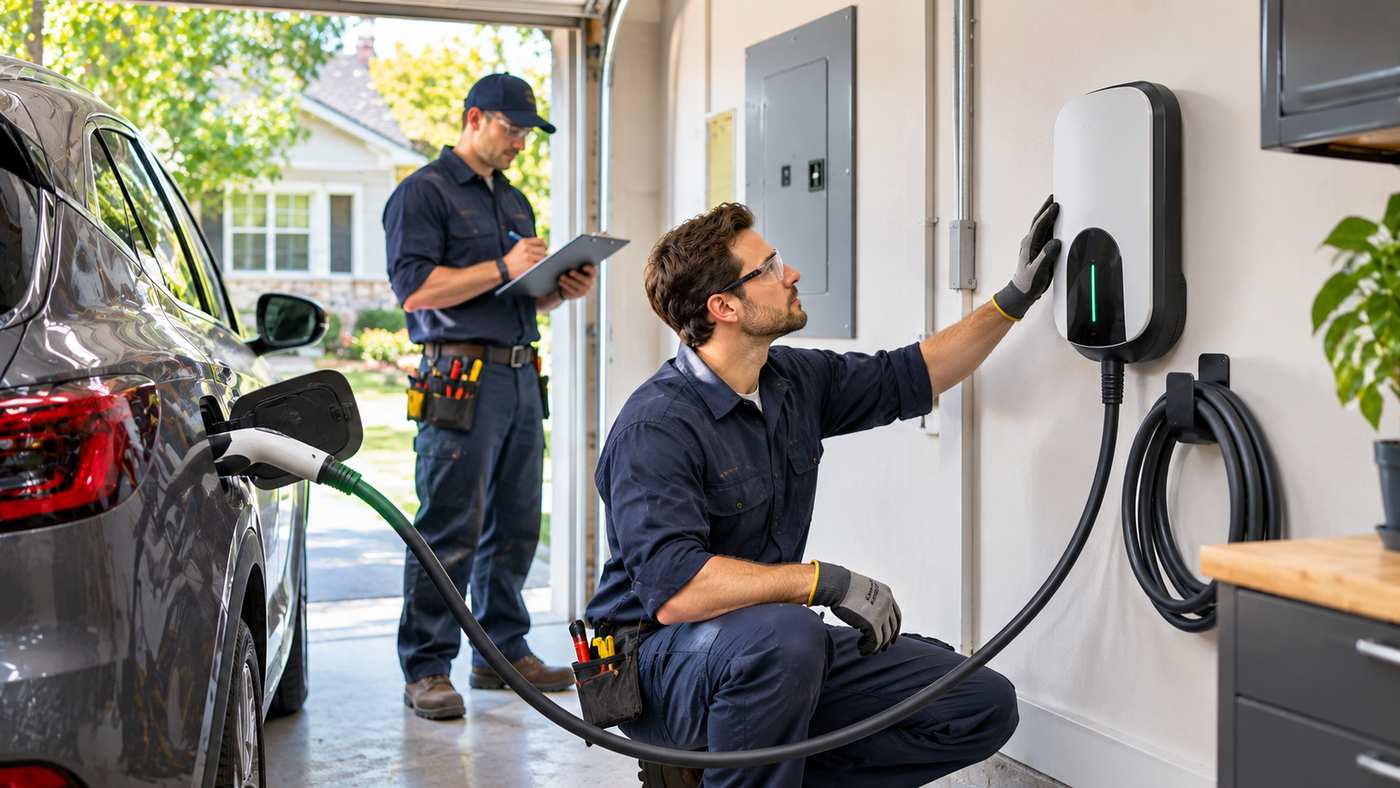
Electric vehicles are changing how Americans approach everyday transportation. As more drivers switch from gasoline-powered cars to electric vehicles, having a dependable charging solution at home has become an important consideration. Instead of relying entirely on public charging stations, homeowners can install dedicated equipment that allows them to recharge their vehicles conveniently overnight.
However, installing a home charging station involves more than mounting a charger on a garage wall. Electrical capacity, circuit requirements, equipment compatibility, installation location, and local building codes all affect the process.
For homeowners searching for ev installation near me, understanding these factors is essential before selecting an electrician or purchasing charging equipment.
Professional installation helps ensure that a charging system operates safely and efficiently while meeting applicable electrical requirements. This guide explains the different types of EV chargers, installation costs, important safety considerations, and how to choose a qualified electrical contractor.
Understanding Home Electric Vehicle Charging
Home EV charging allows vehicle owners to replenish their battery using electricity supplied through their residential electrical system.
Most electric vehicle owners charge at home using either Level 1 or Level 2 equipment.
The best option depends on driving habits, available electrical infrastructure, charging speed requirements, and the vehicle’s capabilities.
Level 1 Charging
Level 1 charging generally uses a standard 120-volt household electrical connection in the United States.
It is typically the slowest residential charging option.
For drivers who travel relatively short distances each day and have sufficient overnight charging time, Level 1 charging may be adequate.
However, charging an electric vehicle with a large battery can take considerably longer through a standard household connection.
Homeowners should confirm that the selected outlet, circuit, and charging equipment are suitable for continuous EV charging.
Level 2 Charging
Level 2 charging commonly uses a 240-volt electrical connection.
This option provides faster charging than Level 1 and is widely used in residential garages, driveways, and designated parking areas.
According to the U.S. Department of Energy, Level 2 charging is a common choice for electric vehicle owners who want to replenish substantial driving range overnight.
A professional electrician evaluates the home’s electrical system and installs the appropriate circuit and charging equipment.
DC Fast Charging
DC fast charging equipment is primarily associated with commercial and public charging facilities.
These systems deliver much higher charging power and usually require electrical infrastructure beyond what a typical residential property can support.
For most homeowners, Level 2 equipment offers a more practical balance between charging speed, convenience, and installation requirements.
Seven Things to Know Before Installing an EV Charger
Preparing for installation can help homeowners avoid unnecessary complications and make better decisions about charging equipment.
1. Check Your Home’s Electrical Capacity
Before installing a Level 2 charger, an electrician should evaluate the capacity of the home’s electrical system.
Residential electrical panels have different ratings, and the available capacity depends on existing electrical loads.
Homes with electric heating, air conditioning, ovens, dryers, and other high-demand appliances may have less spare capacity than expected.
An electrician can perform an electrical load calculation to determine whether the panel can accommodate an EV charging circuit.
Some properties may require an upgrade or an approved energy management solution.
However, not every installation needs a panel replacement.
2. Choose the Right Charging Speed
Faster charging is not automatically necessary for every driver.
Someone who drives 25 miles per day may have very different requirements from a driver who regularly travels 150 miles.
Consider your average daily mileage, available overnight charging hours, and vehicle specifications.
Charging speed also depends on the vehicle’s onboard charging capabilities.
Installing a charger with a higher power rating does not guarantee that every vehicle can accept that charging rate.
A qualified electrician can help identify a practical configuration.
3. Select a Convenient Installation Location
Charging equipment should be installed where the vehicle can be connected comfortably and safely.
Common locations include residential garages, carports, and exterior walls near driveways.
The location should provide adequate cable reach without creating unnecessary trip hazards.
Outdoor equipment must be appropriately rated for environmental exposure.
Homeowners should also consider whether the charging station will remain accessible if they purchase a different electric vehicle.
4. Understand the Electrical Circuit Requirements
Level 2 charging commonly requires a dedicated 240-volt branch circuit.
The appropriate breaker, conductor sizing, and charging current must be determined according to applicable electrical codes and equipment instructions.
EV charging is generally treated as a continuous electrical load, making circuit design particularly important.
Electrical work should not be based on assumptions about existing outlets or available panel space.
Professional assessment is essential for safe installation.
5. Decide Between Plug-In and Hardwired Equipment
Some Level 2 chargers connect through a suitable receptacle, while others are permanently hardwired.
A plug-in model may offer flexibility when equipment needs to be replaced or moved.
A hardwired charger provides a permanent electrical connection and may be appropriate for higher-current applications.
Each configuration has specific requirements.
A licensed electrician should determine whether the selected approach is compatible with local regulations, circuit capacity, and manufacturer specifications.
6. Review Permits and Inspection Requirements
EV charging installation may require an electrical permit and inspection, depending on the jurisdiction.
These requirements help confirm that the work follows applicable safety standards.
Local rules vary, so homeowners should not assume that requirements are identical across cities or states.
Ask the contractor who will obtain the permit, arrange inspections, and provide documentation.
7. Compare Qualified Electrical Contractors
When researching ev installation near me, homeowners should evaluate more than the advertised installation price.
Look for appropriate licensing, insurance, relevant experience, clear estimates, and knowledge of residential EV charging systems.
An experienced contractor should be able to explain electrical capacity, equipment placement, installation requirements, and available options.
Transparent communication is particularly important when significant electrical upgrades may be necessary.
How Professional EV Charger Installation Works
Understanding the installation process helps homeowners prepare for the project.
Initial Electrical Assessment
The electrician begins by reviewing the existing electrical infrastructure.
This includes evaluating the main electrical panel, available circuit capacity, existing loads, and the proposed charger location.
The contractor may also examine the distance between the panel and installation point.
Longer wiring distances can increase material requirements and installation complexity.
Selecting Charging Equipment
The homeowner and electrician identify suitable charging equipment based on the vehicle, electrical system, and intended use.
Important considerations include charging power, connector compatibility, equipment certification, and whether smart features are desired.
Some chargers support scheduled charging, energy monitoring, and smartphone connectivity.
These features may be useful for households with time-of-use electricity pricing.
Circuit Installation
After confirming the design and necessary approvals, the electrician installs the required wiring and protective equipment.
This may involve routing conductors through walls, ceilings, garages, or exterior conduit.
The appropriate installation method depends on local electrical requirements and the property’s construction.
Mounting and Connecting the Charger
Once the circuit is prepared, the charger is mounted in the selected location.
The electrician connects the equipment according to the manufacturer’s instructions and verifies the installation.
Proper mounting height, cable management, and environmental protection contribute to everyday convenience.
Testing and Final Inspection
The installation should be tested before regular use.
The electrician verifies that the charging system operates correctly and addresses any applicable inspection requirements.
Homeowners should receive instructions covering normal operation, basic maintenance, and what to do if the equipment reports a fault.
How Much Does Home EV Charger Installation Cost?
Installation expenses vary substantially from one property to another.
A straightforward project with an accessible electrical panel may cost much less than an installation requiring extensive wiring, underground conduit, or electrical service upgrades.
Main Factors Affecting Cost
Electrical panel capacity: Existing spare capacity can simplify installation, while upgrades or energy management equipment can increase expenses.
Distance from the panel: Longer cable runs generally require additional materials and labor.
Charger type: Equipment pricing varies based on charging capacity, certification, connectivity, and additional features.
Installation location: Outdoor installation, detached garages, and difficult access may require additional work.
Permit requirements: Local permitting and inspection fees vary by jurisdiction.
Wall and surface restoration: Some projects require drywall repairs, concrete work, or other restoration.
Understanding the Total Project Estimate
Homeowners should request a written estimate identifying the included work.
The estimate should explain whether it covers the charging unit, circuit installation, electrical materials, permits, inspection coordination, and any required panel modifications.
It is also important to ask how unexpected conditions will be handled.
A quote that appears inexpensive may exclude necessary electrical upgrades or restoration work.
Comparing the complete scope is more useful than comparing a single advertised number.
Are Utility Rebates Available?
Some electric utilities and local programs offer incentives for qualifying residential EV charging equipment or installation work.
Eligibility depends on location, equipment specifications, program availability, and other conditions.
Federal incentives have also changed over time, so homeowners should verify current rules rather than relying on outdated tax-credit advertisements.
Local utilities and official government resources are useful starting points for checking available programs.
Finding Professional EV Charger Installation Services
Choosing a qualified contractor is one of the most important parts of a residential charging project.
Homeowners searching for ev installation near me can explore EV charger installation services offered by Mister Sparky.
The company provides electrical services for residential properties, including EV charging equipment installation and repair.
Its service information explains that electricians can assist with evaluating home charging requirements, selecting appropriate equipment, and identifying possible manufacturer or local utility incentives.
Service availability and installation requirements can vary by location.
Why Experience Matters
An EV charging station places a sustained electrical demand on a home’s infrastructure.
Correct circuit sizing, protective devices, wiring methods, and equipment installation are essential for safe operation.
A contractor familiar with EV charging can assess the entire electrical system rather than focusing only on the charger.
This helps homeowners identify potential limitations before work begins.
Questions to Ask an EV Installation Company
Before selecting a contractor, ask whether the company has experience installing your preferred charging equipment.
Find out whether the electrical panel requires additional work and whether alternative solutions are available.
Confirm who will obtain permits and coordinate inspections.
Request information about workmanship warranties and manufacturer warranty responsibilities.
It is also helpful to ask whether the company provides maintenance or repair services after installation.
Benefits of Installing a Home EV Charger
A dedicated home charging system can provide several practical advantages.
Convenient Overnight Charging
One of the greatest benefits is the ability to recharge a vehicle while it is parked at home.
For many drivers, overnight charging reduces the need for frequent visits to public charging stations.
A suitable Level 2 system may replenish enough driving range during the night to support normal commuting.
Actual charging time depends on battery capacity, charging power, vehicle limitations, and starting battery level.
Better Control Over Charging Schedules
Certain smart chargers allow owners to schedule charging sessions.
This may be particularly helpful in areas where electricity rates change throughout the day.
Charging during lower-cost periods can reduce energy expenses when the household is eligible for an appropriate electricity tariff.
Greater Everyday Convenience
Home charging can make electric vehicle ownership more predictable.
Drivers can plan charging around normal routines rather than locating available public equipment.
This convenience is particularly valuable for households with consistent parking access.
Potential Long-Term Practical Value
A properly installed EV charging station may improve the functionality of a home for current and future electric vehicle owners.
However, any effect on property resale value depends on local market conditions and buyer preferences.
Homeowners should prioritize practical use and installation quality rather than assuming a guaranteed increase in property value.
Common EV Charger Installation Mistakes
Avoiding preventable errors is important for both safety and performance.
Installing Equipment Without a Load Assessment
A charger should not be installed simply because an electrical panel has an unused breaker position.
Available physical space does not necessarily mean sufficient electrical capacity.
A proper evaluation helps determine whether the home’s electrical system can support the additional load.
Choosing an Unsuitable Charging Location
Poor placement can create inconvenient cable routing or expose equipment to unsuitable conditions.
Consider vehicle parking positions, connector location, cable length, and future accessibility before mounting the charger.
Ignoring Equipment Compatibility
Not every charging connector is compatible with every vehicle without an appropriate adapter.
North American EV charging uses several connector arrangements, including J1772 and NACS.
Homeowners should verify compatibility with their specific vehicle and charging equipment.
Attempting Unsafe DIY Electrical Work
Improper electrical installation can create risks involving overheating, electric shock, and fire.
Work involving new circuits, electrical panels, or hardwired EV charging equipment should be handled by properly qualified professionals.
Overlooking Future Charging Needs
A household may eventually own more than one electric vehicle.
Although installing the highest-capacity equipment is not always necessary, discussing future requirements during the initial assessment can help avoid unnecessary modifications later.
Maintaining a Home EV Charging Station
After installation, basic maintenance and monitoring can help keep charging equipment reliable.
Inspect the charging cable periodically for visible damage.
Keep connectors clean and protected according to manufacturer instructions.
Avoid using equipment with cracked housings, damaged cables, signs of overheating, or unusual operating behavior.
If the charger repeatedly trips a breaker or displays persistent fault warnings, stop using it and contact a qualified electrician or the manufacturer.
Software-connected chargers may also receive updates that improve functionality or address technical issues.
Follow the manufacturer’s maintenance guidance rather than attempting unauthorized electrical repairs.
Frequently Asked Questions
How long does EV charger installation take?
A straightforward residential installation may be completed within a day, but projects requiring panel upgrades, extensive wiring, permits, or additional construction can take longer.
Do I need a licensed electrician to install a Level 2 charger?
Professional installation is strongly recommended, and many jurisdictions require appropriately licensed electrical professionals for the work. Local code and permit requirements should be verified.
Can a Level 2 charger be installed outdoors?
Yes. Many Level 2 chargers are designed for outdoor use. The equipment must have an appropriate environmental rating and be installed according to manufacturer instructions and applicable codes.
Will I need to upgrade my electrical panel?
Not necessarily. An electrician must evaluate existing electrical capacity and household loads. Some homes can support the charger without a panel upgrade, while others may require additional equipment or modifications.
Conclusion
Installing a home electric vehicle charging station can make EV ownership more convenient, predictable, and practical.
However, successful installation requires careful consideration of electrical capacity, charging requirements, equipment compatibility, safety standards, and local permitting rules.
For homeowners searching for ev installation near me, choosing a qualified electrical contractor is an essential step toward a dependable charging solution.
A professional assessment can identify the most suitable charging equipment, determine whether electrical upgrades are necessary, and help ensure that the installation follows applicable requirements.
By planning carefully, comparing complete estimates, and maintaining the charging equipment properly, homeowners can enjoy the benefits of residential EV charging while supporting long-term electrical safety and reliability.
