
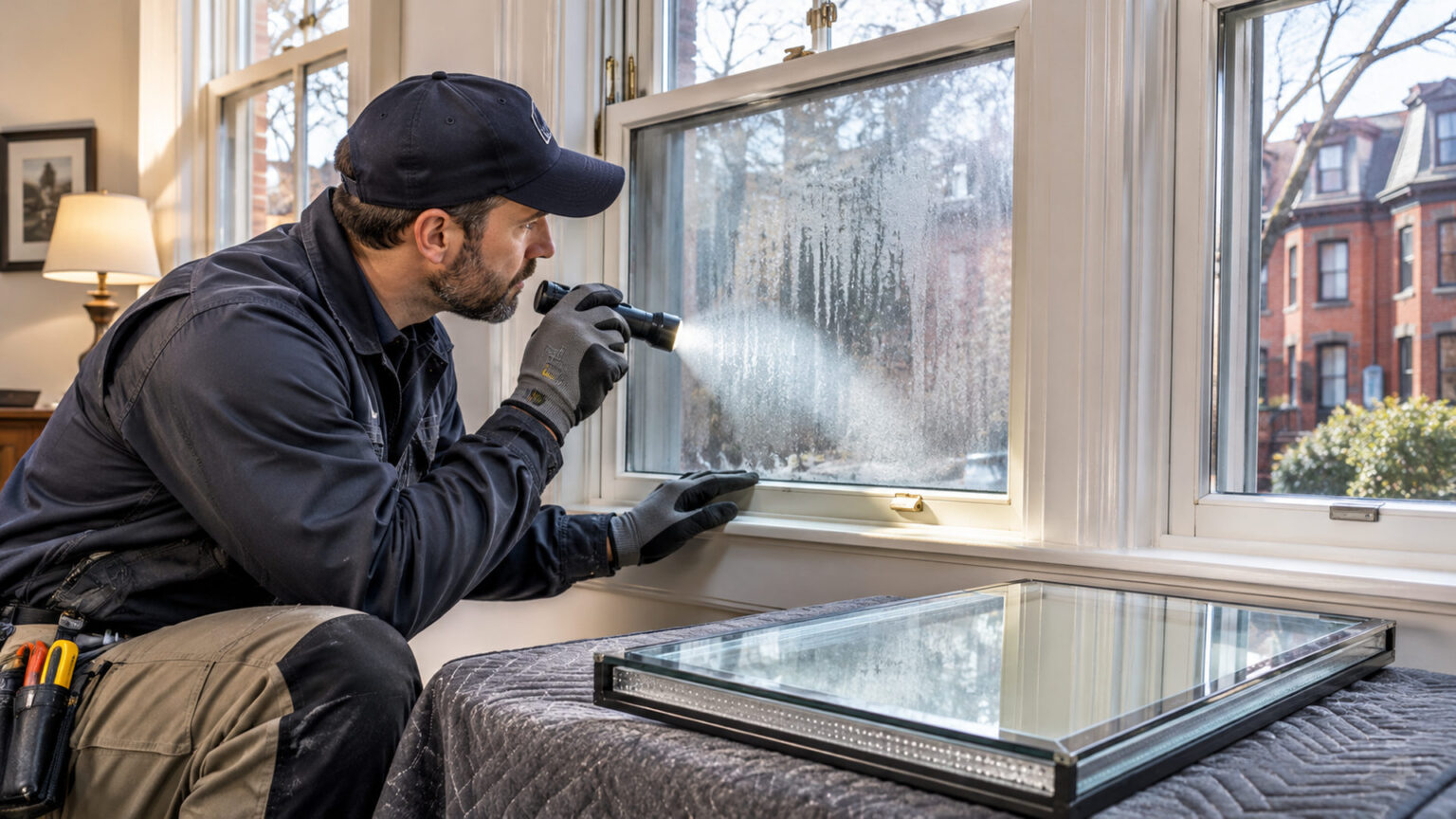
Fogged glass window repair in Boston is an important home maintenance consideration for property owners dealing with cloudy double pane windows, trapped condensation, and deteriorating window seals. Boston’s cold winters, humid summers, and changing outdoor temperatures can make window moisture problems particularly noticeable. Although foggy glass may initially seem like a minor cosmetic issue, condensation trapped between sealed panes can indicate that an insulated glass unit is no longer functioning as designed. Understanding the cause helps homeowners choose an appropriate repair without unnecessarily replacing an entire window.
Many homeowners assume that cloudy windows simply need more cleaning. However, moisture inside an insulated glass assembly cannot be reached with ordinary household cleaning products. In some cases, replacing the sealed glass unit can restore clarity while preserving a structurally sound window frame.
The correct solution depends on the location of the moisture, condition of the surrounding materials, age of the window, and availability of compatible replacement components. This guide explains how to identify window seal failure, compare repair options, understand local service costs, and select qualified professionals for Boston properties.
What Causes Fogged Glass Windows?
Fogged windows develop when moisture collects on or between glass surfaces.
Not every foggy window has a failed seal. Some moisture forms naturally when humid air contacts a colder glass surface.
The first step is identifying exactly where condensation appears.
Condensation on the Interior Glass Surface
Interior condensation occurs when moisture in household air contacts sufficiently cold glass.
During Boston winters, indoor heating creates a temperature difference between the living space and the outdoors.
If the room facing glass surface becomes cold enough, moisture may collect on it.
Common contributing conditions include elevated indoor humidity, limited ventilation, and insufficient insulation around the window.
This type of moisture can normally be wiped away from the interior surface.
Addressing humidity and ventilation may help reduce the problem.
Moisture Between Double Pane Glass
Modern insulated windows frequently contain two or more glass panes separated by a sealed space.
The perimeter seal helps keep moisture outside the insulated cavity.
When the seal deteriorates, humid air can enter the space between the panes.
As temperatures change, condensation may appear inside the glass assembly.
Because the moisture is trapped within the unit, cleaning either exposed glass surface will not remove it.
Persistent internal fogging is a strong indication that the sealed glass assembly requires professional evaluation.
Condensation on Exterior Glass
Exterior condensation can appear when the outside glass surface becomes cooler than surrounding humid air.
This may occur during certain morning weather conditions.
Exterior condensation does not automatically mean that the window is defective.
It may disappear as outdoor temperatures change.
Understanding these three types of condensation prevents homeowners from paying for unnecessary repairs.
Why Window Seal Failure Matters in Boston Homes
Boston experiences seasonal temperature changes that influence window performance and indoor comfort.
Cold weather increases the importance of effective insulation, while humid conditions can make condensation more noticeable.
A failed insulated glass seal can affect more than the appearance of a window.
Loss of Insulating Performance
Many insulated glass units contain air or an insulating gas between their panes.
Some also incorporate special coatings designed to manage heat transfer.
When a seal fails, the original sealed cavity may no longer maintain its intended conditions.
Moisture can enter, and insulating gas may escape.
The resulting change in performance depends on the window’s construction and the extent of the failure.
Not every fogged window produces a noticeable increase in heating costs, but compromised insulation can contribute to unwanted heat transfer.
Reduced Visibility and Natural Light
Fogging can create a cloudy or streaked appearance.
Over time, moisture may leave deposits on inaccessible internal glass surfaces.
This can reduce visual clarity even when the window is otherwise clean.
For properties with attractive outdoor views, persistent cloudiness may become particularly frustrating.
Potential Damage Around the Window
Condensation inside an insulated glass unit does not automatically mean water is entering the surrounding wall.
However, separate problems such as failed exterior seals, damaged flashing, or deteriorating frames can permit water intrusion.
Homeowners should inspect nearby trim and window sills for discoloration, peeling paint, soft wood, or unusual dampness.
These signs may indicate additional moisture problems requiring attention.
5 Smart Professional Tips for Solving Fogged Window Problems
Repairing cloudy windows starts with an accurate diagnosis.
The following recommendations help Boston homeowners distinguish practical repairs from temporary cosmetic treatments and unnecessary replacement work.
1. Identify Where the Moisture Is Located
Before contacting a repair company, examine the affected window under different lighting conditions.
Look closely at the room facing and outdoor surfaces.
If condensation can be wiped away, it is likely forming on an accessible surface rather than inside the sealed unit.
If the cloudy appearance remains between the glass panes, a failed insulated glass seal becomes more likely.
Check for Persistent Haze
Some failed windows develop a milky appearance or internal streaks rather than visible droplets.
These marks may become more noticeable when sunlight passes through the glass.
Photograph the condition during daylight.
Clear photographs can help a technician understand the problem before scheduling an inspection.
Consider Storm Window Condensation
Older Boston homes sometimes have separate storm windows.
Moisture trapped between a storm window and the primary window is different from condensation inside a sealed double pane glass unit.
The causes and appropriate repairs may therefore differ.
An accurate diagnosis should identify which glass surfaces enclose the moisture.
2. Determine Whether the Existing Frame Is Sound
A cloudy insulated glass unit does not necessarily require complete window replacement.
If the frame and sash remain structurally sound, replacing the glass assembly may be possible.
This can preserve existing window components while correcting the failed seal.
Inspect the frame for visible damage and test whether the window opens and closes normally.
Look for loose joints, damaged glazing components, and deterioration around the sill.
When Frame Repairs May Be Necessary
Wooden windows can develop decay when exposed to persistent moisture.
Vinyl frames may become distorted or damaged, while metal frames can experience corrosion or connection problems.
A qualified technician should determine whether these issues are repairable.
If the frame cannot support a replacement insulated glass unit correctly, more extensive work may be necessary.
3. Consider Insulated Glass Unit Replacement
Replacing the insulated glass unit is often a practical solution when the existing frame is in good condition.
An insulated glass unit, commonly called an IGU, consists of multiple glass panes assembled with a spacer and sealed perimeter.
A new unit replaces the failed glass assembly rather than automatically requiring the entire window frame to be removed.
What a Replacement Glass Unit Should Include
The new glass should match the relevant dimensions and performance requirements of the original window.
Important specifications may include glass thickness, overall unit thickness, spacer dimensions, coatings, and safety glass requirements.
Some windows contain argon filled insulated glass units or other energy performance features.
A replacement should be selected with the intended performance and compatibility in mind.
Why Accurate Measurements Matter
Insulated glass units are commonly manufactured to specific dimensions.
Incorrect measurements can prevent proper installation or create sealing and support problems.
A technician should check the existing sash configuration and appropriate glazing clearances before ordering replacement glass.
The new unit must fit securely without placing damaging pressure on the glass.
4. Understand the Limitations of Window Defogging
Some services offer window defogging procedures intended to improve visibility.
Depending on the method, these treatments may involve accessing the insulated cavity, removing moisture, and introducing ventilation or other modifications.
Such procedures may improve the appearance of certain windows.
However, they do not necessarily recreate the original factory sealed construction or restore its insulating gas and specified thermal performance.
Is Defogging a Permanent Repair?
Defogging should not be assumed to provide the same result as installing a new factory sealed insulated glass unit.
Long term outcomes depend on the procedure and condition of the window.
If restoring the original insulating properties is important, ask whether the proposed treatment can achieve that objective.
Request a clear explanation of what the service restores and what limitations remain.
5. Select the Repair Based on Long Term Value
The least expensive initial service is not automatically the best choice.
A temporary visual improvement may be adequate for some situations, while other windows require replacement glass or more extensive repairs.
Consider the expected service life, warranty coverage, energy performance, and condition of surrounding components.
A newer window with one failed insulated glass unit may be a suitable candidate for targeted glass replacement.
An older window with extensive frame deterioration may justify a broader replacement project.
The goal is to solve the actual problem without paying for unnecessary work.
Window Glass Repair vs Complete Window Replacement
Homeowners often struggle to decide whether to repair the glass or replace the entire window.
The best choice depends on the severity and location of the damage.
When Glass Unit Replacement Makes Sense
Replacing the insulated glass unit may be appropriate when the existing frame remains stable and functional.
This approach can retain the original window appearance and reduce the amount of surrounding construction work.
It is particularly worth investigating when only one or two window units show internal fogging.
However, availability of compatible replacement glazing must be confirmed.
When Sash Replacement Is Appropriate
Some manufacturers offer replacement sashes that include a new insulated glass assembly.
A sash is the part of a window that holds the glass and may move within the frame.
Replacing the sash can be useful when the existing sash is damaged or the window design makes separate glass replacement impractical.
Compatibility with the original frame is essential.
When Complete Replacement Is Necessary
Full window replacement may be appropriate when the frame is severely damaged, installation problems affect the surrounding opening, or major performance improvements are desired.
Multiple failures across ageing windows may also justify considering a broader project.
However, window age alone does not prove that complete replacement is necessary.
A professional evaluation should identify which components are defective.
Understanding Fogged Window Repair Costs in Boston
The price of fogged window repair varies depending on the window’s dimensions, design, location, and required work.
A small standard insulated glass unit may involve less material and labour than a large custom shaped window.
Boston properties also vary considerably in architectural design and accessibility.
As a result, homeowners should obtain estimates based on their specific windows rather than relying on a universal advertised price.
Glass Size and Specifications
Larger insulated glass units generally require more material.
Special coatings, unusual shapes, thicker glass, and particular safety glazing specifications may affect manufacturing costs.
Triple pane assemblies can have different material and installation requirements from standard double pane units.
Window Accessibility
A ground floor window with straightforward access may be easier to service than glazing located several floors above street level.
Some projects require specialised access equipment or additional safety arrangements.
These requirements can increase labour costs.
Existing Frame Condition
If the frame is sound, the work may be limited to removing and replacing the failed glass assembly.
Damaged sashes, deteriorated glazing components, or surrounding water damage can increase the scope of repairs.
Labour and Installation Complexity
Window construction differs across properties.
Some glazing systems allow relatively straightforward glass removal, while others require more extensive disassembly.
The contractor should explain the expected work before providing a final quotation.
How to Compare Estimates
Ask each contractor to describe the same scope of work.
Determine whether the quote includes measurement, replacement glass, labour, disposal of old materials, and any necessary adjustments.
Check whether taxes and other applicable charges are included.
A detailed written estimate makes comparisons more meaningful than a single total price.
How to Find a Reliable Window Repair Specialist in Boston
A local window repair professional should be able to identify insulated glass failures and explain appropriate repair options.
Not every general contractor specialises in sealed glass unit replacement.
Choosing someone with relevant experience can improve the quality of diagnosis and installation.
Look for Experience With Insulated Glass
Ask whether the company regularly repairs fogged double pane windows.
A suitable contractor should understand insulated glass measurements, glazing systems, seal failure, and sash compatibility.
Experience with older wooden windows may be particularly useful for some Boston properties.
Check Applicable Credentials and Insurance
Verify the business information and any registration or licensing requirements applicable to the proposed work.
Ask about liability insurance and any other coverage relevant to the project.
Requirements can differ depending on whether the job involves glass replacement, structural alterations, or broader renovation work.
Request a Written Assessment
A professional should explain whether the problem involves internal condensation, frame deterioration, surface moisture, or another condition.
The assessment should distinguish confirmed defects from possible contributing factors.
Avoid agreeing to expensive replacement work solely because a window appears cloudy.
Evaluate Warranty Coverage
Ask whether the replacement glass includes a manufacturer’s warranty.
Find out how installation workmanship is covered and what happens if condensation returns between the new panes.
A warranty should clearly identify the covered components, duration, and exclusions.
Review Communication and Scheduling
A trustworthy contractor should provide understandable explanations and realistic service arrangements.
Find out whether the company handles measurement, ordering, installation, and follow up support.
Clear responsibilities can help prevent confusion if adjustments are needed after installation.
Special Considerations for Historic Boston Properties
Boston contains many older homes and buildings with distinctive window designs.
Some properties feature traditional wooden sashes, decorative trim, or architectural details that homeowners want to preserve.
Window repair decisions may therefore involve appearance as well as energy performance.
Preserving Original Window Features
Where an existing frame remains in good condition, targeted repairs may help retain original architectural elements.
Replacing only damaged glazing components can sometimes reduce alterations to the visible exterior.
However, not every historic window contains a conventional insulated glass unit.
Some use single glazing combined with separate storm windows.
These systems require a different assessment.
Historic District Review
Certain properties located within designated historic districts or subject to landmark protections may have design review or approval requirements for window alterations.
The applicable requirements depend on the property and the proposed work.
Homeowners should verify whether approval is needed before changing visible window details, materials, or configurations.
Routine repairs and major replacements may be treated differently.
Condominium and Multiunit Buildings
Boston condominiums may have additional rules governing window repairs and exterior appearance.
The association or building management may control certain window components or require approval before work begins.
Owners should review applicable building policies before ordering replacement glass.
This can prevent delays and disputes over responsibility for the repair.
What Happens During Professional Fogged Glass Repair?
Understanding the typical process helps homeowners prepare for a service appointment.
The exact steps vary with window construction and repair method.
Initial Inspection
A technician examines the glass, seals, sash, and surrounding frame.
The inspection helps determine whether moisture is trapped inside the insulated unit or forming elsewhere.
The technician may also check for drafts, water damage, and operational problems.
Measuring and Ordering Replacement Glass
When insulated glass replacement is recommended, the existing assembly must be measured accurately.
The contractor identifies the appropriate replacement specifications and confirms compatibility.
Custom insulated glass may need to be manufactured before installation.
Removing the Failed Assembly
The installer carefully removes the glazing components that secure the failed unit.
The removal method depends on the window design.
Glass handling requires suitable protective equipment and care because damaged or unsupported glass can cause serious injury.
Installing the Replacement Unit
The new insulated glass assembly is positioned using the appropriate glazing supports and sealing materials.
The installer checks that the unit is secure and properly aligned.
Any removed glazing components are then reinstalled or replaced as needed.
Final Inspection
The finished window should be checked for correct operation, secure glazing, and visible installation defects.
Homeowners should also receive applicable product information and care instructions.
A completed repair should address the diagnosed problem rather than simply conceal visible symptoms.
Can Homeowners Repair Fogged Double Pane Windows Themselves?
Some window maintenance tasks are suitable for homeowners.
Cleaning accessible glass, checking indoor humidity, and inspecting visible weatherstripping can be straightforward.
However, opening or modifying a sealed insulated glass unit is a different task.
Why DIY Defogging Can Be Risky
Some online methods suggest drilling holes through glass to release trapped moisture.
Drilling can damage the glass, compromise the unit further, and create injury risks.
Tempered glass may shatter when drilled or otherwise damaged.
Removing moisture also does not necessarily restore the original insulated glass seal.
For these reasons, drilling into an installed insulated glass unit is not a recommended general household repair.
When Professional Help Is Better
Professional assistance is appropriate when the glass requires removal, the window is difficult to access, or safety glazing specifications must be maintained.
Older painted frames may also require special precautions if repair work disturbs existing coatings.
A qualified contractor can evaluate these conditions before work begins.
Preventing Future Window Condensation Problems
No maintenance routine can guarantee that an insulated glass seal will never fail.
However, good window care can help preserve surrounding components and reduce avoidable moisture problems.
Manage Indoor Humidity
Indoor humidity affects condensation on room facing glass surfaces.
Use suitable ventilation when cooking, bathing, or completing other moisture producing activities.
Check for plumbing leaks and other sources of excessive indoor moisture.
A hygrometer can help homeowners monitor humidity levels.
Maintain Window Frames and Drainage
Keep accessible drainage openings clear where the window design includes them.
Inspect exterior sealant and surrounding trim for deterioration.
Address damaged paint, exposed wood, or other signs of water intrusion promptly.
These measures protect the window assembly and surrounding materials, although they cannot restore an already failed insulated glass seal.
Operate Windows Correctly
Avoid forcing stuck windows or repeatedly slamming sashes.
Damaged hardware and distorted frames can contribute to operational problems.
Regularly inspect locks, hinges, balances, and other moving components.
Follow Manufacturer Cleaning Instructions
Use suitable cleaning products and soft materials on glass and frames.
Avoid abrasive methods that can damage protective coatings or finishes.
Do not apply excessive pressure to decorative glazing components.
Proper maintenance helps preserve the overall window assembly.
When Should Fogged Window Repairs Be Prioritised?
Not every cloudy window represents an emergency.
Persistent condensation inside a sealed glass unit can often be evaluated through a scheduled service appointment.
However, some conditions require more urgent attention.
Broken or Unstable Glass
Cracked, loose, or unstable glazing can create immediate safety concerns.
Keep people away from the affected area and arrange appropriate professional assistance.
Active Water Leakage
Water entering around a window during rainfall may indicate a separate problem involving seals, flashing, or surrounding construction.
Prompt investigation can help limit additional damage.
Severe Frame Deterioration
Soft wood, loose connections, and significant frame damage can affect the stability and operation of the window.
These conditions should not be ignored while focusing only on glass clarity.
Multiple Failed Windows
Several fogged windows may indicate ageing insulated glass assemblies or common installation and product issues.
A coordinated inspection can help determine whether individual repairs or a broader replacement strategy makes more sense.
Improving Window Efficiency After Repair
Homeowners considering replacement glazing may also want to evaluate thermal performance.
Different glass assemblies offer different insulation and solar control characteristics.
Understanding Low Emissivity Glass
Low emissivity glass uses a special coating that helps manage radiant heat transfer.
The appropriate coating and glazing configuration depend on climate, window orientation, and performance goals.
Double Pane vs Triple Pane Glass
Triple pane windows contain an additional glass layer and insulating space.
They may provide improved thermal performance in suitable configurations.
However, an existing frame must be compatible with the weight and thickness of any replacement glass assembly.
Triple pane glazing cannot simply be substituted into every double pane window.
Why Installation Quality Matters
A high performance insulated glass unit still requires correct installation.
Improper support, sealing, or alignment can undermine the finished result.
Homeowners should consider both product specifications and workmanship when evaluating a repair or upgrade.
Frequently Asked Questions
1. What causes fogged glass windows in Boston homes?
Moisture trapped between double pane glass usually indicates insulated glass seal failure. Interior or exterior surface condensation can instead result from humidity and temperature differences.
2. Can fogged double pane glass be repaired without replacing the entire window?
Yes. When the frame and sash are suitable, replacing only the failed insulated glass unit may restore clarity without complete window replacement.
3. How much does fogged glass window repair in Boston cost?
Costs depend on glass dimensions, glazing specifications, accessibility, frame condition, and labour requirements. A local inspection and written quotation provide a more reliable estimate.
4. Is window defogging as effective as replacing sealed glass?
Defogging may improve visibility, but it does not necessarily restore the original factory seal or thermal performance. A new insulated glass unit offers a different repair outcome.
5. How long does insulated glass replacement take?
Installation time varies according to window size, construction, access, and repair complexity. Custom glass manufacturing or additional frame work may extend the overall project.
6. Should I replace every window if one develops condensation?
Not necessarily. A single failed insulated glass unit may be repaired independently when the surrounding window remains functional and structurally sound.
Conclusion
Fogged glass window repair in Boston begins with identifying whether moisture is trapped inside the insulated glass or forming on an accessible surface. For windows with sound frames, targeted glass unit replacement can often restore clarity without requiring a complete window renovation. Comparing repair methods, verifying contractor qualifications, and reviewing written estimates helps homeowners make informed financial decisions. With accurate diagnosis, appropriate materials, and professional installation, Boston property owners can address cloudy glass while preserving window function and long term comfort.
