
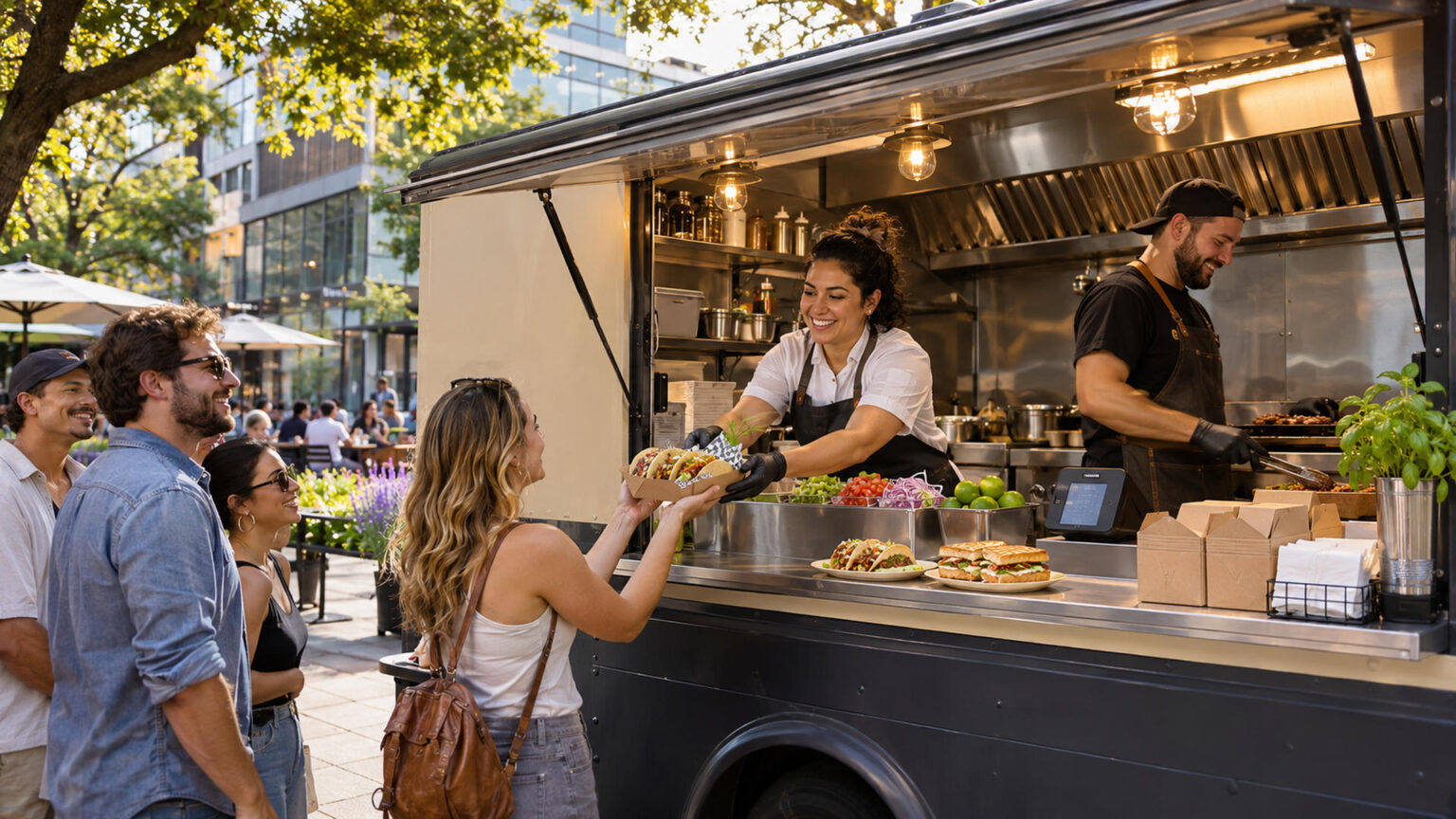
A food truck company can turn a focused food concept into a mobile business that serves customers at workplaces, community events, markets, and private celebrations. The appeal is clear: operators can reach different audiences without opening a conventional dining room. Yet a successful launch takes more than a vehicle and a popular recipe. Permits, kitchen layout, safe food handling, pricing, scheduling, and consistent customer service all affect whether the operation can support itself. This guide explains how to plan a mobile food business, manage the daily work, and build a brand people want to visit again.
The best approach is to test demand before committing major funds, build a menu that your equipment can execute reliably, and understand the rules wherever you intend to sell. The same principles can also help event organisers compare mobile catering businesses more confidently.
What Does a Food Truck Company Actually Do?
A food truck company prepares or serves food from a mobile unit. Some operators sell directly to walk up customers, while others focus on festivals, office lunches, weddings, or booked catering. A business may operate one vehicle or manage several trucks with shared purchasing, staffing, and administrative support.
Not every company connected with food trucks serves meals. Some businesses manufacture, convert, rent, or repair mobile kitchens. That distinction matters when searching for a supplier. A catering operator handles food service; a truck builder supplies the vehicle or equipment. Ask which service a company provides before requesting a quote.
How Mobile Food Service Differs From a Restaurant
A truck can change service locations, but it has less kitchen space, storage, and preparation capacity than many restaurants. Weather, parking access, fuel, vehicle maintenance, and travel time can influence each service day. The operational plan must account for these limitations rather than assume that mobility automatically reduces every expense.
13 Essential Steps to Build a Strong Food Truck Company
1. Identify Your Customers Before Choosing a Concept
Start with the people you want to serve. Office workers might value fast lunches, while evening markets may attract customers looking for memorable snacks or shareable meals. A wedding audience may need coordinated service times and dietary options. Talk to potential customers and observe how they buy food in the locations you are considering.
Choose a clear promise, such as freshly prepared rice bowls, regional sandwiches, or compact dessert menus. A specific concept helps you design equipment, purchase ingredients, and communicate what makes your food worth trying. Avoid creating an oversized menu merely to appeal to everyone.
2. Research Demand and Competing Vendors
Visit possible vending areas at the times you would actually operate. Notice customer traffic, nearby businesses, competing menus, average waiting times, and the practical space available for a truck. High pedestrian traffic does not automatically mean permission to park or sell there.
Compare competitors on portion sizes, service speed, product consistency, and customer experience rather than copying their dishes. Look for an unmet need that your kitchen can realistically deliver. Test the concept through small approved events or pop ups when feasible before committing to a permanent schedule.
3. Write a Business Plan With Realistic Assumptions
Your plan should describe the audience, menu, permitted locations, startup budget, daily operating model, and sales channels. Estimate both quiet days and busy days. Include a reserve for repairs, unexpected closures, and lower than expected demand.
Main Startup Cost Categories
Account for a truck or trailer, conversion work, cooking equipment, refrigeration, ventilation, initial inventory, permits, insurance, branding, payment tools, parking, and any required kitchen facilities. Costs differ substantially by vehicle and location, so use actual supplier quotations rather than a universal online estimate.
A lender or partner will also want to know how cash enters the business, when bills fall due, and who is responsible for operations.
4. Design a Menu for Speed and Quality
Build the menu around a small number of dishes that share ingredients and preparation steps. This reduces storage needs, food waste, and training complexity. Test each dish under realistic conditions, including peak demand when several orders arrive together.
Record preparation times, portion weights, ingredient costs, and holding requirements. If a dish becomes difficult to produce safely or consistently during a rush, simplify it before launch. Offer dietary information accurately, and avoid promising that food is free from an allergen unless your processes can support that claim.
5. Confirm Licenses and Vending Permissions Early
Regulations vary by city, state, and the type of food prepared. Before purchasing or converting a truck, ask the relevant local agencies about business registration, mobile food permits, food safety inspections, vending locations, fire requirements, and vehicle rules. Some operations must use an approved commissary or servicing location; others have different arrangements.
A permit to prepare food does not necessarily grant permission to park and sell anywhere. Event organisers may request separate documentation. Confirm the requirements for every jurisdiction where you intend to operate and budget for renewals and inspections.
6. Choose a Truck That Fits the Workflow
Select the vehicle after defining your menu and production process. The layout should give workers practical access to refrigeration, handwashing facilities, cooking stations, dry storage, service windows, and safe movement paths. Requirements for sinks, ventilation, water systems, and fire protection depend on the operation and local rules.
Inspect a used vehicle for mechanical condition, electrical capacity, water systems, and previous modifications. Ask for service records and obtain a qualified inspection before buying. A low purchase price can become expensive if the vehicle requires extensive repairs or cannot pass the intended approval process.
7. Set Up Suppliers and Preparation Facilities
Reliable purchasing is as important as a good recipe. Identify suppliers for core ingredients, packaging, cleaning products, and replacement equipment. Compare delivery schedules, minimum order quantities, storage needs, and availability during busy periods.
If the business requires an approved kitchen or commissary, establish the agreement before finalising operations. Plan how food will be prepared, loaded, transported, stored, and returned safely. Keep purchasing records and stock counts so shortages do not force last minute menu changes.
8. Build Food Safety Into Every Shift
Create clear procedures for handwashing, cleaning, temperature control, separation of raw and ready to eat ingredients, waste disposal, and employee illness reporting. Train every worker to follow the procedures consistently. Use appropriate equipment to monitor temperatures where required.
Manage Allergens and Cross Contact
Know which ingredients contain common allergens, keep recipes current, and explain what the kitchen can and cannot prevent. In a compact workspace, shared utensils and surfaces may create cross contact risks. Reliable communication is better than making unsupported safety promises. Review the relevant food safety requirements with the authority responsible for the operation.
9. Price Food Using Complete Unit Costs
Calculate the cost of each portion, including ingredients, packaging, and expected waste. Then consider labour, payment processing, fuel, rent for approved facilities, insurance, repairs, and taxes. A price that covers ingredients alone may still lose money.
For an illustrative example, a dish sold for $12 with $4 in food and packaging leaves $8 before labour and every other operating expense. That remaining amount is not profit. Review actual sales and costs regularly, and adjust recipes, portions, or prices when necessary rather than guessing at margins.
10. Plan Locations Around Access and Demand
A reliable route depends on legal vending access, customer demand, travel time, and practical service conditions. Check whether a proposed site has room for safe customer lines, deliveries, waste handling, and vehicle entry. Consider weather exposure and the effect of nearby events.
Build a weekly schedule that customers can recognise, but keep flexibility for booked events and maintenance. Track the revenue and operating costs of each location. A busy site may be less attractive once fees, travel, staffing, and lost preparation time are included.
11. Create a Recognisable Brand and Online Presence
Use a memorable business name, consistent food photography, a readable menu, and accurate location updates. Your website or business profile should make it easy to find current hours, service areas, booking details, and contact information. Keep information consistent across the channels you maintain.
Show real dishes rather than misleading images. Answer common questions about ingredients, catering capacity, payment options, and availability. Clear, specific information also helps people discover your services through conventional search and AI powered search experiences.
12. Train Staff for an Efficient Service Line
Define who receives orders, prepares food, handles payments, restocks supplies, and manages sanitation during service. In a small kitchen, overlapping tasks can create congestion, so test the workflow before a large event. Prepare an opening checklist and a closing checklist.
Teach workers how to respond to delayed orders, incorrect items, allergy questions, and equipment faults. Maintain accurate schedules and follow applicable employment rules. Friendly service matters, but dependable preparation and safe operations must come first.
13. Build Catering Revenue and Track Performance
Private events can provide an additional sales channel, although bookings require careful planning. Confirm guest numbers, service duration, menu choices, access, power needs, cancellation terms, and who provides waste facilities. A written agreement reduces misunderstandings.
Track sales by location, average order value, food waste, labour hours, and repeat bookings. Review these measures together rather than celebrating revenue alone. Expand to another truck or new location only when the existing operation shows consistent demand and the team can maintain quality.
How to Calculate Whether the Business Can Support Itself
A food truck company needs enough contribution from sales to cover its fixed expenses. Contribution per order is the selling price minus the variable costs directly linked to that order. Fixed costs might include insurance, certain loan payments, software subscriptions, and facility charges, although individual cost classifications vary.
Suppose a typical order sells for $15 and its ingredients, packaging, and processing costs total $6. The remaining $9 contributes toward wages and other operating costs. If the business has $4,500 in monthly costs not included in that $6, it would need 500 such orders just to cover those costs. This simplified example excludes taxes, financing complications, and changes in the sales mix. Use your actual records when estimating break even volume.
Cash Flow Is Different From Sales
A busy weekend does not guarantee money will be available when an insurance payment or repair bill arrives. Keep separate records for deposits, unpaid invoices, payroll, taxes, and planned purchases. Establish a realistic reserve so a short closure does not immediately threaten the business.
How Customers Can Choose a Food Truck Company for Events
People searching for a food truck company may want catering rather than advice on launching a business. For a wedding, office party, or community event, begin by confirming that the operator serves your location and has permission to operate at the venue.
Ask for a sample menu, expected serving capacity, an itemised quote, and any minimum spending requirement. Confirm how dietary requests are handled and whether the price includes staffing, travel, setup, service time, and cleanup. Review the cancellation policy and the process for managing poor weather or vehicle problems.
Questions Worth Asking Before Booking
- How many guests can the truck serve during the planned meal period?
- What space, power, and site access does the vehicle require?
- Which permits and insurance documents will the venue need?
- Is there a clear backup plan if the truck cannot attend?
Common Mistakes That Hold Mobile Food Businesses Back
Buying a truck before checking permits is a costly risk. So is opening with a menu too large for the available equipment. Other frequent problems include unreliable schedules, unclear pricing, untrained staff, and poor inventory control.
Resist the temptation to chase every popular event. A booking that requires excessive travel or staffing may generate impressive sales but little remaining cash. Likewise, discounting heavily can increase order volume without improving financial results. Test changes on a manageable scale and measure what actually happens.
How to Grow Without Losing Food Quality
Growth should begin with a reliable core operation. Document recipes, purchasing standards, sanitation procedures, and customer service expectations before introducing more locations. Develop staff who can handle routine decisions without depending on the owner for every task.
New opportunities might include corporate lunches, recurring community events, seasonal menus, or collaborations with permitted venues. Each additional activity adds planning and compliance work. Choose opportunities that fit existing equipment and staffing rather than assuming more bookings always mean better performance.
Plan for Equipment Failures and Service Disruptions
A mobile kitchen depends on a vehicle and several pieces of equipment working together. Build a maintenance calendar for the engine, tires, refrigeration, cooking appliances, ventilation, and power supply. Record inspection dates and keep contact details for technicians who can service the specific equipment you use. Unexpected repairs can interrupt both street sales and promised catering bookings.
Check Power and Water Before Every Service
Confirm that electrical equipment can operate safely with the available supply. Never improvise connections or overload a generator. Check fresh water capacity, wastewater arrangements, and required handwashing facilities before leaving the base. A practical departure checklist should also cover fuel, utensils, food supplies, temperature monitoring equipment, and payment connectivity.
Prepare a Weather and Cancellation Policy
Rain, high winds, and extreme temperatures can change customer traffic or make a site unsuitable for service. Decide in advance who evaluates conditions and notifies customers or event organisers. For booked catering, document the circumstances under which service may be moved, delayed, or cancelled. A clear contingency plan protects customer trust even when circumstances prevent normal operations.
Frequently Asked Questions
1. What is a food truck company?
A food truck company is a business that prepares or serves food from a mobile unit. Some also provide private event catering, while separate suppliers build or rent the vehicles.
2. How much does it cost to start a food truck company?
Startup cost depends on the vehicle, equipment, local permits, insurance, kitchen facilities, and working capital. Obtain local quotes and include a reserve for unexpected expenses.
3. What permits does a mobile food business need?
Requirements vary by location and menu. They may include food service approvals, inspections, business registration, vending permission, fire checks, and vehicle documentation.
4. Can a food truck company cater a wedding or corporate event?
Yes, if it offers catering and can meet the venue’s requirements. Confirm guest capacity, service timing, menu options, permits, pricing, and contingency plans in writing.
5. How can a food truck attract repeat customers?
Consistent food quality, reliable location updates, fair pricing, quick service, and courteous handling of problems give customers practical reasons to return.
6. Is a food truck company profitable?
It can be, but profitability is not guaranteed. Results depend on sales volume, menu contribution, labour, operating costs, location access, and disciplined cash management.
Conclusion
Building a food truck company requires a clear concept, realistic financial planning, compliant operations, and food people genuinely enjoy. The strongest businesses treat permits, food safety, equipment, and customer experience as connected parts of one system. Tracking costs and learning from each service day makes it easier to improve without expanding too quickly. With consistent execution and careful decisions, a mobile food business can develop a loyal audience and more predictable opportunities for growth.
