
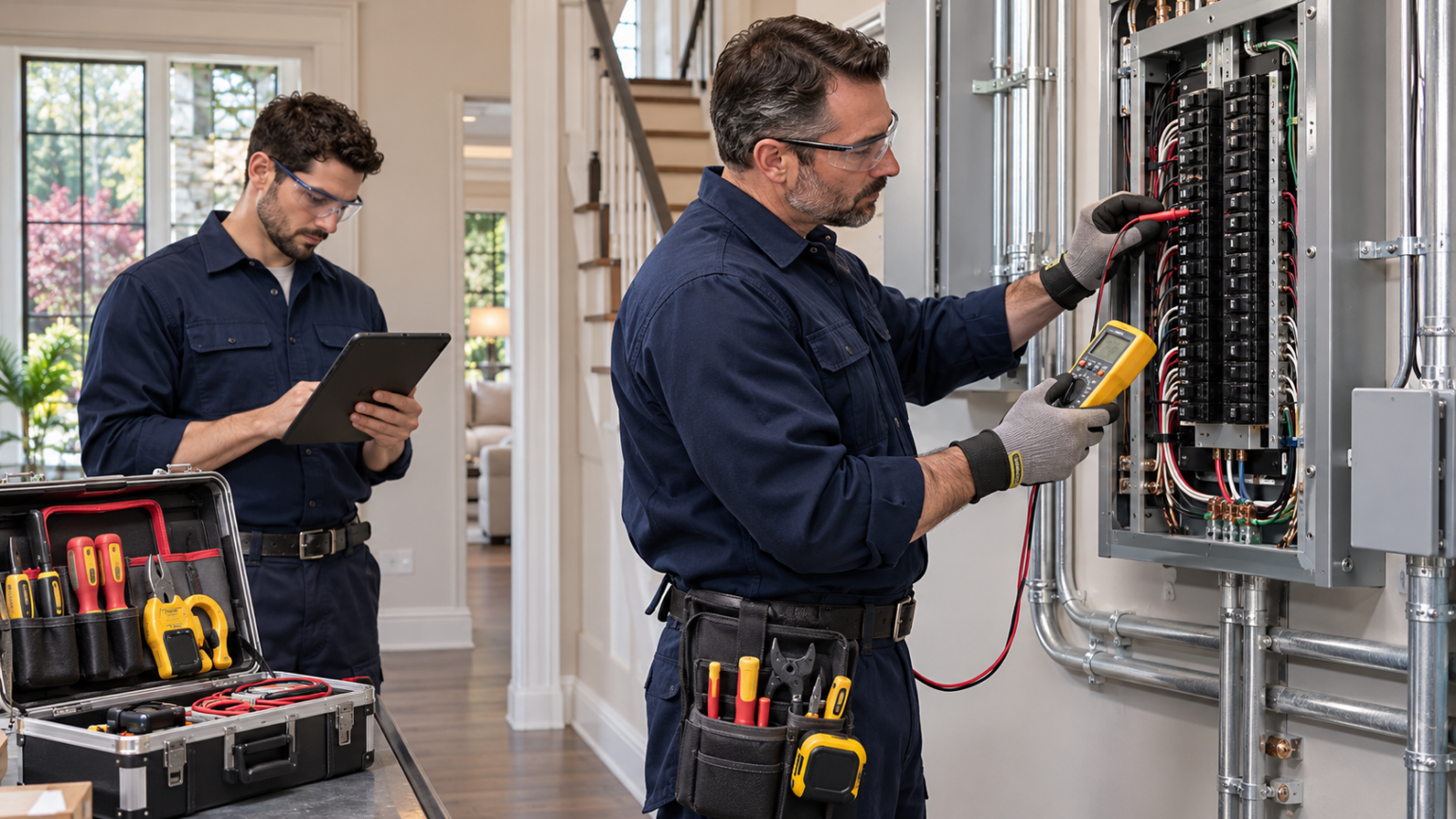
A dependable electrical system is essential for everyday comfort, property safety, and modern household technology. From kitchen appliances and heating equipment to electric vehicle chargers and backup generators, homes increasingly depend on properly designed electrical infrastructure. However, ageing wiring, overloaded circuits, and unsuitable electrical panels can create serious concerns. Grounded Electric NJ provides residential and commercial electrical services across Northern New Jersey, helping property owners address electrical problems and plan improvements that suit their buildings. Understanding the available services and the importance of licensed installation can help homeowners make safer, more informed decisions.
Electrical work requires technical knowledge, careful planning, and compliance with applicable regulations. Even a seemingly minor problem may indicate a larger issue within a property’s electrical distribution system.
Therefore, choosing a qualified contractor involves more than comparing prices. Homeowners should consider licensing, experience, project planning, communication, and long term electrical safety.
This guide explains the services associated with Grounded Electric, common warning signs, electrical upgrades, and important considerations when hiring an electrician in New Jersey.
What Is Grounded Electric NJ?
Grounded Electric is an electrical contracting company based in Bergenfield, New Jersey. According to its official website, the business provides residential and commercial electrical services throughout Bergen County and surrounding areas of Northern New Jersey.
The company lists electrical contractor license number 16590 and identifies Robert Mulholland as its head electrician and license holder. It also identifies Barret Abramow as a project manager and co-owner.
Its advertised services include electrical repairs, panel upgrades, EV charger installation, backup generators, lighting, electrical inspections, and wiring for construction and renovation projects.
The business lists service coverage across Bergen County, with additional service areas in nearby northern New Jersey communities.
Property owners should confirm current service availability and independently verify contractor credentials through the New Jersey Division of Consumer Affairs before hiring.
Residential Electrical Services
Residential electrical work involves maintaining and improving the systems that distribute electricity throughout a home.
Services may include repairing faulty outlets, inspecting wiring, installing lighting, upgrading electrical panels, and preparing circuits for new appliances.
Moreover, homeowners planning renovations may need additional electrical capacity or changes to existing circuits.
A professional assessment helps determine which improvements are necessary.
Commercial Electrical Services
Commercial properties have different electrical requirements from residential buildings.
Offices, retail businesses, restaurants, and other workplaces may need specialised lighting, dedicated equipment circuits, and suitable electrical distribution systems.
Consequently, commercial projects require careful attention to equipment demands, building use, and applicable electrical requirements.
Why Electrical Safety Matters in New Jersey Homes
Electrical systems can become unsuitable as household requirements change.
An older house may have been designed for fewer appliances and different patterns of electricity consumption.
Today, homeowners may use powerful kitchen equipment, home offices, electric heating systems, and vehicle charging stations.
Although an older system is not automatically unsafe, its condition and capacity deserve attention when major electrical changes are planned.
The Electrical Safety Foundation International identifies flickering lights, warm outlets, unusual buzzing, burning smells, and repeated breaker trips as possible warning signs.
These symptoms should not be ignored.
Furthermore, electrical safety involves more than maintaining reliable power. Appropriate grounding, protective devices, sound connections, and correctly sized circuits help reduce risks associated with electrical faults.
7 Essential Tips for Safer Electrical Systems
1. Recognise Electrical Warning Signs Early
Electrical problems sometimes develop gradually.
For example, a homeowner may notice that lights occasionally dim when an appliance starts. Another household may experience repeated circuit breaker trips.
Such symptoms do not always have the same cause.
However, they may indicate problems involving circuit loading, loose connections, damaged equipment, or other electrical conditions.
Warning Signs That Require Attention
Common signs include:
- Repeated circuit breaker trips
- Flickering or dimming lights
- Warm or discoloured outlets
- Buzzing sounds near switches
- Burning smells from electrical equipment
- Damaged receptacles or exposed wiring
- Mild shocks when touching appliances
These problems should be evaluated by a qualified electrician.
If smoke, arcing, or an active electrical fire is present, move to safety and contact emergency services.
Do not attempt to inspect exposed live components or repeatedly reset a breaker that continues to trip.
Early professional diagnosis can help identify the cause before additional equipment is affected.
2. Verify Electrical Licensing and Permit Requirements
Electrical contracting is regulated in New Jersey.
The state’s Board of Examiners of Electrical Contractors licenses electrical contractors, registers qualified journeyman electricians, and regulates professional electrical contracting activities.
The Board also requires electrical contracting businesses to hold appropriate business permits.
Therefore, homeowners should verify credentials rather than accepting advertising claims alone.
The official New Jersey license verification system allows consumers to search relevant professional and business records.
Understanding Electrical Permits
Many electrical installations and alterations require permits and inspections under the New Jersey Uniform Construction Code.
Requirements depend on the type of work and the applicable local procedures.
For example, a major panel replacement or installation of new circuits may require approvals that are not applicable to certain routine maintenance tasks.
Before work begins, ask the contractor:
- Does this project require a permit?
- Who will submit the application?
- Are permit fees included in the estimate?
- Will an inspection be necessary?
- Who will coordinate final approval?
A properly documented project helps homeowners maintain accurate records for future repairs, renovations, and property transactions.
3. Evaluate Electrical Panel Capacity Before Upgrading
The electrical panel distributes electricity to circuits throughout the property.
However, adding major electrical equipment can increase demand on the existing system.
For example, a homeowner installing a new electric vehicle charger may need an evaluation of the available electrical capacity.
Similarly, a kitchen renovation with additional appliances may require changes to branch circuits.
An electrician can assess the panel, evaluate its condition, and calculate the electrical load.
When Is a Panel Upgrade Necessary?
A panel upgrade may be appropriate when equipment is damaged, available capacity is insufficient, or the existing configuration cannot safely support planned improvements.
However, not every older electrical panel requires replacement.
Grounded Electric’s published EV charger guidance explains that a load calculation should come before recommending a panel upgrade.
In some cases, an existing system may have sufficient capacity.
Other situations may allow suitable load management equipment, subject to code requirements and professional assessment.
Therefore, homeowners should request an explanation of the technical reason for any proposed replacement.
The goal is an electrical system that safely supports actual demand, not simply a larger panel.
4. Plan EV Charger Installation Around Electrical Capacity
Electric vehicles have introduced additional electrical planning requirements for many households.
Home charging can be convenient because it allows drivers to recharge their vehicles while parked.
However, installing a charging station requires more than choosing a location on the garage wall.
A qualified electrician should evaluate the available electrical supply, charging equipment, wiring route, and mounting location.
Understanding Level 2 Charging
Level 2 charging equipment typically uses a 240 volt electrical supply in residential applications.
It generally provides faster charging than a standard household outlet, although actual charging performance depends on the vehicle and equipment.
Installation requirements vary according to charger specifications and the property’s electrical system.
Grounded Electric advertises residential and commercial EV charging installation in Bergen County and surrounding communities.
Its published process includes an electrical capacity assessment, permit coordination, installation, and testing.
Additionally, homeowners should consider cable length, parking arrangements, equipment weather ratings, and future vehicle needs.
Where utility incentives may be available, confirm current eligibility with the program administrator before purchasing equipment.
Incentive availability and approved product lists can change.
5. Consider Backup Power for Essential Household Needs
Storms, utility equipment failures, and other events can interrupt electricity.
As a result, some homeowners consider standby generators to support essential household functions during outages.
A professionally installed standby generator can provide an alternative power source for selected circuits or larger electrical loads, depending on its capacity and configuration.
However, generator selection requires careful planning.
Choosing the Appropriate Generator Size
Generator capacity should reflect the equipment that must operate during an outage.
Essential loads might include refrigeration, selected lighting, heating equipment, or other important electrical devices.
The total demand depends on equipment ratings and starting requirements.
Therefore, an electrician should assess the intended loads before recommending a system.
Grounded Electric advertises standby generator installation and maintenance, including work involving Generac equipment.
Why Proper Connection Matters
Backup generators must be connected using appropriate equipment and installation methods.
A properly designed transfer arrangement helps prevent unsafe interactions between generator power and utility supply.
Never connect a portable generator directly to a household receptacle to energise the home’s wiring.
Furthermore, fuel powered generators introduce carbon monoxide hazards.
Portable generators must be operated outdoors and away from doors, windows, and other openings, according to manufacturer and official safety guidance.
Professional installation and ongoing maintenance are essential parts of reliable standby power planning.
6. Improve Protection Through Inspections and Suitable Devices
Electrical safety depends on both installation quality and protective equipment.
Different safety devices perform different functions.
For example, ground fault circuit interrupters help protect people from certain electrical shock hazards.
Arc fault circuit interrupters are designed to detect particular dangerous arcing conditions that can contribute to electrical fires.
These devices are not interchangeable.
Understanding GFCI and AFCI Protection
GFCI protection is commonly associated with areas where contact with electricity and grounded surfaces presents additional risk.
AFCI protection addresses different hazards involving electrical arcing.
The specific locations and circuit requirements depend on the applicable electrical code.
A qualified electrician can evaluate where protective devices are required or recommended.
The Value of Electrical Inspections
Electrical inspections may help identify damaged components, unsuitable connections, and other conditions requiring attention.
They can be particularly useful before major renovations or the addition of significant electrical loads.
However, an inspection cannot guarantee that every future electrical problem will be prevented.
It provides information about the condition of the installation at the time of assessment.
Homeowners should request written findings and explanations of recommended corrective work.
7. Request Clear Estimates and a Practical Project Plan
Electrical work should begin with a clear understanding of the proposed services.
A written estimate helps homeowners compare options and identify responsibilities.
For example, an electrical panel replacement may involve equipment, labour, permits, utility coordination, and inspection arrangements.
If these elements are not explained, comparing quotations becomes difficult.
What Should an Electrical Estimate Include?
An estimate should identify:
- Description of the proposed work
- Major equipment and materials
- Labour and installation charges
- Relevant permit responsibilities
- Expected project schedule
- Any necessary electrical shutdown
- Warranty or workmanship provisions
- Payment terms and exclusions
Grounded Electric advertises onsite estimates and written pricing for several of its services.
Nevertheless, customers should confirm the terms for their particular project.
Ask whether an initial diagnosis is included, which conditions could change the price, and how additional work would be approved.
Clear communication helps prevent misunderstandings while allowing property owners to make informed financial decisions.
Electrical Services Available for Northern New Jersey Properties
Beyond urgent repairs, professional electricians support renovations, equipment installations, and planned improvements.
Home Wiring and Renovations
A renovation may change how electricity is distributed throughout a property.
For example, converting a basement into living space may require additional lighting, receptacles, and circuits.
Similarly, a kitchen renovation may involve new appliances with specific electrical requirements.
An electrician should review the proposed layout and coordinate with other contractors where necessary.
This helps ensure electrical work is completed at the appropriate stage of construction.
Indoor and Outdoor Lighting
Lighting influences visibility, comfort, and the appearance of a property.
Indoor improvements may include new fixtures, recessed lighting, and suitable lighting controls.
Outdoor projects may involve pathways, entrances, security lighting, and landscape features.
However, exterior electrical equipment must be suitable for its exposure to moisture and weather.
Proper circuit protection and installation are particularly important.
Smart Home Electrical Improvements
Smart switches, compatible lighting systems, and automated controls can make certain household functions more convenient.
However, device compatibility varies.
Some products require particular wiring arrangements or additional components.
Therefore, homeowners should verify compatibility before purchasing equipment and arrange professional installation where electrical work requires it.
Commercial Lighting and Electrical Maintenance
Businesses may require lighting systems suitable for customer areas, employee workspaces, and exterior access.
LED lighting improvements can reduce electricity consumption compared with less efficient lighting technologies under appropriate conditions.
However, actual savings depend on equipment ratings, operating hours, and the previous installation.
Commercial electrical maintenance may also involve inspecting distribution equipment and addressing identified defects.
How the Electrical Installation Process Works
Understanding the typical project sequence helps homeowners prepare for electrical improvements.
Step 1: Initial Consultation
The process usually begins with a description of the problem or proposed project.
Homeowners should explain existing symptoms, planned equipment, and any previous electrical work.
Photographs may help communicate the situation, but they do not replace professional inspection.
Step 2: Site Assessment
The contractor examines the relevant electrical equipment and determines the scope of work.
This may involve checking service capacity, circuit arrangements, equipment condition, and installation access.
For complex projects, further technical evaluation may be necessary.
Step 3: Written Proposal
The homeowner receives a proposal describing recommended work, equipment, and expected expenses.
Review this document carefully.
If several solutions are possible, ask about the advantages, limitations, and cost implications of each.
Step 4: Permits and Scheduling
Where permits are required, the contractor and property owner should confirm who will coordinate approvals.
Electrical service interruptions may need to be scheduled.
Major work may also require coordination with the utility company.
Step 5: Installation and Final Checks
Qualified personnel complete the agreed work using suitable equipment and safety procedures.
Required inspections and testing should be completed according to applicable requirements.
Finally, the contractor should explain relevant operating instructions and provide documentation for the completed project.
How Much Do Electrical Services Cost in New Jersey?
Electrical pricing varies according to project complexity, materials, labour, property condition, and approval requirements.
A minor repair generally involves different resources from a complete service upgrade.
Factors That Influence Project Cost
Important considerations include the type of electrical problem, ease of access, wiring distance, equipment requirements, and time needed to complete the work.
For example, installing a charger near an existing panel may require a different scope from running a circuit across a large property.
Likewise, an older building may present concealed conditions that become apparent only during assessment.
Comparing Electrical Quotes
New Jersey’s consumer guidance recommends obtaining two or three bids based on comparable materials, labour, and project requirements.
When reviewing quotations, pay attention to what each contractor includes.
A lower price may exclude permits, inspection coordination, or other necessary components.
Therefore, compare the complete project rather than the initial figure alone.
Why Local Electrical Knowledge Matters
Electrical contractors working in Northern New Jersey encounter different property types, construction periods, and municipal procedures.
Bergen County includes older residential neighbourhoods, newer homes, multifamily buildings, and commercial properties.
These buildings may have different wiring configurations and electrical demands.
Grounded Electric identifies Bergenfield, Englewood, Fort Lee, Tenafly, Westwood, Closter, and other nearby communities among its service areas.
However, coverage and scheduling should be confirmed directly.
Local familiarity can help a contractor plan for property access, municipal approvals, and coordination with the relevant utility provider.
Nevertheless, proper licensing and technical competence remain essential regardless of location.
When Should You Contact an Electrician Immediately?
Some electrical issues require prompt professional attention.
A burning smell, sparking equipment, or a dangerously hot receptacle may indicate a serious problem.
Similarly, water entering electrical equipment requires particular caution.
Do not touch wet panels, exposed wiring, or equipment that may remain energised.
If an electrical hazard presents immediate danger, move away and contact emergency services or the appropriate utility.
For other urgent concerns, ask a licensed contractor about available service.
Grounded Electric advertises emergency appointments subject to technician availability. Therefore, customers should confirm actual response arrangements rather than assume continuous emergency coverage.
Maintaining a Safer Electrical System Over Time
Electrical maintenance should continue after an installation is complete.
Homeowners can support safety by using equipment according to manufacturer instructions and avoiding unnecessary circuit overloads.
Large appliances should be connected through appropriate outlets rather than unsuitable extension cords.
Furthermore, damaged cords and receptacles should not remain in use.
Keep electrical panels accessible and store project documentation where it can be found easily.
When planning additional appliances, renovations, or charging equipment, ask an electrician whether the existing system can support the changes.
A proactive approach helps homeowners identify potential problems before undertaking expensive improvements.
Frequently Asked Questions
What services does Grounded Electric NJ provide?
Grounded Electric advertises residential and commercial electrical repairs, panel upgrades, EV charger installation, standby generators, wiring, lighting, and electrical inspections.
Is Grounded Electric NJ a licensed electrical contractor?
The company lists New Jersey electrical contractor license number 16590. Customers should verify current licensing and business permit status through the New Jersey Division of Consumer Affairs.
Does Grounded Electric install EV chargers?
Yes. The company advertises residential and commercial EV charger installation, including electrical load assessments, permit coordination, and installation services.
Can Grounded Electric help with backup generators?
Yes. Its published services include standby generator installation, repair, and maintenance. Homeowners should confirm equipment suitability and current scheduling availability.
Do electrical panel upgrades require permits in New Jersey?
Panel upgrades generally require applicable permits and inspections. Homeowners should confirm project requirements with the local electrical subcode official.
How can homeowners request electrical service in Bergen County?
Homeowners can contact Grounded Electric through its official website or published business telephone number to discuss a project and request information about estimates and scheduling.
Conclusion
Grounded Electric NJ provides residential and commercial electrical services for property owners across Bergen County and surrounding Northern New Jersey communities. Whether planning an electrical panel upgrade, EV charger installation, backup generator, or routine repair, homeowners should prioritise qualified professionals and appropriate safety procedures. Reviewing licensing, project requirements, written estimates, and inspection responsibilities supports better decisions. With careful planning and proper maintenance, property owners can develop electrical systems that meet their needs while reducing avoidable safety risks.
