
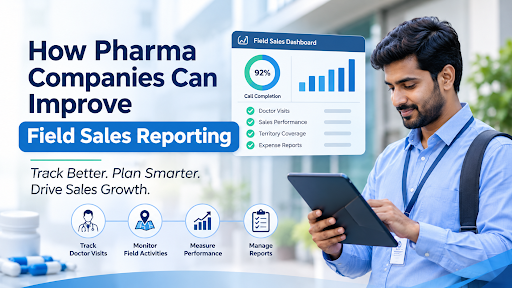
Field sales reporting is essential for how pharmaceutical companies manage medical representatives, track doctor visits, and evaluate sales activities. Each day, medical representatives travel within their territories to meet doctors and chemists, discuss products, gather market feedback, and document their work.
Managing this volume of information can be challenging. Some companies still rely on spreadsheets, paper reports, phone calls, and manual data entry. This can lead to delayed reporting, difficulty validating field activities, and limited visibility into what is happening across different territories.
Improved reporting practices can help address these issues. With structured reporting processes and digital tools such as MR Reporting Software, pharmaceutical companies can keep accurate field records and gain clearer insight into overall sales operations.
Next, we’ll review common reporting challenges in pharmaceutical companies and seven practical ways to improve field sales reporting.
Why Field Sales Reporting Matters in Pharmaceutical Companies
Pharmaceutical sales teams work across different locations, territories, and customer groups. Sales managers cannot personally monitor every doctor visit or chemist interaction. They depend on field reports to understand daily activities and evaluate team performance.
Accurate reporting helps companies understand:
- Doctor coverage: Whether medical representatives are visiting their assigned doctors regularly.
- Daily field activities: How many doctor and chemist visits are completed each day.
- Sales performance: Whether territories are progressing towards their sales targets.
- Market feedback: What doctors and chemists communicate about products, availability, and competitors.
- Team productivity: How effectively representatives manage their assigned territories.
- Expense management: Whether travel expenses and other field-related claims are recorded correctly.
For example, a regional sales manager handling five different territories may need to understand why one territory is achieving its targets while another is falling behind. Daily call reports, doctor coverage records and sales data can help identify possible reasons.
Without reliable reporting, managers may have to depend on individual updates rather than a complete picture of field operations.
Common Challenges in Pharma Field Sales Reporting
Even companies with experienced sales teams face reporting difficulties. Some of the most common challenges include:
1. Manual reporting and spreadsheet dependency
When representatives record their activities in notebooks or spreadsheets, collecting and consolidating information becomes time-consuming. Managers may need to combine reports from several representatives before reviewing overall performance.
2. Delayed submission of daily reports
Some medical representatives complete their Daily Call Reports (DCR) at the end of the day or even the following morning. When reporting is delayed, important details about doctor interactions and market feedback may be missed.
3. Inaccurate field activity records
When visit details are entered manually, it can become difficult to verify the actual date, time and location of a doctor visit.
4. Difficulty tracking doctor visits
Managers may not have a clear understanding of which doctors have been visited, which visits were missed and whether representatives are following their planned schedules.
5. Limited sales performance visibility
When sales reports and field activity reports are maintained separately, connecting daily field efforts with territory performance becomes difficult.
6. Errors in attendance and expense records
Manual attendance entries, travel claims and expense calculations can create discrepancies and additional administrative work.
These challenges can affect reporting accuracy and make it harder for managers to take timely decisions.
7 Ways Pharma Companies Can Improve Field Sales Reporting
Improving field sales reporting does not always require major changes to existing operations. Companies can start by introducing consistent reporting practices and gradually adopting suitable digital solutions.
1. Move from Manual Reporting to Digital Reporting
The first step is to reduce dependency on paper-based reports and disconnected spreadsheets.
Digital reporting allows medical representatives to record their daily activities through a mobile application. Instead of maintaining separate records for doctor visits, chemist interactions, attendance and expenses, representatives can submit information through a common platform.
For example, when an MR completes a doctor visit, they can record the doctor’s name, products discussed, samples provided and visit remarks directly through the application.
This gives managers access to organized information without waiting for multiple spreadsheets or physical reports.
2. Encourage Timely Daily Call Reporting (DCR)
Daily Call Reporting is one of the most important activities in pharmaceutical field sales management.
A DCR records the daily activities of a medical representative, including doctor visits, chemist visits, products detailed, samples distributed and other relevant field information.
Companies should encourage representatives to submit their reports immediately after completing visits or before the end of the working day.
Timely reporting helps managers:
- Review daily field activities.
- Identify missed or incomplete visits.
- Monitor planned versus completed calls.
- Understand doctor interaction patterns.
- Review field performance without unnecessary delays.
For example, if an MR plans to visit ten doctors but completes only seven, the report should clearly reflect the completed calls and the reason for the remaining visits.
3. Maintain Accurate Doctor and Chemist Visit Records
Doctor and chemist information should be maintained properly within the company’s reporting process.
Each representative should have access to an updated customer database containing relevant details such as doctor names, specialities, clinic locations and assigned territories.
Companies should also maintain records of:
- Doctor visit dates and frequency.
- Products discussed during interactions.
- Samples and promotional inputs distributed.
- Chemist orders and stock availability.
- Feedback received from doctors and chemists.
These records help managers understand whether representatives are covering the right customers and maintaining the expected visit frequency.
4. Improve Field Activity Tracking and Visibility
Pharmaceutical sales managers need visibility into field activities, particularly when representatives work across large or geographically distributed territories.
GPS-based location tracking and geo-tagging can help companies understand where field activities are recorded.
For instance, when a medical representative checks in at a doctor’s clinic, the system can capture the location along with the visit details, depending on its configuration.
This can help managers review:
- Field attendance and working locations.
- Planned and completed doctor visits.
- Territory coverage.
- Travel movements during working hours.
- Differences between planned and actual field activities.
However, location tracking should be implemented with clear company policies, appropriate access controls and respect for employee privacy.
5. Monitor Sales Performance Through Regular Reports
Field activity reports become more useful when managers review them alongside sales performance data.
Companies should regularly analyse primary sales, secondary sales, order booking, doctor coverage and territory-wise performance.
For example, a representative may complete the expected number of doctor visits but still have lower territory sales. Managers can investigate factors such as product availability, competitor activity, doctor engagement, or distribution issues.
Some useful performance indicators include:
- Daily call average.
- Doctor coverage percentage.
- Visit frequency.
- Tour plan adherence.
- Territory-wise sales performance.
- Primary and secondary sales trends.
- Order booking performance.
These reports help managers identify areas that need attention instead of relying only on monthly sales figures.
6. Automate Attendance and Expense Reporting
Attendance and expense reporting are closely connected to daily field operations.
When representatives submit attendance and travel expenses manually, managers often spend additional time checking entries and calculating claims.
Digital reporting tools can simplify this process through features such as mobile attendance, location-based check-ins, predefined expense categories and digital expense submissions.
For example, an MR travelling outside their headquarters may need to submit conveyance expenses and daily allowances. A structured expense reporting process helps maintain consistent records and makes approval easier.
7. Use Reporting Data to Support Better Sales Decisions
Collecting information is only one part of reporting. Companies also need to use that information when planning their sales activities.
Sales managers should regularly review reporting dashboards and identify patterns across territories.
For example:
- Which territories have lower doctor coverage?
- Are representatives following their monthly tour plans?
- Which products receive more attention during doctor visits?
- Where are sales orders declining?
- Which representatives need additional training or field support?
Discussing these findings during regular review meetings helps managers understand the reasons behind performance differences and plan appropriate actions.
How MR Reporting Software Supports Better Field Sales Reporting
Managing field sales information becomes difficult when companies depend on separate tools for attendance, doctor visits, tour planning and sales reporting.
MR Reporting Software brings these activities into a structured digital reporting process. Medical representatives can record their daily field activities through a mobile application, while managers can review submitted information through centralized reports and dashboards.
A typical MR reporting process may include:
- Daily Call Reporting: Record doctor and chemist visits, products discussed, samples distributed, and visit remarks.
- Tour Planning: Prepare daily and monthly visit schedules and review planned versus completed calls.
- Doctor and Chemist Management: Maintain customer details, territory assignments, and visit history.
- GPS and Location Tracking: Review location-based attendance and field activity records.
- Sales Reporting: Monitor order booking, primary sales, secondary sales and territory performance.
- Attendance and Expense Management: Maintain employee attendance, travel records and expense submissions.
- Performance Dashboards: Review individual, team and territory-level reports.
An MR Reporting App also makes reporting more accessible for representatives who spend most of their working hours outside the office.
For companies managing large field teams, a centralized MR Reporting System can reduce the effort involved in collecting information from different territories and help managers review field activities more consistently.
However, the quality of reporting still depends on accurate data entry, employee adoption, suitable reporting processes and regular management reviews.
Important Features to Look for in an MR Reporting System
Not every pharmaceutical company has the same field reporting requirements. The features required by a company with 50 medical representatives may differ from those needed by an organization managing hundreds of employees across multiple regions.
When evaluating Pharma Reporting Software, consider the following capabilities:
| Feature | How it helps |
| Daily Call Reporting | Records doctor and chemist visits with relevant activity details. |
| Doctor and Chemist Management | Maintains customer information and visit history. |
| Tour Planning | Helps representatives plan daily and monthly field activities. |
| GPS Tracking | Provides location-based visibility into field activities. |
| Attendance Management | Maintains employee attendance and working-day records. |
| Expense Management | Organizes travel expenses and reimbursement submissions. |
| Sales Dashboards | Helps managers review territory and team performance. |
| Offline Reporting | Allows representatives to record information in areas with limited internet connectivity and sync it when a connection becomes available. |
Companies should also consider ease of use, reporting flexibility, data security, integration capabilities and the ability to generate customized reports.
A Medical Representative App should make daily reporting easier rather than create additional administrative work for field employees.
Conclusion
Accurate field sales reporting helps pharmaceutical companies understand what is happening across their sales territories. It gives managers a clearer view of doctor coverage, daily field activities, sales performance and representative productivity.
Companies can improve their reporting processes by moving away from disconnected spreadsheets, encouraging timely DCR submission, maintaining accurate customer records and reviewing field performance regularly.
Digital solutions such as MR Reporting Software can bring these activities together in one reporting environment. However, technology alone is not enough. Companies also need clear reporting guidelines, proper employee training, and regular data reviews.
When field representatives and sales managers follow a consistent reporting process, pharmaceutical companies can make better decisions based on actual field information rather than assumptions.
