
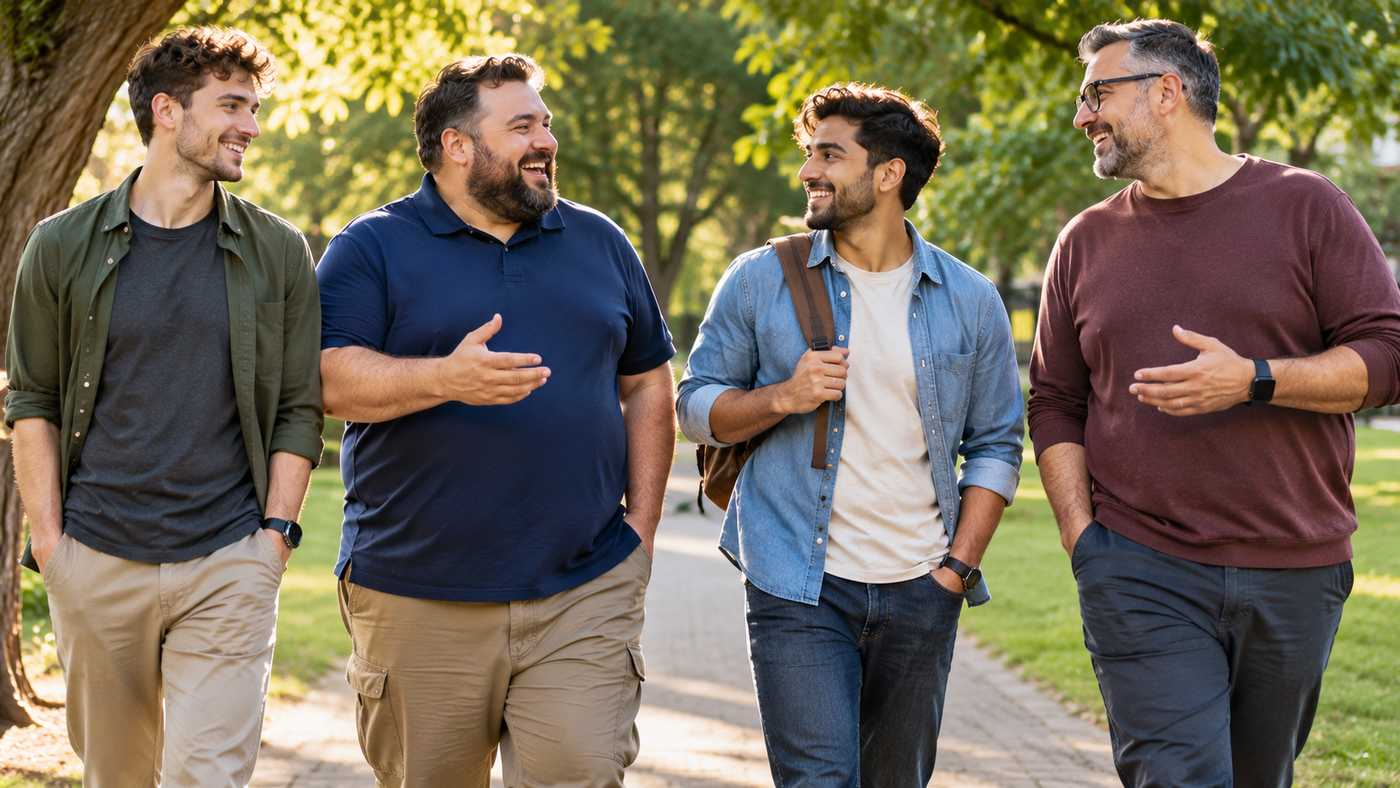
Body image is often discussed as an issue affecting women, but men also experience pressure to meet unrealistic appearance standards. From muscular physiques displayed on social media to expectations about height, weight, hair, and physical strength, many men feel that their appearance influences how others perceive them.
Male body image refers to how men think, feel, and behave in relation to their physical appearance. These perceptions can affect confidence, relationships, everyday activities, and emotional well-being.
For some men, appearance concerns begin during adolescence through teasing, social comparisons, or pressure to look athletic. Others develop concerns later in life as their bodies change with age, health conditions, or lifestyle circumstances.
The growing conversation around body positivity offers an opportunity to challenge these pressures and recognise that people do not need a particular physique to deserve respect.
However, developing a healthier relationship with appearance does not mean ignoring physical health or requiring everyone to feel confident every day. It involves learning to treat the body respectfully, recognising unrealistic expectations, and seeking support when concerns begin affecting daily life.
This guide explores the causes of negative body image among men, the relationship between appearance and mental health, and seven practical strategies for developing greater self-acceptance.
What Is Male Body Image?
Male body image describes a man’s perceptions, attitudes, and feelings about his body.
It may involve thoughts about body size, shape, height, muscularity, weight, skin, hair, or other physical characteristics.
Body image is not necessarily an accurate reflection of physical appearance.
For example, someone may have a healthy, strong body but still feel that they are not muscular enough.
Another person may be satisfied with their appearance despite having physical characteristics that differ from widely promoted beauty standards.
According to Better Health Channel, body image is influenced by personal experiences, social expectations, media exposure, and individual thoughts.
These perceptions may change over time.
Positive vs. Negative Body Image
A positive body image involves recognising that the body deserves respect regardless of its appearance.
It does not require a person to admire every physical feature.
Negative body image can involve persistent dissatisfaction, shame, anxiety, or excessive concern about appearance.
Occasional dissatisfaction is common and does not automatically indicate a mental health condition.
However, ongoing distress can become problematic when it interferes with normal activities or leads to harmful behaviours.
Why Male Body Image Deserves More Attention
For many years, public discussions about body dissatisfaction have focused primarily on women’s experiences.
Although women and girls face substantial appearance pressures, this emphasis can make it harder to recognise similar concerns in men.
Some men may feel uncomfortable discussing their insecurities because of expectations that men should always appear confident, strong, and emotionally resilient.
These expectations can discourage honest conversations.
The Pressure to Look Lean and Muscular
A common masculine appearance ideal combines visible muscularity with relatively low body fat.
This standard appears in fitness advertising, entertainment, sports imagery, and social media.
However, human bodies naturally vary.
Genetics, age, health, physical activity, and numerous other factors influence appearance.
A single physique cannot represent what every healthy man should look like.
Appearance Expectations Beyond Muscles
Men may also experience pressure related to height, facial hair, skin conditions, hair loss, weight, and signs of ageing.
For example, someone experiencing hair loss may worry about appearing older.
A shorter man may feel uncomfortable when height is treated as a measure of attractiveness or status.
These concerns can be reinforced through jokes, advertising, and casual social comments.
The broader goal of body acceptance is to challenge the idea that physical characteristics determine personal worth.
What Does Research Say About Men’s Body Image?
Research indicates that appearance-related concerns affect a meaningful number of men.
The Mental Health Foundation published findings in November 2019 from a UK survey involving 4,505 adults, including 2,103 male respondents.
Among the male participants, 28% reported experiencing anxiety associated with body image.
Another 21% reported changing how they dressed to conceal parts of their bodies.
These findings illustrate that body image concerns are not limited to women.
However, the survey represents a particular population and time period. Its percentages should not be treated as current worldwide statistics.
Research on Social and Cultural Influences
A study published in Body Image in 2022 examined appearance-related pressures among 5,293 men in the United States.
The researchers investigated influences involving family, peers, media, and internalised ideals of muscularity and leanness.
The findings supported the importance of considering social influences when examining male body satisfaction.
This research suggests that appearance concerns develop through interacting personal and environmental factors rather than a single cause.
Body Image Across Different Ages
Appearance concerns can occur during adolescence, early adulthood, middle age, and later life.
Teenagers may feel pressure to resemble athletes or online influencers.
Adults may compare themselves with colleagues, partners, or other people in their social circles.
Older men may experience different concerns related to physical changes and ageing.
There is no single age at which body image concerns begin or disappear.
What Causes Negative Body Image in Men?
Body dissatisfaction can develop through several overlapping influences.
Social Media and Fitness Culture
Social media platforms frequently display carefully selected images.
Lighting, camera angles, editing software, and posing can make bodies appear different from their everyday appearance.
Some content also promotes highly restrictive fitness routines or unrealistic transformation expectations.
A 2024 study in Body Image examined social media appearance preoccupation among university students.
The researchers found associations involving appearance monitoring, body shame, and drives for leanness and muscularity.
These relationships were complex, and the study did not establish that every person who uses social media will develop body dissatisfaction.
Childhood Teasing and Bullying
Comments about weight, height, body shape, or physical ability can influence how people view themselves.
Repeated teasing during childhood or adolescence may contribute to lasting insecurity.
Even remarks presented as jokes can cause distress.
Parents, teachers, and peers can help by avoiding appearance-based criticism and responding appropriately to bullying.
Pressure From Friends and Social Groups
Comments from friends, teammates, and family members may reinforce particular appearance standards.
For example, a man may feel pressured to build more muscle because people repeatedly compare physiques.
Fitness environments can provide support and community, but they can also encourage comparison when appearance becomes the main measure of achievement.
Advertising and Entertainment
Films, television programmes, and advertisements frequently feature carefully selected physical appearances.
These images may contribute to narrow assumptions about attractiveness, masculinity, and success.
Recognising that media portrayals are constructed can help reduce the pressure to imitate them.
Personal Experiences and Relationships
Body image can also be influenced by romantic relationships, medical experiences, disability, ageing, and life changes.
People respond differently to these experiences.
A respectful conversation should avoid assuming that every man has the same insecurities.
How Negative Body Image Can Affect Men’s Mental Health
Persistent dissatisfaction with appearance may affect emotional well-being and everyday behaviour.
Some men experience anxiety when meeting new people, wearing certain clothing, or participating in activities where their bodies are visible.
Others spend substantial time comparing their appearance with photographs or checking mirrors.
Self-Esteem and Confidence
When someone ties personal worth closely to appearance, ordinary physical changes can affect confidence.
For example, gaining weight or losing hair may be interpreted as a personal failure rather than a normal life experience.
A healthier self-image recognises skills, relationships, values, and experiences beyond physical appearance.
Social Avoidance
Some men avoid activities because they are concerned about how others will judge their bodies.
This might involve avoiding swimming, social gatherings, certain clothing, or intimate relationships.
When appearance concerns repeatedly interfere with daily life, additional support may be beneficial.
Eating and Exercise Behaviours
Body dissatisfaction can sometimes contribute to restrictive eating, compulsive exercise, or misuse of performance-enhancing substances.
These behaviours can create physical and psychological risks.
The National Institute of Mental Health emphasises that eating disorders affect people of all genders and body sizes.
An eating disorder cannot be reliably identified simply by looking at someone’s appearance.
What Is Male Body Positivity?
Body positivity is an approach that challenges the idea that people must meet particular appearance standards to deserve acceptance.
The movement encourages respect for diverse bodies, including differences in shape, size, physical ability, and appearance.
For men, body positivity can mean recognising that strength, confidence, attractiveness, and masculinity do not depend on having a particular body type.
The male body image discussion published by HealthPerch on December 2, 2024, explores why men should be included in conversations about body acceptance.
The article, written by Emily Wagner, examines appearance pressures, potentially harmful behaviours, and practical ways to develop a healthier relationship with the body.
One of its central messages is that men deserve the same opportunity to discuss appearance-related insecurities without shame.
Body Positivity vs. Body Neutrality
Body positivity and body neutrality share an emphasis on respect, but they approach body image differently.
Body positivity encourages appreciation and acceptance across different appearances.
Body neutrality focuses on reducing the importance of appearance in everyday self-worth.
For someone who finds it difficult to feel positive about their body, neutrality may offer a more manageable starting point.
| Approach | Main Focus | Example |
|---|---|---|
| Body positivity | Acceptance and appreciation | “My body deserves respect regardless of its appearance.” |
| Body neutrality | Reducing appearance-based judgement | “My appearance does not determine my value.” |
| Appearance-focused thinking | Evaluation against a particular standard | “I must look a certain way to feel worthy.” |
Body neutrality does not mean neglecting health.
It means caring for the body without making appearance the centre of personal identity.
Both approaches can be useful, and people may move between them over time.
7 Empowering Tips for Improving Male Body Image
Developing a healthier relationship with appearance is an ongoing process.
The following strategies offer practical ways to reduce unhelpful comparisons and support emotional well-being.
1. Recognise Unrealistic Male Beauty Standards
The first step is identifying the expectations that influence how you think about appearance.
Consider whether you compare yourself with athletes, celebrities, fitness influencers, or other people whose photographs you frequently see.
Ask whether these comparisons are realistic or useful.
Understand That Bodies Naturally Differ
There is no single ideal male body.
People differ in height, proportions, body composition, mobility, and numerous other characteristics.
These differences are part of ordinary human variation.
A person’s worth cannot be determined from their muscle definition or clothing size.
Question the Messages You Receive
Pay attention to statements suggesting that a man must be tall, muscular, lean, or youthful to be successful.
Consider whether these claims are based on evidence or social expectations.
Learning to question them can create space for a more balanced self-image.
2. Build a Healthier Relationship With Social Media
Online content can influence how people perceive themselves.
Although social media can provide useful education and supportive communities, certain accounts may encourage excessive appearance comparisons.
Review Your Following List
Think about how you feel after viewing different accounts.
Do particular pages repeatedly leave you dissatisfied with your appearance?
If so, consider reducing exposure to those accounts.
You can choose to follow creators who promote realistic expectations, varied interests, and respectful discussions about health.
Remember That Photographs Are Selective
A photograph captures one moment.
It may involve professional lighting, careful posing, editing, or a temporary physical condition.
It does not necessarily represent how someone looks throughout the day.
Comparing everyday appearance with carefully produced images can create unrealistic expectations.
Spend Time Offline
Balance social media with activities that are not centred on appearance.
Friendships, hobbies, learning, and time outdoors can provide opportunities to focus on different aspects of life.
3. Focus on Health Instead of Appearance Alone
Physical activity can support health, mobility, strength, and well-being.
However, exercise does not need to be motivated entirely by a desire to change appearance.
Choose Activities You Enjoy
Walking, cycling, swimming, dancing, recreational sports, and strength training are examples of different ways to move.
The right activity depends on your preferences, circumstances, health, and abilities.
You do not need to participate in a particular sport or gym routine to deserve respect.
Set Meaningful Goals
Instead of focusing only on appearance, consider goals related to enjoyment, function, or daily activities.
For example, someone might want to feel more comfortable walking longer distances or develop skills in a favourite sport.
Goals should be realistic and flexible.
Allow Rest and Recovery
Exercise becomes less helpful when it feels compulsory or creates constant guilt.
Rest and recovery are normal parts of physical activity.
If exercising causes distress when interrupted or interferes with other responsibilities, discussing those concerns with a qualified professional may be useful.
4. Develop a Respectful Relationship With Food
Food provides nourishment, satisfaction, cultural connection, and enjoyment.
Body image concerns can sometimes lead people to view eating as something that must be earned or punished.
A more balanced approach avoids turning every meal into a judgment about personal worth.
Avoid Moral Labels Around Food
Describing ordinary food choices as proof of being good or bad can create unnecessary guilt.
Nutritional needs vary between individuals.
A registered dietitian can help when someone needs personalised dietary guidance.
Notice Rigid Rules
Extremely strict eating rules, fear around normal meals, or persistent anxiety about food can signal that additional support is needed.
A person’s health is not defined by following a particular online diet trend.
Recognise That Men Can Experience Eating Disorders
Eating disorders are sometimes incorrectly viewed as conditions affecting only women.
Men and boys can also develop serious eating-related conditions.
Early recognition and appropriate treatment are important.
5. Practise Body Neutrality and Supportive Self-Talk
Some people find it difficult to move directly from dissatisfaction to positive feelings about appearance.
Body neutrality offers an alternative.
Rather than forcing yourself to admire your body, you can practise treating it with basic respect.
Notice Harsh Self-Criticism
Pay attention when internal thoughts become unnecessarily critical.
For example, you might notice that you judge yourself after seeing a photograph or trying on clothes.
Recognising the thought can help create distance from it.
Use Neutral Language
Instead of making an exaggerated positive claim that feels uncomfortable, try a grounded statement.
Examples include:
“My appearance is only one part of who I am.”
“My body deserves care even on difficult days.”
“I can take part in activities without having to look a certain way.”
The goal is to reduce unnecessary judgement rather than demand constant confidence.
Appreciate What Matters Beyond Appearance
Think about personal qualities that have little to do with physical looks.
These might include kindness, reliability, creativity, curiosity, problem-solving, or being a supportive friend.
A broader sense of identity can make appearance less central to self-worth.
6. Build Supportive Relationships and Conversations
Body image concerns can feel isolating when people believe they must hide their insecurities.
Supportive conversations can challenge this isolation.
Talk With Someone You Trust
A friend, family member, partner, or mental health professional may provide a non-judgmental space.
You do not have to explain everything immediately.
A simple conversation about feeling pressured by appearance expectations can be a starting point.
Avoid Appearance-Based Teasing
Comments about someone’s weight, height, hair, or body shape can be hurtful even when presented as humour.
Consider whether a joke reinforces an insecurity.
Compliments can focus on character, effort, skills, or behaviour rather than physical appearance.
Respect Different Experiences
Men from different backgrounds may experience different pressures.
Age, culture, disability, sexuality, health conditions, and social environments can affect body image experiences.
Avoid assuming that every man has identical concerns.
Listening without making comparisons can be more helpful than offering immediate advice.
7. Seek Professional Support When Body Image Affects Daily Life
Self-help strategies may be useful, but some body image concerns require additional support.
A mental health professional can help assess persistent distress and identify appropriate approaches.
Recognise When Extra Help May Be Needed
Consider seeking support when concerns about appearance repeatedly interfere with social activities, relationships, work, eating, or exercise.
Persistent body checking, distressing comparisons, or extreme attempts to change appearance can also be reasons to consult a professional.
Understand Available Treatment Options
Treatment depends on the individual’s symptoms and needs.
It may involve psychological therapy, nutritional support, medical assessment, or a combination of services.
For recognised body dysmorphic disorder and eating disorders, evidence-based treatment is available.
A qualified professional should determine the appropriate approach rather than relying on online self-diagnosis.
Remember That Seeking Help Is a Strength
Body image difficulties are legitimate concerns.
Men do not have to manage significant emotional distress alone.
Getting support is compatible with confidence, independence, and personal responsibility.
Understanding Muscle Dysmorphia in Men
Muscle dysmorphia is a form of body dysmorphic disorder involving persistent concern that the body is insufficiently muscular or too small.
It is different from simply wanting to become stronger or enjoying weight training.
The condition involves distressing preoccupation and behaviours that may interfere with everyday functioning.
Common Features
Some people experiencing muscle dysmorphia may spend excessive time worrying about muscularity.
They may repeatedly check their appearance, compare themselves with others, follow rigid exercise or eating routines, or experience considerable distress when unable to train.
The condition can also be associated with misuse of performance-enhancing substances.
These behaviours should be evaluated by an appropriately qualified professional.
Why Awareness Matters
Muscle dysmorphia can be overlooked when excessive exercise is automatically praised as dedication.
However, the motivation, distress, and impact on daily life matter.
A 2024 review in the British Journal of Nursing describes muscle dysmorphia as an under-recognised aspect of male body dissatisfaction.
Awareness can help distinguish ordinary fitness interests from patterns that may require clinical attention.
How Parents, Friends, and Communities Can Support Boys and Men
Improving male body image is not only an individual responsibility.
Families, schools, workplaces, sports organisations, and online communities can influence how appearance is discussed.
Parents and Caregivers
Avoid repeatedly criticising children’s bodies or making appearance the centre of praise.
Encourage varied interests and recognise achievements unrelated to physical appearance.
Respond seriously to teasing and bullying.
Schools and Sports Teams
Coaches and educators can promote respectful language and appropriate training practices.
Emphasise skill development, teamwork, enjoyment, and safety rather than a single physical ideal.
When students express persistent distress, provide access to suitable support.
Friends and Partners
Listen without dismissing concerns.
Statements suggesting that men should simply be tougher can discourage useful conversations.
Avoid pressure to follow particular diets, exercise routines, or cosmetic changes.
Workplaces and Online Communities
Discourage appearance-based jokes and harassment.
Support a culture in which people are evaluated according to their conduct, work, and contributions rather than body shape.
Respectful environments can make it easier for people to participate without unnecessary self-consciousness.
Healthy Body Image vs. Appearance-Based Pressure
It can help to distinguish supportive behaviours from potentially harmful patterns.
| Area | Supportive Approach | Potential Warning Pattern |
|---|---|---|
| Exercise | Movement for enjoyment, health and function | Exercising compulsively despite harm or distress |
| Food | Flexible nourishment and enjoyment | Rigid restriction or intense food-related anxiety |
| Social media | Following content that informs or supports | Persistent comparisons causing distress |
| Self-talk | Respectful, balanced language | Constant harsh appearance-based criticism |
| Relationships | Open and supportive conversations | Hiding from relationships due to appearance concerns |
| Body checking | Occasional ordinary grooming | Repeated checking that disrupts daily life |
These examples are not diagnostic criteria.
A qualified healthcare professional can assess whether particular behaviours indicate a mental health condition.
Why Body Positivity Does Not Mean Ignoring Physical Health
Body acceptance and healthcare can coexist.
A person can respect their body while seeking medical advice, adjusting habits, or managing a health condition.
Body positivity does not require people to reject fitness, nutrition, or medical treatment.
Instead, it challenges the idea that someone must reach a particular appearance before deserving dignity.
Similarly, body neutrality does not mean avoiding physical activity.
It encourages caring for the body without making appearance the main measure of success.
Health cannot be accurately judged from a photograph alone.
People with similar appearances can have different medical needs and circumstances.
The most appropriate health decisions are based on individual needs and professional guidance rather than appearance comparisons.
A Practical Weekly Approach to Better Body Image
Improving body image does not require completing a complicated programme.
Small, realistic habits may help people become more aware of how they think about appearance.
Reflect on Common Triggers
Notice which situations tend to create dissatisfaction.
These may include certain social media accounts, conversations, photographs, or comparisons.
Awareness can help identify habits worth changing.
Make Space for Enjoyable Activities
Spend time on interests that are not focused on appearance.
Examples include learning, art, music, friendships, volunteering, reading, and outdoor activities.
The purpose is to develop a fulfilling life beyond physical self-evaluation.
Practise Respectful Language
Notice how you speak about your own appearance and the bodies of other people.
Try to avoid unnecessary negative judgements.
Maintain Supportive Connections
Make time for people who respect your individuality.
Healthy relationships provide opportunities for connection that are not based on looks.
Reassess Without Pressure
Body image can change from day to day.
A difficult moment does not mean previous progress has disappeared.
The goal is not perfect confidence but a more balanced relationship with yourself.
Frequently Asked Questions
1. What is male body image?
Male body image describes how men perceive, think, and feel about their bodies, including physical appearance, size, shape, muscularity, and other characteristics. These perceptions can change throughout life.
2. Why do men experience negative body image?
Possible influences include social media, unrealistic appearance standards, bullying, peer pressure, relationships, and personal experiences. The causes vary between individuals.
3. What is the difference between body positivity and body neutrality?
Body positivity encourages acceptance and appreciation of different bodies. Body neutrality focuses on treating the body respectfully without making appearance a central measure of self-worth.
4. Can men experience eating disorders or muscle dysmorphia?
Yes. Eating disorders can affect people of all genders. Muscle dysmorphia involves significant distress about perceived insufficient muscularity. Both may require assessment and treatment from qualified professionals.
Conclusion
Male body image deserves greater attention because appearance pressure can affect confidence, relationships, and emotional well-being.
Body positivity and body neutrality offer ways to challenge unrealistic expectations while recognising the natural diversity of men’s bodies.
Supportive relationships, balanced media habits, respectful self-talk, and appropriate professional care can help men develop a healthier relationship with appearance.
Ultimately, a person’s value extends far beyond physical characteristics.
