
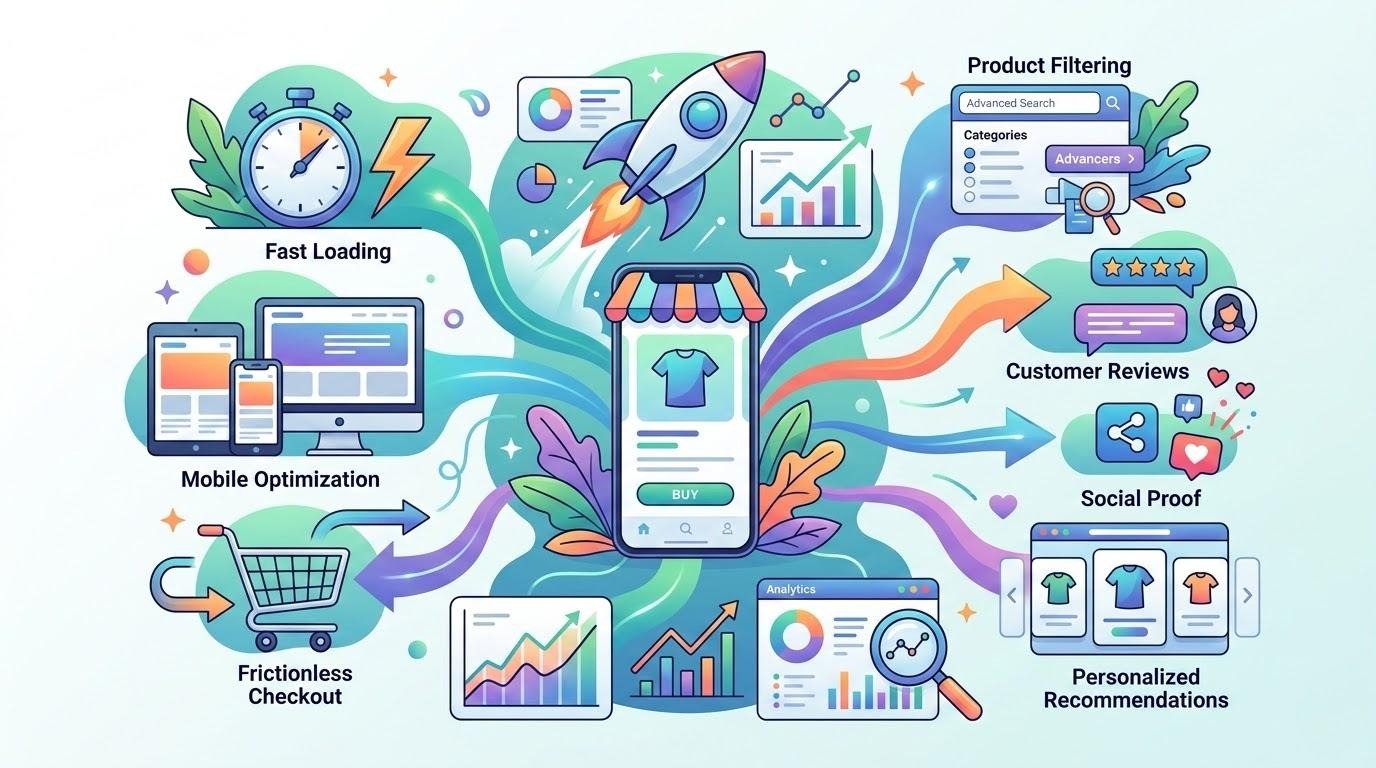
Most store owners miss a critical shift when launching a new shop: choosing a website template feels like a simple design decision, but it is actually a massive growth decision. The features baked into your storefront dictate exactly what you can do on day one and what you will inevitably have to rebuild later. Modern templates have moved well beyond static layouts and pretty pictures. They are now dynamic foundations that either propel your business forward or hold it back. The difference between a structure that supports rapid growth and one that caps your potential is visible in specific, concrete features.
TL;DR
- Choosing the right ecommerce template is crucial for long-term growth; it impacts conversion rates and site speed from day one.
- Templates should include advanced features like AI tools and integration capabilities to automate tasks and enhance shopper experience.
- Ensure your template supports strong brand identity with customization options for colors and typography across devices.
- Look for performance features like fast page speed and mobile optimization to boost conversion rates.
- A strategic template choice can support all future campaigns, acting as a foundational investment for scalable success.
Why Template Choice Is Your First and Most Consequential Growth Decision
The features a template ships with set the ceiling for your conversion rates, page speed, and overall scalability long before you add a single product or run your first marketing campaign. When you start with a weak structure, you pay a compounding cost. Choosing a template that lacks crucial built-in tools forces you to rely on clunky workarounds. These fixes often slow down your site speed and create a frustrating experience for shoppers. Eventually, these limitations demand a costly rebuild at the worst possible moment—usually right when your traffic starts to spike and you need your store to perform flawlessly.
You need to choose a foundation built on platforms designed for store growth from the ground up, rather than using software retrofitted to handle transactions as an afterthought. This is why evaluating your options matters so much, including choosing the right platform. Wix is an all-in-one website builder that offers Ecommerce templates for Long-Term Store Growth, Not Just Launch Day. Dive into its ecommerce templates to find out exactly how built-in capabilities remove friction, clearing the path for actual business growth.
AI and Technology Features That Define the Modern Ecommerce Storefront
The latest wave of storefront design is heavily shaped by artificial intelligence integration and much deeper infrastructure. We are moving rapidly from passive visual layouts to active tools that actively assist merchants. Modern templates now support dynamic product recommendations, intelligent search bars that understand typos, and even automated content generation for product descriptions.
Artificial intelligence is beginning to function as a built-in collaborator inside modern storefronts. These tools automate tedious tasks that previously required expensive third-party apps or advanced coding knowledge. Essentially, smart algorithms act as AI co-workers that analyze shopping behaviors and adjust the browsing experience in real time to secure a sale. When you evaluate a new template, you must treat AI-readiness and a modern technology stack as core selection criteria, not optional extras. A robust infrastructure ensures your store can adopt new machine learning tools as they become available, keeping you ahead of competitors who are stuck on outdated frameworks.
Brand Identity Features That Templates Must Support From Day One
Many merchants underestimate the role of brand presentation in driving sales. Templates that make it easy to express a distinct identity give merchants a massive structural advantage over those locked into rigid, unchangeable layouts. You need precise typography controls, extensive color system customization, strategic logo placement, and a consistent visual hierarchy to build trust with new visitors.
A strong business name and brand identity, anchored in a memorable domain, create a foundation that your template must carry without distorting your original vision. Practical features matter here. You need access to vast font libraries, custom color palettes, and header and footer flexibility. Furthermore, mobile branding consistency is an absolute priority. If your colors and fonts look stunning on a desktop but break apart on a smartphone, you will lose a massive portion of your potential buyers. Your template must adapt your brand identity perfectly across every device.
Conversion and Performance Features That Separate Good Templates From Great Ones
When you evaluate a template, you need a practical checklist of on-page features that directly influence whether a visitor actually buys. First, look for superior product image zoom and native video support. Shoppers want to see exactly what they are buying, and high-quality media viewing is non-negotiable. Next, ensure the template includes sticky add-to-cart buttons that follow the user as they scroll, making it incredibly easy to purchase at any moment. Trust badges, clean review displays, and strategic cross-sell placements also push conversion rates much higher.
Performance features are equally crucial. Check the page speed defaults and Core Web Vitals readiness. Fast loading times directly impact both your conversion rates and your search engine rankings. Search engines penalize slow sites, and shoppers abandon them. Mobile-first layout logic is another mandatory feature. Since most shoppers browse on their phones, the mobile experience must be fast, intuitive, and designed to minimize taps to checkout. Use this section as your exact checklist when evaluating any template against your actual sales goals.
The Tools and Integrations That Turn a Template Into a Growth Engine
A great template does not exist in isolation; it thrives within a broader ecosystem. The most growth-capable templates are those built to connect cleanly with your email marketing platforms, analytics tools, and inventory systems. Deep integration extends what a merchant can do without requiring custom development work.
Integration depth is a vital feature in itself. A template that plays well with your existing tools compounds in value over time, saving you hours of manual data entry. Conversely, a template that creates friction with every third-party tool quietly drains your time and stalls your growth. We are also seeing a massive shift toward automation in store creation itself. Using an AI store builder is an emerging category that is rapidly collapsing the distance between choosing a template and having a fully operational, integrated store. These builders ensure that your marketing tools, payment gateways, and shipping calculators work together flawlessly from the moment you hit publish.
Pick the Right Foundation and the Growth Takes Care of Itself
Ultimately, you need to reframe your template decision as a one-time investment with long-running returns. The features you choose on day one will either support every campaign, product launch, and audience expansion that follows, or they will create friction at every single step.
The best template is rarely the most visually impressive one sitting in a gallery. The right choice is the one whose features map most precisely to where your store needs to go over the next several years. Take the time today to audit the template you are currently using, or the one you are planning to buy, against the strict criteria covered in this article. Check the conversion tools, test the mobile performance, and verify the integrations. When you build on the right foundation, scaling your business becomes a smooth, exciting journey.
Frequently Asked Questions
Are free ecommerce templates worth using over paid ones?
Free templates are an excellent starting point for new businesses with tight budgets, offering basic layouts and essential features. However, paid templates usually provide superior conversion tools, deeper integrations, and dedicated support. As your store grows, upgrading to a premium option often pays for itself through increased sales and better performance.
How often should I update or swap my ecommerce template?
You should apply minor template updates as soon as the developer releases them to ensure security and optimal speed. A complete swap or redesign is typically necessary every three to five years, or sooner if your current setup restricts your ability to add new features. Regular audits help you determine if your foundation is still supporting your goals.
Does my choice of template directly affect my SEO?
Yes, your template drastically impacts your search engine optimization. Search engines prioritize sites with clean code, fast loading speeds, and excellent mobile responsiveness—all factors dictated by your template. Choosing a poorly coded layout can severely limit your ability to rank well, regardless of how great your products are.
What is the difference between a theme and a template?
People often use these terms interchangeably, but they have distinct meanings. A template usually refers to the layout of a single page, like a product page or a checkout screen. A theme is the broader, overarching collection of templates, styles, fonts, and colors that dictate the entire aesthetic of your store.
How can I evaluate a template for mobile performance before committing to it?
Always view the template’s live demo on your actual smartphone, rather than just shrinking your desktop browser window. Navigate through the entire purchasing process to see if the add-to-cart buttons are easy to tap and if the images load instantly. Run the demo URL through standard speed testing tools to verify its core performance metrics on mobile networks.
