
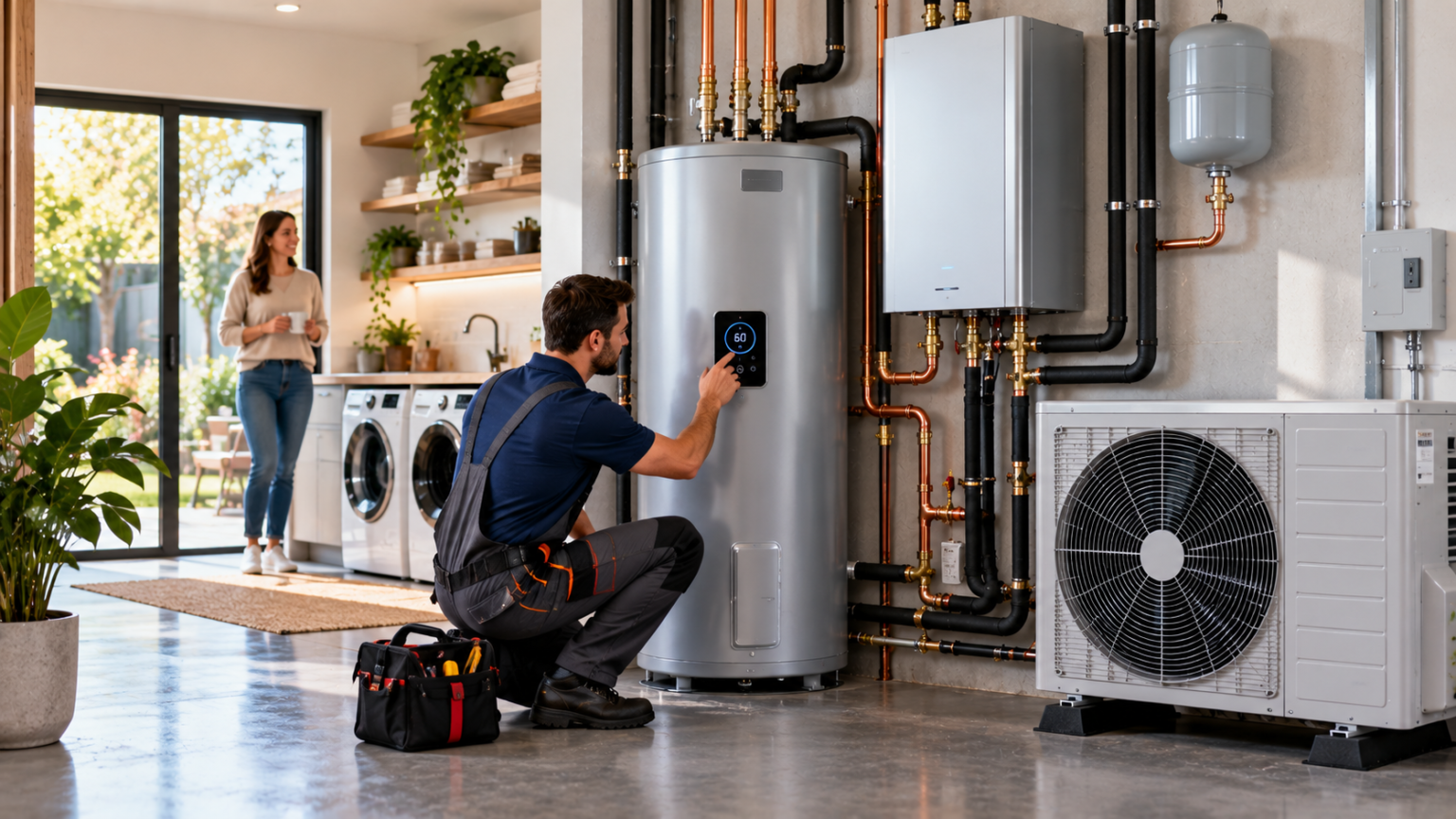
Reliable hot water is an important part of a comfortable and functional property because many daily activities depend on a dependable water heating system. Showers, bathing, dishwashing, laundry, cleaning, and other household tasks all require a consistent supply of heated water, which means problems with a water heater can quickly become inconvenient. As plumbing technology continues to develop, homeowners have more choices than traditional storage-based equipment. Modern systems can provide hot water more efficiently while taking up less physical space and responding directly to household demand. A tankless water heater is designed to heat incoming water as it passes through the equipment instead of continuously storing a large quantity of heated water in a tank. This operating method can provide several practical advantages, but homeowners should consider installation requirements, household demand, water quality, maintenance, and the condition of the existing plumbing before choosing this type of system. Professional plumbing service can help property owners understand these factors and select an appropriate solution based on the actual requirements of the home.
Understanding How On-Demand Water Heating Works
The basic operation of an on-demand water heating system is different from that of a conventional storage water heater. Instead of keeping a large supply of hot water ready inside a tank, the equipment activates when a hot water fixture is opened and water begins moving through the system. Cold water enters the unit and passes through a heat exchanger, where it is heated before continuing through the plumbing system toward the fixture. This process allows the equipment to respond to actual demand instead of constantly maintaining the temperature of stored water. The performance of the system depends on several factors, including the incoming water temperature, desired outlet temperature, water flow rate, equipment capacity, and number of fixtures being used simultaneously. Understanding these factors is important because a system must be capable of producing enough hot water for the property’s peak demand. Professional evaluation can help determine the appropriate capacity and configuration so the equipment can provide dependable service without creating unnecessary operating or installation problems.Another important characteristic of on-demand water heating is that the system does not need to continuously maintain a large reservoir of heated water. Traditional storage equipment can use energy even when no hot water is being used because the stored water gradually loses heat and must be reheated. An on-demand system operates differently because heating generally occurs when there is a request for hot water. This can help reduce standby heating losses, although the actual energy savings depend on the equipment, household usage patterns, fuel source, water temperature, and installation conditions. Homeowners should therefore avoid assuming that every property will experience the same level of savings. A professional technician can evaluate the existing water heating system, examine household demand, and explain how a modern system may perform under the property’s specific conditions.
Selecting Equipment Based on Household Demand
Proper equipment sizing is one of the most important aspects of a successful water heating project. Choosing a unit simply because it has a compact design or attractive efficiency rating does not guarantee that it will provide enough hot water for the household. The system needs to be evaluated according to peak demand, which can occur when several fixtures or appliances require hot water at the same time. For example, a family may have multiple showers operating during busy morning hours while a dishwasher or washing machine is also using heated water. If the equipment does not have sufficient capacity, occupants may experience inconsistent temperatures or reduced performance. A professional plumber can review the property’s typical usage patterns and calculate the approximate demand before recommending equipment.
Household size is only one factor involved in determining water heating requirements. The number and type of plumbing fixtures, appliance usage, shower flow rates, desired water temperature, incoming water temperature, and daily routines can all influence the required capacity. A smaller household with high simultaneous demand may have different requirements from a larger household where hot water use is spread throughout the day. This is why professional assessment is more useful than relying only on general equipment size recommendations. Proper planning can help homeowners avoid purchasing equipment that is either insufficient for their needs or unnecessarily large for the property’s actual requirements.Fuel source also needs to be considered during the planning process. Electric and gas-powered systems have different installation requirements and may require specific electrical capacity, gas supply, venting, or other infrastructure. Existing plumbing and utility connections should be inspected before installation so potential limitations can be identified. If the property does not have the necessary infrastructure, additional work may be required before the new equipment can operate correctly. Addressing these requirements during the planning stage helps create a more predictable installation process and reduces the risk of unexpected complications.
Professional Installation Makes a Difference
Installing modern water heating equipment involves considerably more than disconnecting an old unit and connecting a new one. The technician must consider water supply lines, shutoff valves, temperature controls, electrical connections, fuel supply where applicable, venting requirements, condensate management on applicable systems, equipment clearances, and manufacturer specifications. Every component must work together correctly for the system to provide safe and dependable service. Improper installation can affect efficiency, performance, equipment life, and safety, which is why professional installation is an important part of the overall investment.The condition of the existing plumbing should also be considered before installation. Older pipes may have corrosion, mineral buildup, restricted flow, or deteriorated connections that can interfere with the performance of new equipment. Replacing the water heater without addressing serious plumbing problems may simply transfer existing issues to the new system. A professional inspection can identify these concerns and determine whether valves, pipes, fittings, or other components should be repaired or replaced during the project. Taking care of related plumbing problems at the same time can improve system reliability and reduce the possibility of repeated service calls after installation.Equipment placement is another important consideration. The unit should be installed in an appropriate location that provides required clearances and allows technicians to access important components for future maintenance. A compact design can provide greater flexibility, but available space should never be the only factor used when selecting an installation location. Venting, electrical access, water connections, drainage requirements, and manufacturer instructions all need to be considered. Professional installation helps ensure that these details are addressed before the system is placed into service.
The Role of Water Quality in System Performance
Water quality can have a major influence on plumbing equipment, especially in areas where water contains elevated levels of minerals. Hard water can contribute to mineral deposits inside plumbing components and heating equipment. Over time, these deposits may restrict water flow, interfere with heat transfer, and reduce the efficiency of the system. Because on-demand equipment relies on efficient heat transfer to rapidly heat incoming water, mineral accumulation can have a noticeable effect on performance. Homeowners who experience recurring problems with water heating equipment should consider whether water quality may be contributing to the issue.Professional plumbing service can help identify conditions associated with hard water and mineral buildup. Depending on the property’s water characteristics, a technician may recommend appropriate filtration or water treatment options. These solutions are not automatically necessary for every household, so an evaluation should be performed before investing in additional equipment. Regular maintenance can also help reduce the impact of mineral accumulation by allowing technicians to inspect and clean components according to manufacturer requirements. Addressing water quality concerns early can help protect not only the water heater but also faucets, valves, pipes, appliances, and other plumbing components throughout the property.Water pressure should also be evaluated when diagnosing water heating problems. Excessively low pressure can affect fixture performance, while excessively high pressure can place additional stress on plumbing components and appliances. A complete plumbing inspection can help determine whether pressure-related issues are affecting hot water performance. Looking at the entire system instead of focusing on a single appliance can provide a clearer understanding of why a household may be experiencing inconsistent or unsatisfactory water service.
Maintenance Supports Long-Term Reliability
Like other major plumbing equipment, modern water heating systems benefit from regular professional maintenance. Even advanced equipment can develop problems when mineral deposits, worn components, restricted filters, loose connections, or other issues are allowed to continue without attention. Maintenance provides an opportunity to inspect the system, identify developing problems, and complete necessary service before minor issues become more disruptive failures. Following the manufacturer’s recommended maintenance schedule is an important part of protecting equipment performance.During a professional maintenance visit, technicians may inspect water connections, heating components, valves, temperature controls, filters, and other system components depending on the equipment design. They can also look for signs of corrosion, mineral accumulation, leaks, unusual operation, or other conditions that could affect future performance. The exact maintenance requirements vary according to the model, fuel source, water quality, usage level, and manufacturer recommendations. Homeowners should therefore rely on qualified service professionals and manufacturer guidance rather than assuming that every system requires the same maintenance procedure.Maintenance can also help property owners understand the condition of aging equipment. If a technician identifies repeated component failures, significant mineral accumulation, corrosion, or declining performance, the homeowner can begin considering replacement options before a complete system failure occurs. Planning in advance gives property owners more time to research equipment, compare installation requirements, establish a budget, and schedule professional work at a convenient time rather than dealing with an emergency loss of hot water.
Recognizing Signs of Water Heating Problems
Homeowners should pay attention to changes in hot water performance because unusual behavior can provide an early warning that professional service is needed. Fluctuating temperatures, reduced hot water flow, unusual noises, delayed heating, unexpected shutdowns, recurring error conditions, and water around the equipment can all indicate potential problems. These symptoms can have different causes, so attempting to identify the exact issue without appropriate knowledge may lead to unnecessary repairs or further damage. A professional diagnosis can determine whether the problem involves the heating components, plumbing connections, water flow, controls, mineral deposits, or another part of the system.Reduced hot water availability does not always mean that complete replacement is necessary. In some situations, cleaning, adjustment, component replacement, or another targeted repair may restore proper performance. However, if the equipment is old and has developed repeated problems, replacement may need to be considered as part of the long-term planning process. A technician can evaluate the condition of the equipment and explain the available repair and replacement options based on its current performance.Leaks require particularly prompt attention because water can damage surrounding building materials and equipment. A leak near plumbing connections, valves, or the water heating system should not be ignored simply because the amount of water appears small. Continued leakage can affect floors, walls, cabinets, insulation, or nearby electrical components. Professional plumbing service can locate the source of the leak and determine whether the issue can be repaired or whether a larger equipment or plumbing problem is involved.
Considering an Upgrade or Replacement
Replacing an older water heating system can be an opportunity to improve the property’s overall plumbing performance. Homeowners should consider the age and condition of the existing equipment, repair history, hot water demand, energy use, available installation space, and future household needs before making a decision. An upgrade should be viewed as a complete system improvement rather than simply purchasing a newer appliance. The new equipment must be compatible with the property’s plumbing and utility infrastructure and should be selected according to actual demand.For homeowners exploring modern alternatives, a tankless water heater can be considered as part of a broader water heating strategy. These systems may provide on-demand heating, a compact equipment footprint, and reduced standby heating compared with traditional storage-based systems. However, the benefits depend on proper sizing, installation, maintenance, water quality, and household usage. Professional evaluation is therefore important before making a final equipment selection. A qualified plumbing contractor can explain how different options compare in terms of installation requirements, expected performance, maintenance, and compatibility with the existing system.Future household needs should also be considered during replacement planning. A family may add another bathroom, install a new appliance, change occupancy patterns, or increase hot water consumption over time. Selecting equipment based only on current conditions may create capacity concerns later. Discussing both present and anticipated demand with a professional can help homeowners develop a water heating plan that remains practical as household requirements change.
Protecting the Broader Plumbing System
A water heater operates as part of a larger plumbing network, so its performance can be affected by other components throughout the property. Restricted pipes, failing valves, poor water pressure, deteriorated fittings, and plumbing leaks can all contribute to water service problems. When new water heating equipment is installed, it can be beneficial to evaluate nearby plumbing connections and related components at the same time. This approach can help identify problems that might otherwise cause trouble after the new equipment has been installed.Professional plumbing service can address a broad range of related concerns, including water heater problems, leaking pipes, faulty fixtures, drainage issues, pressure concerns, water supply connections, and other plumbing repairs. Taking a comprehensive approach allows homeowners to understand how individual components interact with one another. For example, improving water heating equipment may not resolve inconsistent hot water if a separate plumbing restriction is limiting flow. A complete evaluation can help identify these underlying conditions and ensure that repair or replacement decisions address the actual source of the problem.Maintaining service records can also support long-term plumbing management. Keeping information about installation dates, equipment models, previous repairs, maintenance visits, and replaced components can make future diagnosis easier. When a technician knows the system’s service history, they can often evaluate recurring problems more efficiently and determine whether a repair represents an isolated issue or part of a broader pattern.
Safety and Professional Service
Water heating equipment involves high temperatures and, depending on the system, electricity, gas, combustion, and specialized venting. Because of these factors, professional installation and repair are important for safe operation. Homeowners should avoid modifying unfamiliar gas connections, electrical components, venting systems, safety controls, or other technical components without appropriate qualifications. Incorrect work can create performance problems and may also introduce serious safety concerns.Professional technicians can inspect connections, controls, valves, venting where applicable, and other components to ensure that the system is installed and serviced correctly. They can also identify conditions that may require immediate attention. Manufacturer requirements and applicable installation standards should be followed during every project. Proper service protects the equipment while also supporting the safety and reliability of the plumbing system.Professional service can be particularly valuable when a property owner is replacing older equipment with newer technology. Modern systems may have different installation requirements from the equipment they replace. Existing connections that worked with the previous system may not automatically be suitable for the new configuration. Evaluating the complete installation before work begins helps reduce unexpected problems and allows necessary modifications to be planned in advance.
Creating a Reliable Water Heating Plan
A dependable hot water system is the result of several factors working together, including proper equipment selection, professional installation, appropriate maintenance, good water quality, and a healthy plumbing infrastructure. Homeowners should consider these factors together rather than focusing solely on the initial purchase price of the equipment. A lower-cost installation may not provide long-term value if the system is incorrectly sized or installed without addressing existing plumbing problems. Likewise, highly efficient equipment may not perform as expected if maintenance is neglected or water quality creates excessive mineral buildup.Regular inspections can help property owners identify developing concerns before they become major disruptions. Professional technicians can monitor system performance, evaluate components, and recommend service based on the actual condition of the equipment. This allows homeowners to plan repairs and replacements more effectively and reduces the likelihood of being forced into an emergency decision after a sudden failure.Modern water heating technology can provide valuable benefits when it is selected and installed correctly. The goal should be to create a system that matches the property’s demand, available infrastructure, water quality, and long-term maintenance needs. With appropriate professional service, homeowners can support reliable hot water delivery while also protecting the broader plumbing system.
Conclusion
Choosing the right water heating solution requires more than comparing equipment specifications or selecting the newest available technology. Homeowners should consider household demand, available space, utility requirements, water quality, plumbing conditions, maintenance needs, and future usage before making a decision. On-demand systems can provide hot water when it is needed and may offer advantages related to space and standby heating, but their performance depends heavily on proper sizing and professional installation.A well-maintained system can provide dependable service for everyday household activities while reducing the likelihood of unexpected interruptions. Professional plumbing inspections can help identify mineral buildup, leaks, pressure problems, worn components, and other conditions that may affect water heating performance. When replacement becomes necessary, evaluating the complete plumbing system can help homeowners select equipment that fits both current and future needs.For property owners considering an upgrade, a tankless water heater can be one option worth discussing with a qualified plumbing professional. The right choice ultimately depends on the property’s specific requirements, existing infrastructure, household usage, and long-term service expectations. By combining appropriate equipment selection with professional installation, regular maintenance, timely repairs, and attention to water quality, homeowners can build a reliable water heating system that supports comfort, efficiency, and dependable plumbing performance for years to come.
