
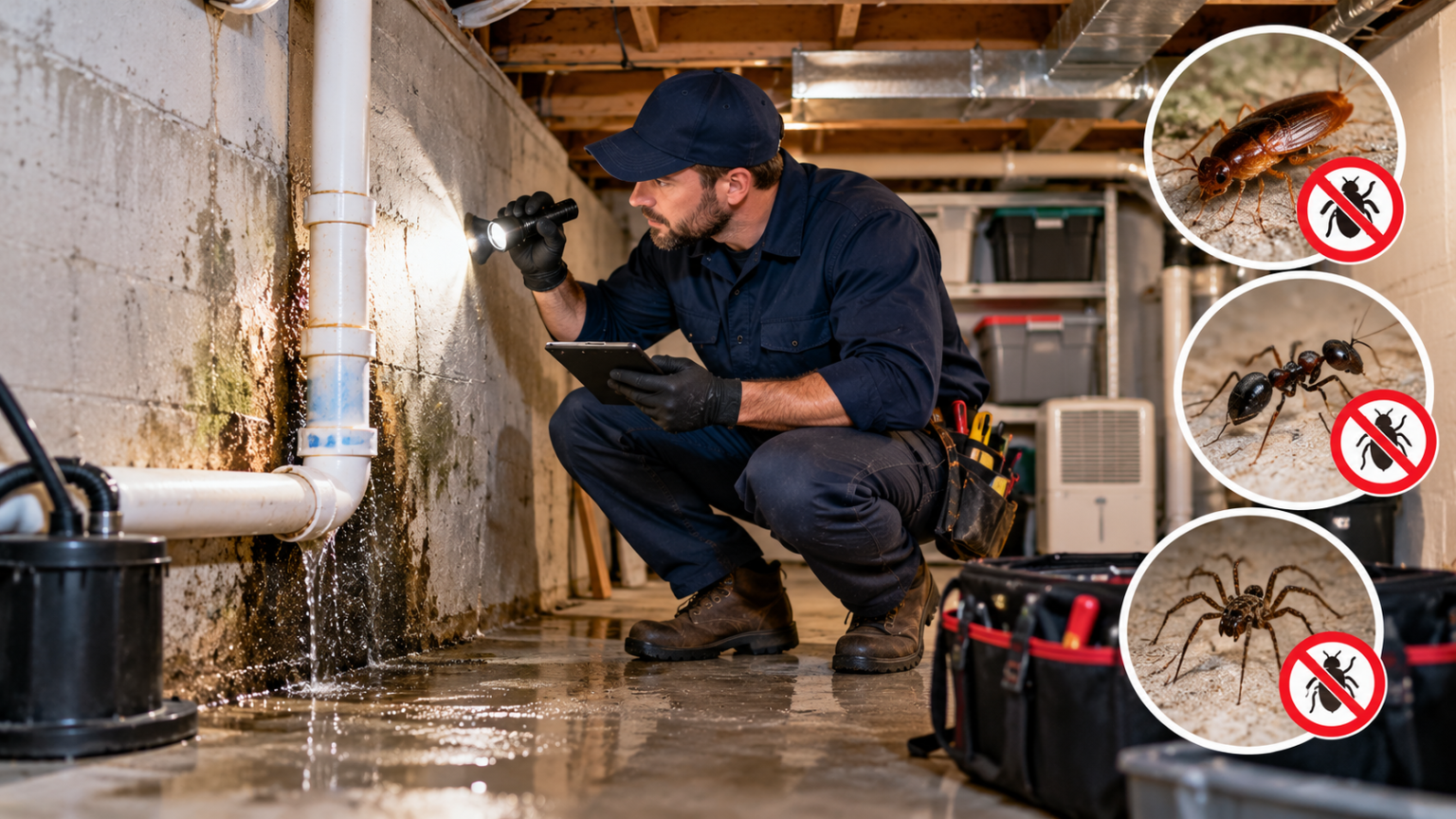
When homeowners discover insects or rodents inside their living spaces, their immediate reaction often involves applying topical pest sprays, setting traps, or scattering insect baits. While these temporary measures may address visible pests, they fail to solve the core environmental conditions that attract organisms into residential structures in the first place.
Pests require three fundamental elements to survive and build indoor colonies: shelter, food, and moisture. Among these three necessities, moisture serves as the single primary catalyst for residential pest infestations. Controlling interior humidity and repairing minor plumbing leaks eliminates the foundational environment that sustains household pests, effectively stopping infestations directly at their source.
The Biological Link Between Water and Household Pests
Water is essential for insect metabolism, egg incubation, and colony expansion. Understanding how moisture attracts specific pest species enables homeowners to implement targeted environmental controls across vulnerable home areas.
High-Moisture Insect Invaders
Cockroaches, silverfish, earwigs, and springtails possess thin exoskeletons that lose body water rapidly in dry ambient air. To survive, these pests actively seek damp microclimates where environmental humidity remains high.
Kitchen sink cabinets, bathroom vanity bases, utility rooms, and damp basements provide ideal habitats for moisture-dependent pests. Cockroaches can survive for weeks without food, but they perish within days without access to free-standing water drops. Eliminating localized plumbing drips deprives insect populations of essential hydration, forcing them to migrate elsewhere.
Wood-Destroying Organisms and Damp Timber
Subterranean termites, carpenter ants, and wood-boring beetles are directly attracted to damp, decaying wood framing. Leaking roof flashings, overflowing gutters, and slow plumbing drips weaken structural timber, breaking down tough lignin fibers into soft, digestible material.
Carpenter ants do not consume wood for food, but they selectively target moisture-damaged timber to hollow out nesting galleries for their expanding colonies. Subterranean termites require continuous moisture to construct protective mud tubes that shield them from dry surrounding air. Fixing structural leaks protects the structural integrity of your building envelope while rendering wooden framing unappealing to destructive wood-boring insects.
Identifying Hidden Moisture Sources Around the Home
Plumbing leaks are not always obvious floods under kitchen sinks. Slow, hidden water leaks often go unnoticed for months, steadily creating damp micro-environments inside wall cavities and subflooring.
Indoor Plumbing Fixtures and Appliance Lines
Inspect under-sink plumbing, flexible dishwasher supply hoses, refrigerator ice-maker lines, and washing machine connections regularly. Tiny pinhole leaks in copper supply lines or loose drain pipe joints create slow, persistent dampness that saturates surrounding cabinetry and subflooring.
Bathroom shower surrounds, decaying bathtub tile grout, and worn toilet wax rings allow water to seep directly beneath floor tiles. Moisture trapped under bathroom floor tiles decays subflooring, providing an ideal, undisturbed breeding zone for silverfish and drain flies.
Exterior Drainage, Roofline Leaks, and Foundation Moisture
Exterior water management directly impacts interior pest activity. Clogged roof gutters and short downspout extensions allow heavy rainwater to pool directly against foundation footings.
Excess water saturates perimeter soil, driving subterranean pests upward into foundation cracks, crawlspace vents, and basement sill plates. Ensuring downspouts discharge rainwater at least five feet away from foundation walls keeps perimeter soil dry, reducing insect pressure along the exterior building boundary.
Practical Steps for Comprehensive Moisture Control
Implementing proactive moisture reduction strategies transforms a damp, welcoming residence into an uninviting environment for invasive pests.
Repairing Leaks and Sealing Building Enclosures
Addressing moisture problems requires a systematic approach to household repairs. Fix dripping faucets, replace corroded sink drain traps, and reseal deteriorating tub and shower caulking promptly.
Inspect exterior walls for masonry cracks, missing siding sealant, or deteriorating window frame caulk that permits rainwater entry. Sealing structural building gaps prevents water infiltration while physically blocking pest entryways.
Humidity Management and Crawlspace Ventilation
Maintaining healthy interior humidity levels prevents moisture accumulation in unventilated home zones. Use bathroom exhaust fans during showers and run kitchen range hoods while cooking to remove atmospheric steam.
In damp basements and enclosed crawlspaces, install dedicated heavy-duty dehumidifiers to keep relative humidity levels consistently below fifty percent. Encapsulating exposed earth crawlspaces with heavy polyethylene vapor barriers stops soil moisture from evaporating into floor joists. Keeping subfloors dry deters pests, prevents mold spore development, and protects subfloor structural strength.
Combining Moisture Control with Professional Maintenance
While managing moisture control addresses the primary environmental cause of pest infestations, combining structural repairs with routine professional inspections provides complete, long-term home protection.
Addressing Structural Damage and Mold Remediation
When plumbing leaks remain unaddressed over extended periods, wood framing absorbs moisture and begins decaying. Replacing water-damaged drywall, rotted subflooring, and compromised wood framing eliminates existing pest nesting sites.
Removing moldy building materials improves interior air quality and eliminates fungal food sources that sustain specialized mold-feeding beetles and mites.
Long-Term Integrated Pest Management Strategies
Fixing plumbing leaks forms the cornerstone of Integrated Pest Management, a holistic approach that emphasizes structural prevention over chemical treatments. Inspecting utility closets, basements, and attic spaces regularly allows homeowners to spot subtle moisture issues early.
When persistent pest activity occurs despite maintaining dry conditions, partnering with certified professionals for pest control services in Seattle provides specialized structural inspections, targeted environmental controls, and peace-of-mind home protection year-round.
