
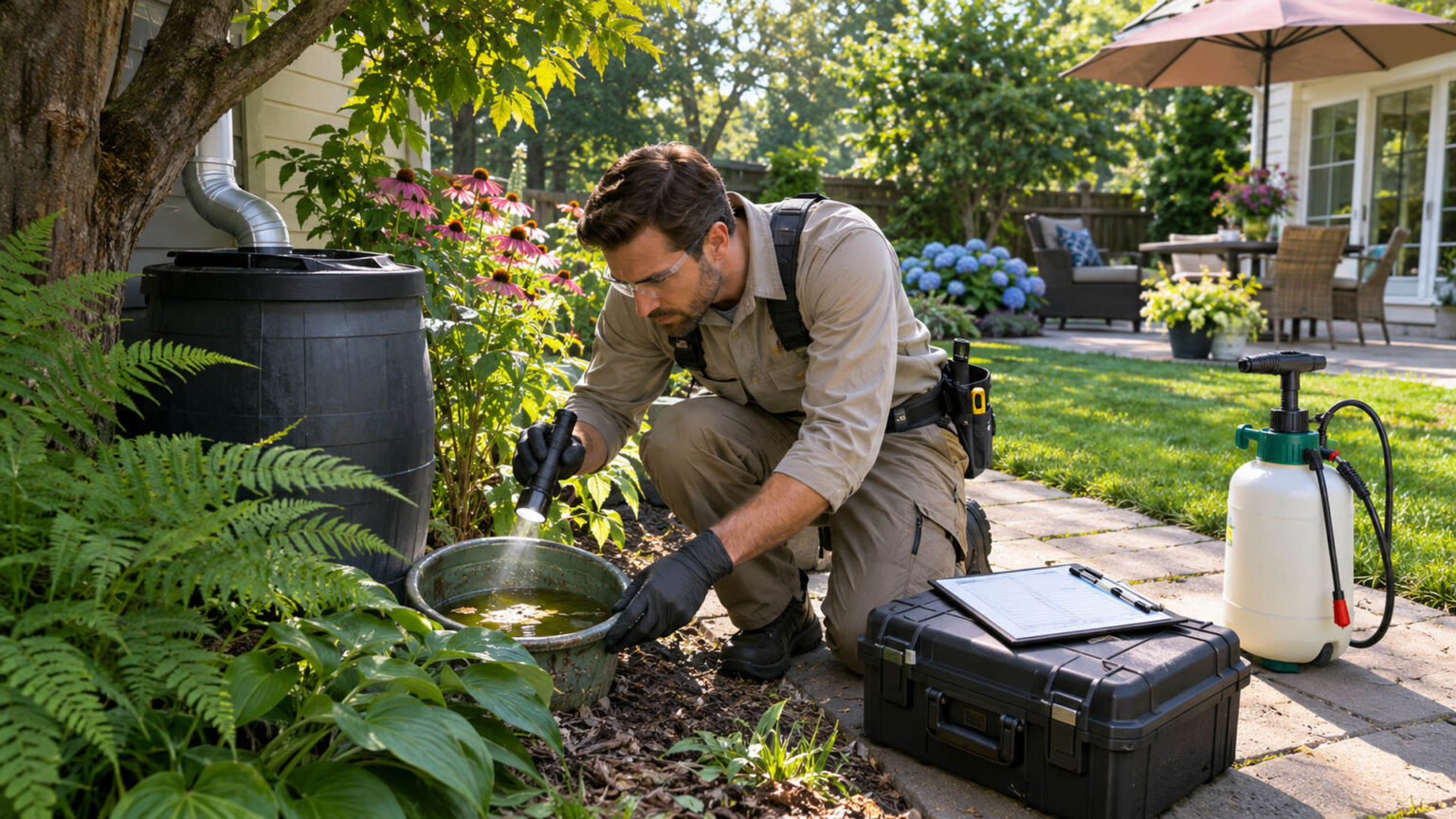
Searching for mosquito control near me is often the first step homeowners take when mosquitoes begin interfering with outdoor activities, family gatherings, or everyday comfort. These insects can make gardens, patios, balconies, and other outdoor spaces difficult to enjoy. In some regions, certain mosquito species can also transmit diseases, making effective prevention an important household consideration. Choosing the right local mosquito control service involves understanding treatment methods, professional qualifications, safety practices, and the environmental conditions that allow mosquitoes to reproduce.
A successful mosquito management plan should do more than temporarily reduce the number of flying insects. It should identify breeding sites, address standing water, target mosquito populations appropriately, and help prevent recurring problems.
Professional pest control providers may offer property inspections, larval treatments, targeted adult mosquito control, and seasonal maintenance services. However, the quality and suitability of these services can vary.
This guide explains how to evaluate local mosquito control companies, compare treatment options, understand potential costs, and develop practical strategies for making outdoor spaces more comfortable.
What Is Professional Mosquito Control?
Professional mosquito control is a pest management service designed to reduce mosquito populations around residential, commercial, or public properties.
The process may involve identifying mosquito breeding areas, managing standing water, applying appropriate treatments, and monitoring mosquito activity.
Unlike general pest treatments that target a broad range of insects, dedicated mosquito management focuses on mosquito behaviour, breeding habitats, and the conditions that support their development.
How Mosquito Control Services Work
Most comprehensive mosquito management programs combine several approaches.
A technician may begin by examining the property for containers, drainage problems, shaded resting locations, and other conditions associated with mosquito activity.
The next step involves selecting appropriate control methods based on the inspection.
Some properties benefit mainly from removing breeding habitats. Others may require targeted treatment of water that cannot be removed or treatment of areas where adult mosquitoes rest.
A responsible provider should explain why a particular method is appropriate and what results can reasonably be expected.
Why One Treatment May Not Solve the Problem
Mosquitoes can enter a property from surrounding locations.
Even when breeding sites within one garden are removed, mosquitoes may arrive from nearby vegetation, drains, or neighbouring properties.
Environmental conditions also change throughout the season.
Rainfall can create new breeding sites, while warm weather may support continued mosquito activity.
For these reasons, long term mosquito management often requires a combination of preventive measures and periodic reassessment.
Why Mosquitoes Are Attracted to Residential Properties
Understanding mosquito behaviour can help homeowners recognise the conditions that contribute to recurring infestations.
Different mosquito species prefer different habitats, but several common environmental factors influence their presence.
Standing Water Creates Breeding Opportunities
Many mosquito species lay their eggs in or around water.
Common residential breeding locations include flowerpot saucers, discarded containers, blocked gutters, uncovered water storage, and neglected outdoor equipment.
Some species can reproduce in surprisingly small collections of water.
Removing unnecessary standing water is therefore one of the most important preventive measures.
Shaded Areas Provide Resting Locations
Adult mosquitoes often shelter in humid, shaded environments.
Dense shrubs, overgrown vegetation, and sheltered areas beneath outdoor structures may provide suitable resting conditions.
These locations can become particularly relevant during hot or dry periods.
Weather Influences Mosquito Activity
Temperature, rainfall, humidity, and seasonal patterns influence mosquito development and activity.
The timing and intensity of mosquito seasons differ between locations.
A treatment schedule suitable for one region may not be appropriate elsewhere.
Nearby Properties Can Affect Your Yard
Mosquito management is not always limited to a single property.
Breeding locations outside a homeowner’s control may continue producing mosquitoes.
This makes neighbourhood awareness and cooperation valuable components of broader mosquito prevention.
11 Essential Strategies for Finding Reliable Local Mosquito Control
Choosing a mosquito control provider should involve more than comparing advertisements.
The following strategies help homeowners assess service quality, treatment suitability, safety, and long term value.
1. Verify Professional Qualifications and Local Requirements
Start by checking whether the company meets the licensing and registration requirements applicable to mosquito control services in your area.
Requirements vary by country, state, province, and municipality.
Some jurisdictions require specific qualifications for pesticide application, while others have different rules for pest management activities.
A professional provider should be able to explain which requirements apply to its services.
What to Verify Before Booking
Ask whether the company has appropriate business registration, relevant pesticide application credentials, and insurance for the work being performed.
Confirm that the person applying treatments has the qualifications required for the products and methods involved.
Avoid assuming that general business registration alone establishes technical competence.
2. Choose a Company That Inspects the Property
An inspection helps identify the actual conditions supporting mosquito activity.
A company that recommends the same treatment for every property without asking relevant questions may overlook important causes.
Professional assessments can examine water accumulation, vegetation, drainage, and the areas where mosquitoes are most noticeable.
The inspection should also consider how the household uses its outdoor spaces.
For example, a property with a decorative pond may need a different management approach from a small paved courtyard.
Questions to Ask During the Inspection
Find out which areas appear to support mosquito breeding and which conditions can be corrected without chemical treatment.
Ask the technician to distinguish between confirmed breeding sites and places that merely provide suitable resting habitat.
This helps ensure that the treatment plan addresses observable problems rather than assumptions.
3. Prioritise Mosquito Breeding Site Removal
Removing unnecessary breeding habitats is a central part of effective mosquito management.
Adult mosquito treatments may reduce existing populations, but new mosquitoes can continue emerging when suitable water sources remain.
A thorough inspection should identify containers and other features that collect water.
Examples include unused buckets, garden ornaments, roof gutters, and damaged drainage areas.
Practical Breeding Prevention Steps
Homeowners can reduce breeding opportunities by:
- Emptying unnecessary water containers regularly.
- Cleaning flowerpot saucers and birdbaths.
- Keeping rainwater storage properly covered.
- Maintaining gutters and drainage channels.
- Correcting avoidable water accumulation.
- Keeping swimming pools maintained according to their operating requirements.
Items that collect water should generally be emptied and scrubbed at least once a week where practical.
Water that cannot be removed may require a different management method.
4. Compare Available Mosquito Treatment Methods
Not every mosquito problem requires the same treatment.
A knowledgeable provider should explain the available options and why a particular approach has been recommended.
Common methods include managing breeding habitats, treating mosquito larvae, and controlling adult mosquitoes.
Larval Mosquito Control
Larvicides are products designed to control mosquitoes during their immature aquatic stages.
They may be useful in suitable water sources that cannot be emptied, covered, or otherwise managed.
One biological larvicide ingredient used in certain products is Bacillus thuringiensis israelensis, commonly abbreviated Bti.
Its suitability depends on the product formulation, labelled application sites, and local regulations.
Adult Mosquito Treatments
Adulticides are insecticides intended to control adult mosquitoes.
Certain products may be applied to suitable resting areas or used in other authorised mosquito management operations.
Their performance depends on the active ingredient, application method, mosquito species, environmental conditions, and possible insecticide resistance.
A professional should explain the expected benefits and limitations before treatment.
5. Request a Treatment Plan for Your Property
An effective mosquito management program should reflect the property’s characteristics.
Important considerations include yard size, nearby vegetation, water features, seasonal activity, and household preferences.
A provider should identify the areas requiring attention and explain how the treatment is expected to address the problem.
For example, a home with frequent mosquito activity around a shaded patio may need different control priorities from a property with persistent standing water.
The proposed plan should specify which locations will be inspected or treated.
It should also explain any actions the homeowner must complete before or after service.
6. Ask About Treatment Products and Safety
Product transparency is important when evaluating a mosquito control company.
Homeowners should know what substances may be applied around their property and how those products are intended to work.
Request the product name, active ingredients, intended application areas, and relevant safety instructions.
A professional provider should be willing to discuss these details.
Understanding Product Labels
Pesticide labels contain important information about approved uses, application restrictions, handling precautions, and other requirements.
Products should be used only in accordance with applicable label instructions and local laws.
Homeowners should never assume that a pesticide approved for one location or purpose is suitable for every environment.
Preparing Children and Pets
Ask whether children and animals need to remain away from treated areas during application or for a specified period afterward.
Follow the actual product instructions rather than relying on a universal waiting time.
Pet bowls, toys, and other personal items may need to be moved or protected before treatment.
A qualified provider should explain the required precautions clearly.
7. Consider Effects on Pollinators and the Environment
Mosquito management should account for surrounding plants, wildlife, water features, and beneficial insects.
Some broad spectrum insecticides used against mosquitoes can also affect insects that are not the intended targets.
Bees, butterflies, and other pollinators may be exposed when applications are poorly timed or directed toward unsuitable locations.
Ask About Targeted Application
A responsible provider should explain how it limits unnecessary treatment.
This may include prioritising breeding site removal, selecting appropriate application areas, and considering flowering plants or nearby water.
Chemical treatment should be based on a practical need rather than an assumption that more spraying always produces better results.
Protecting Water Features
Ponds, aquariums, streams, and other water environments may require special precautions.
Some insecticide ingredients are hazardous to aquatic organisms.
Tell the technician about all nearby water features before work begins.
8. Understand What Results Are Realistic
No mosquito control company can reliably promise that every mosquito will disappear permanently from an outdoor property.
Mosquito populations are influenced by weather, neighbouring habitats, breeding conditions, and continued immigration from surrounding areas.
A successful service may reduce mosquito activity substantially without eliminating every insect.
How to Evaluate Treatment Performance
Discuss what the company expects to improve and how progress will be assessed.
The provider may consider mosquito observations, activity in previously problematic areas, and the presence of breeding habitats.
Some professional programs use traps or other monitoring tools.
Homeowners can also record when and where mosquito activity remains noticeable.
This information helps determine whether further inspection or a different strategy is needed.
9. Compare Written Quotes and Service Agreements
Price matters, but the lowest quote does not necessarily represent the best service.
Mosquito control packages can differ in inspection quality, treatment methods, property coverage, and follow up support.
Request written estimates that describe what is included.
What a Clear Quote Should Explain
Look for information about:
- Initial inspection charges.
- Areas included in the service.
- Treatment methods and products.
- Number of planned visits.
- Follow up inspection arrangements.
- Conditions for additional treatments.
- Cancellation and payment requirements.
Avoid comparing only the headline price.
A more useful comparison considers the work performed and the responsibilities included in the agreement.
10. Evaluate Reviews and Customer Support
Customer feedback can provide insight into communication, punctuality, and service reliability.
However, online reviews should be assessed carefully.
A large number of positive comments does not guarantee that a company uses appropriate mosquito control methods.
Look for detailed experiences describing inspection quality, explanation of treatments, and how concerns were handled.
Check How the Company Responds to Problems
A reliable provider should explain what happens if mosquito activity continues after treatment.
Ask whether follow up evaluations are included or separately charged.
Find out how customers can report unexpected problems.
Clear communication is especially important when a service involves treatments around homes, gardens, or frequently used outdoor areas.
11. Select a Provider That Supports Long Term Prevention
The strongest mosquito management plans combine professional intervention with practical household prevention.
Repeated pesticide applications without addressing breeding opportunities may fail to manage the underlying problem.
Look for a provider that explains how homeowners can maintain improvements between visits.
Recommendations may include water management, screen maintenance, vegetation care, and monitoring after rainfall.
A company that helps customers understand mosquito behaviour can provide value beyond the treatment appointment itself.
Professional Mosquito Control Treatment Options Explained
Different service methods address different stages of the mosquito life cycle.
Understanding these differences helps homeowners interpret treatment recommendations.
Targeted Outdoor Barrier Treatments
Some providers apply insecticides to vegetation or other locations where adult mosquitoes are likely to rest.
These applications are sometimes described as barrier treatments.
The objective is to reduce adult mosquito activity in selected areas.
Results vary with product characteristics, weather, application quality, and mosquito movement.
Outdoor barrier treatments are not guaranteed to prevent every bite.
Mosquito Fogging
Fogging disperses insecticide droplets into an area to target adult mosquitoes.
It may be used in specific professional mosquito control situations.
However, fogging does not remove breeding sites and may provide only temporary population reduction.
Appropriateness depends on local regulations, mosquito activity, environmental conditions, and the specific control objective.
Larvicide Applications
Larval treatment addresses mosquitoes before they become flying adults.
This approach can be useful when breeding water cannot reasonably be eliminated.
Examples may include certain drains, water holding structures, or approved ornamental water features.
The product must be suitable for the exact application site.
Mosquito Traps
Some mosquito traps use light, carbon dioxide, attractants, or other mechanisms.
Their effectiveness varies considerably with device design, placement, mosquito species, and surrounding conditions.
Traps should not automatically be considered a replacement for removing breeding sites.
A provider should explain whether a proposed device is intended for monitoring or control.
Automatic Mosquito Misting Systems
Automatic misting systems apply insecticides at programmed intervals.
Although these products are marketed for residential mosquito control, routine automatic spraying can introduce concerns about unnecessary pesticide use, exposure, and effects on beneficial insects.
An integrated approach that considers actual mosquito activity and prioritises prevention is generally preferable to indiscriminate recurring applications.
How Much Does Mosquito Control Near You Cost?
The price of local mosquito control depends on the service area, property conditions, treatment requirements, and provider.
There is no universal price that accurately represents every location.
A small residential property with a limited mosquito problem may require a different amount of work from a large landscaped property with persistent breeding habitats.
Factors That Influence Service Pricing
Important pricing factors include property size, inspection time, access to treatment areas, required products, and the frequency of visits.
Custom treatment requirements may also increase costs.
Some providers offer individual appointments, while others provide seasonal service packages.
One Time Service vs Seasonal Plans
A single treatment may be appropriate for a specific short term concern.
A seasonal plan may involve recurring inspections and treatments during periods of mosquito activity.
However, recurring visits are not always necessary for every property.
The appropriate schedule should reflect actual conditions and a justified management plan.
How to Avoid Unexpected Charges
Ask for a written explanation of the total service cost.
Confirm whether inspection fees, follow up visits, additional treatment areas, or cancellation charges are included.
If an annual or seasonal package is offered, review the renewal conditions before agreeing.
DIY Mosquito Control vs Professional Services
Homeowners can take several important mosquito prevention steps without hiring a contractor.
The most useful starting point is reducing standing water and preventing mosquitoes from entering indoor spaces.
Professional help becomes more valuable when the problem persists, breeding sites are difficult to identify, or specialised treatment is being considered.
What Homeowners Can Do Themselves
Regularly inspect outdoor containers and remove unnecessary standing water.
Repair damaged window and door screens.
Keep outdoor water features maintained and cover suitable storage containers securely.
When spending time outside, use an appropriate insect repellent according to its instructions.
Long sleeves and other protective clothing can also reduce exposed skin.
When Professional Assistance Is Useful
Consider professional assessment when mosquito activity remains high despite consistent prevention.
Persistent breeding sources, difficult drainage problems, or complex landscaping may require additional expertise.
Professional intervention can also be appropriate when an area has a recognised mosquito borne disease concern and local health authorities recommend specific measures.
How to Prepare Your Yard Before a Mosquito Control Visit
Preparation can improve access and help the technician complete a thorough assessment.
The exact requirements depend on the planned service.
Remove Unnecessary Outdoor Clutter
Clear objects that block access to areas requiring inspection.
Empty containers holding unnecessary water and identify places where water repeatedly accumulates.
Avoid disturbing areas that the technician specifically wants to examine before treatment.
Identify Sensitive Locations
Tell the provider about vegetable gardens, flowering plants, ponds, aquariums, children’s play areas, and pet spaces.
These details may influence treatment selection and placement.
Communicate Household Concerns
Discuss relevant preferences or concerns about pesticide use before the appointment.
Ask what precautions are necessary for people, animals, and outdoor belongings.
Follow the Provider’s Instructions
Preparation and reentry directions should reflect the actual products and methods being used.
Do not rely on generic advice when a product label specifies different requirements.
Preventing Mosquitoes From Returning After Treatment
Mosquito prevention requires continued attention because new breeding sites can appear after rainfall or changes in property conditions.
A simple routine can help maintain the benefits of professional management.
Establish a Weekly Water Inspection
Check outdoor containers, gutters, garden equipment, and other places that may collect water.
Empty and scrub suitable containers where practical.
Monitor permanent water features according to their maintenance requirements.
Maintain Doors and Windows
Keep insect screens in good condition.
Repair tears and gaps that allow mosquitoes to enter.
Ensure doors close properly and avoid leaving unscreened entrances open unnecessarily.
Manage Outdoor Vegetation
Maintain overgrown areas where practical and inspect shaded locations for mosquito activity.
Vegetation management alone does not eliminate mosquitoes, but it can make certain resting habitats less favourable and improve access for inspection.
Coordinate With Nearby Properties
When mosquitoes originate from shared drainage areas or surrounding properties, individual efforts may have limited results.
Community cooperation can help address breeding conditions beyond one household.
Local public health or mosquito management programs may also offer information about regional concerns.
Common Mistakes to Avoid When Hiring Mosquito Control Services
Some purchasing decisions lead to unnecessary spending or unrealistic expectations.
Recognising common mistakes helps homeowners choose more appropriate solutions.
Choosing a Service Based Only on Price
A low advertised price may exclude inspection, follow up support, or important treatment areas.
Compare the complete scope of work.
Expecting Permanent Elimination
Mosquitoes can move between properties and reproduce when new breeding sites develop.
Claims of permanent outdoor elimination should be treated cautiously.
Ignoring the Source of the Problem
Spraying adult mosquitoes without addressing nearby breeding sites may allow populations to recover.
Effective management requires attention to the mosquito life cycle.
Overlooking Product Information
Homeowners should understand which products are being used and what precautions apply.
Avoid agreeing to unfamiliar treatments without receiving adequate information.
Booking Unnecessary Recurring Treatments
A service schedule should reflect mosquito activity, local conditions, and treatment objectives.
Repeated applications should have a practical justification rather than being automatic.
How Local Mosquito Conditions Affect Treatment Decisions
Mosquito control is highly dependent on regional conditions.
Different mosquito species have different breeding preferences, biting patterns, and seasonal activity.
An approach suitable for one location may not produce the same outcome elsewhere.
Climate and Seasonal Patterns
Warm conditions and rainfall can influence mosquito development.
Some regions experience pronounced seasonal peaks, while others have longer periods of mosquito activity.
Treatment planning should account for local weather rather than relying on a fixed schedule everywhere.
Residential vs Commercial Properties
Homes, restaurants with outdoor seating, hospitality venues, and recreational facilities may have different exposure patterns.
The size and use of an outdoor space can affect monitoring and management priorities.
Commercial properties may also have additional operational or regulatory requirements.
Mosquito Borne Disease Concerns
Certain mosquito species can transmit infections such as dengue, malaria, chikungunya, or West Nile virus.
However, the presence of mosquitoes does not establish that a particular disease is circulating locally.
Disease risks vary substantially by region and season.
Local public health guidance is especially important when mosquito borne illness is a recognised concern.
Professional mosquito treatment should complement personal bite prevention and public health measures rather than replace them.
Frequently Asked Questions
1. How do I find reliable mosquito control near me?
Compare locally qualified providers, request property inspections, review treatment methods, check customer feedback, and obtain clear written estimates before booking.
2. What is the most effective way to control mosquitoes around a house?
An integrated approach combining breeding site removal, suitable larval control, targeted adult mosquito management when needed, and personal bite prevention is generally most effective.
3. How long does professional mosquito treatment last?
Results vary by treatment method, product, rainfall, mosquito activity, and surrounding breeding conditions. A provider should explain realistic expectations for the specific service.
4. Is professional mosquito spraying safe for children and pets?
Safety depends on the product, application method, and compliance with label directions. Ask about required precautions and when treated areas may be used again.
5. How often should professional mosquito control be scheduled?
Treatment frequency depends on local mosquito activity, property conditions, the chosen method, and monitoring results. Not every property requires recurring spraying.
6. Can mosquito control completely eliminate mosquitoes from my backyard?
Complete and permanent elimination cannot be guaranteed outdoors because mosquitoes can enter from surrounding areas. Consistent prevention and appropriate treatment can reduce their numbers.
Conclusion
Finding reliable mosquito control near me requires more than selecting the first available pest control company. Effective results depend on careful property inspection, suitable treatment methods, clear safety practices, and realistic expectations about mosquito activity. Homeowners can improve long term control by combining professional support with regular standing water removal and personal bite prevention. A thoughtful, locally appropriate management plan can make outdoor spaces more comfortable while reducing unnecessary treatments.
