
For homeowners searching for pest control Orlando services, a quick spray may sound like an easy answer to ants in the kitchen or cockroaches around the garage. Lasting improvement usually takes more than that. Central Florida’s warm conditions, frequent rainfall, dense landscaping, and connected buildings can create opportunities for insects and rodents, although the exact problem varies by property and season. Effective pest management begins with identification, careful inspection, removal of food and moisture sources, and treatment matched to the pest. This guide explains seven practical steps, how to select a properly licensed Florida company, and what realistic follow up looks like. It is designed to help residents make informed decisions without promises that any home can remain permanently pest free.
Why Pest Problems Need a Local Orlando Strategy
Orlando homes range from older houses with crawl spaces to newer developments with slab foundations, screened patios, and landscaped yards. Each design creates different entry points and hiding places. Good pest control Orlando planning therefore considers the building, surrounding vegetation, moisture, and evidence of the specific species involved.
Warm Weather and Moisture Change the Risk
Florida’s climate can support insect activity during much of the year, but that does not mean every pest follows the same schedule. Ants may seek food or move indoors as outdoor conditions shift. Cockroaches can benefit from damp utility spaces. Mosquitoes need suitable standing water for development. An accurate inspection looks for the actual conditions present instead of assuming that humidity explains every infestation.
A Prevention Plan Should Change With the Property
A household near mature trees may need extra attention around rooflines and branches. A flat with shared plumbing walls may require coordination with building management. A newly renovated property may have fresh gaps around utility penetrations.
1. Identify the Pest Before Choosing Treatment
One of the most useful first steps in pest control Orlando is finding out which organism you are dealing with. Different ants, cockroaches, and termites require different approaches. A large roach entering from outside is not necessarily evidence of the same indoor infestation pattern associated with German cockroaches. Likewise, termite wings can resemble those of flying ants to an untrained observer.
Common Household Pests in Central Florida
American, smokybrown, and other outdoor cockroaches may enter through openings or arrive with materials, whereas German cockroaches often establish themselves around kitchens, appliances, and other indoor harbourage. Ant species vary in nesting habits and responses to bait. Rodents may leave gnaw marks, droppings, or sounds in concealed spaces. Bed bugs may be introduced through luggage and furnishings, and their presence cannot be judged by housekeeping quality alone.
A reputable pest control Orlando professional should identify the likely pest before recommending extensive chemical applications.
Avoid Treating Every Insect as a Threat
Some insects wandering indoors are occasional visitors rather than a breeding population. Others, including termites, warrant prompt specialist attention because damage may occur out of sight.
2. Inspect the Home From Kitchen to Foundation
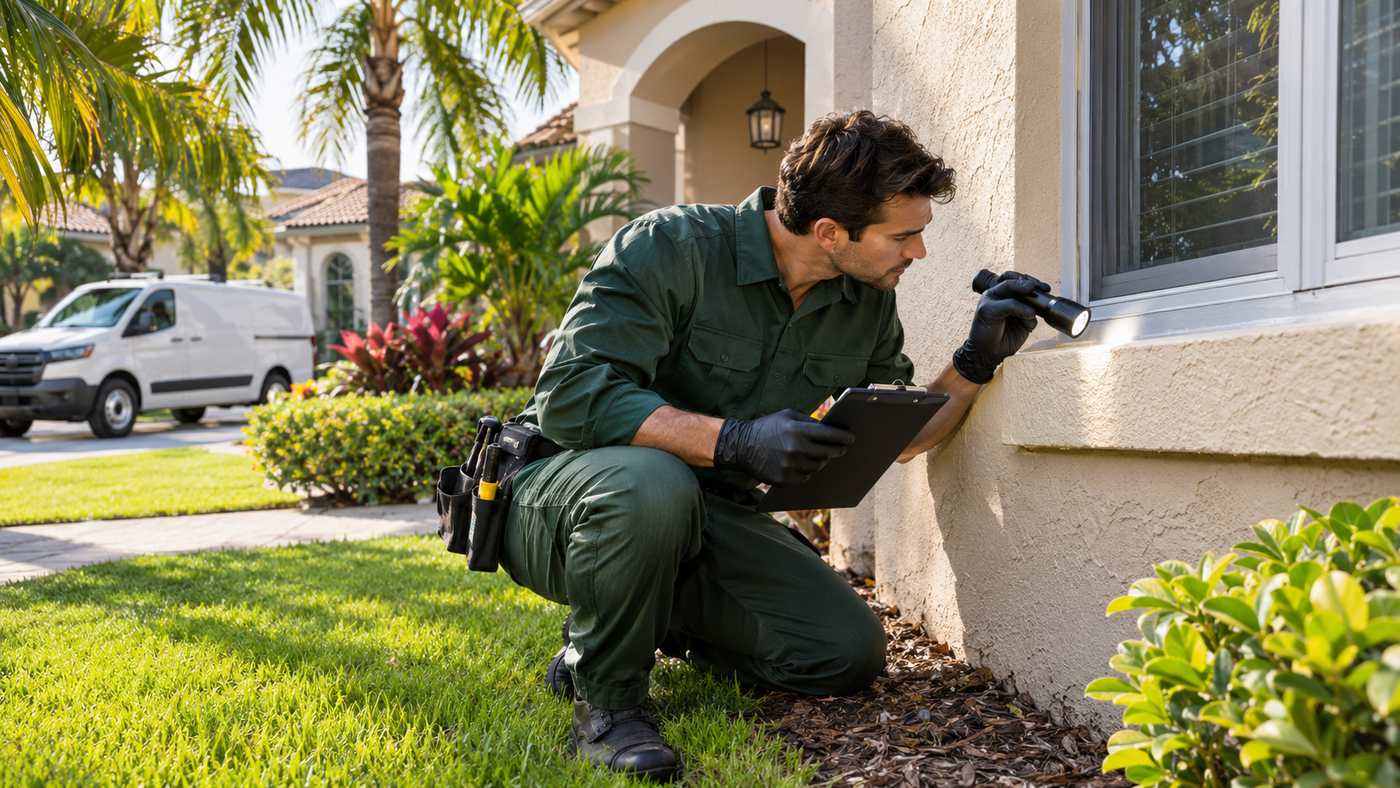
Effective pest control Orlando starts with a structured inspection instead of focusing only on the room where a pest was last seen. Indoors, check behind appliances, under sinks, near pantry shelves, around plumbing openings, and in storage areas. Outdoors, inspect doors, weather seals, utility entries, landscaping close to walls, and places where water collects. Do not enter unsafe attics, crawl spaces, or damaged structures without appropriate help.
Look for Patterns, Not Just Individual Sightings
A trail of ants near a window suggests a different investigation from droppings under a sink or mud tubes along a foundation. Note the date, location, number of sightings, and whether they occur after rain, at night, or near food. Photographs can help a technician identify patterns without relying on vague recollections.
For pest control Orlando properties with recurring problems, keep a simple log after each visit. Record what was found, which prevention work was recommended, and whether activity declined.
Include Areas People Often Overlook
Check the garage door seal, laundry room, air conditioning condensate drainage, exterior hose connections, and gaps where cables enter walls.
3. Remove the Food, Water, and Shelter Pests Need
Integrated pest management, commonly called IPM, combines monitoring, sanitation, exclusion, habitat changes, and carefully chosen treatments. It is a practical foundation for pest control Orlando because pests may return when their underlying resources remain available. An application to an active hiding place is less likely to succeed if water leaks, open food, and entry gaps are ignored.
Improve Everyday Sanitation
Keep dry food in appropriate sealed containers, remove crumbs from counters and appliance spaces, and empty rubbish regularly. Clean pet feeding areas and avoid leaving food exposed overnight where feasible.
Repair leaking taps and pipes, dry persistent condensation, and investigate damp cabinets. In some cases, a plumbing or drainage professional is needed before a pest treatment can remain effective. Pest control Orlando plans for cockroaches and ants often become more practical once these moisture sources are addressed.
Block Access Without Creating New Problems
Repair damaged door sweeps and window screens. Seal suitable cracks around pipes and external openings with materials appropriate for the building. Maintain weatherproofing and ventilation rather than sealing vents that the property needs for safe operation.
Manage the Landscaping Around Walls
Trim vegetation that contacts the structure where appropriate, clear clutter that shelters pests, and avoid keeping firewood directly against the house. An inspection should distinguish a true pest habitat from harmless garden activity.
4. Choose Targeted Treatments and Use Them Safely
Professional pest control Orlando should explain why a treatment is being recommended, what pest it targets, and how its effectiveness will be assessed. For indoor German cockroaches, University of Florida guidance supports an integrated approach that may include suitable baits and insect growth regulators alongside sanitation and monitoring. Widespread spraying is not automatically more effective, and some sprays can interfere with nearby bait performance.
Ask About the Treatment Method
Depending on the pest, a plan may involve sealed entry points, traps, targeted bait placements, or pesticide products applied according to their labels. A mosquito plan is different from a rodent exclusion plan, and a termite program is not interchangeable with routine household insect service. A responsible provider should explain both the expected benefit and the limitations.
For families evaluating pest control Orlando, ask how children, pets, food preparation areas, and sensitive occupants should be protected before, during, and after a visit. Follow written reentry or ventilation instructions that apply to the actual product and treatment. Do not assume every application has the same waiting period.
Never Improvise With Pesticides
Do not mix chemicals, exceed label rates, apply outdoor only products indoors, or use an agricultural pesticide in a home. Avoid homemade combinations of cleaners and pest control products. More product does not necessarily mean better control and may increase exposure or create damage.
5. Treat Termite Concerns as a Separate Priority
Termites deserve particular attention in pest control Orlando because they can remain concealed while affecting wooden parts of buildings. Florida has subterranean termites, including species that may build mud tubes to reach wood above ground. Other termite types may produce different signs. Discarded wings, suspicious tunnels, or damaged timber should be evaluated by someone qualified rather than treated as proof of a particular species.
Seek the Correct Florida Certification
Florida regulates professional structural pest control through the Department of Agriculture and Consumer Services. The categories include general household and rodent control, termite and other wood destroying organisms, lawn and ornamental pests, and fumigation. A company offering termite work needs the appropriate category of certified operator supervising that work, not simply a licence associated with unrelated services.
A pest control Orlando termite inspection should identify accessible evidence, limitations of the inspection, and recommended next steps. Hidden areas may remain unexamined, so buyers should understand what a report does and does not establish.
Compare Termite Agreements Carefully
Termite programs may use monitored bait systems or other properly authorised methods depending on the infestation and building. Ask about the initial inspection, treatment area, follow up schedule, renewal fees, exclusions, and whether any contract offers retreatment, damage repair, or neither. Never assume a warranty means all future damage is covered.
Protect the Building Between Visits
Address leaks, drainage problems, and inappropriate wood or soil contact where feasible. Keep evidence of previous treatment and avoid disturbing installed systems or treated soil without consulting the provider. Preventive maintenance complements professional termite work but cannot certify a building as termite free.
6. Control Mosquitoes and Exterior Conditions
A complete pest control Orlando discussion should include mosquitoes, especially when outdoor living spaces are used frequently. Mosquitoes develop in standing water, so inspecting the yard is a basic preventive step. Check buckets, planters, outdoor toys, clogged gutters, tarps, and other items that hold even small amounts of water after rain.
Make a Weekly Water Check
Empty, scrub, turn over, cover, or dispose of containers according to their use. Maintain swimming pools and ornamental water features appropriately, and ask local authorities or qualified providers about conditions that cannot be drained. Orange County health guidance emphasises eliminating standing water and using appropriate bite prevention measures.
For pest control Orlando households, exterior treatment should not substitute for clearing breeding sites. Control outcomes depend on the species, available habitats, weather, and whether neighbouring properties have suitable water sources.
Reduce Bites While Outdoors
Use an EPA registered insect repellent according to its label and consider long clothing and effective window screens. Permethrin treated clothing is distinct from applying permethrin directly to skin; never use that clothing treatment as a skin spray. Seek medical advice for concerning symptoms after mosquito exposure.
Protect Beneficial Insects and the Environment
Ask a provider why any outdoor pesticide application is needed and how it will be directed toward the target pest. Product labels, drift precautions, flowering plants, and nearby water all matter. A claim of eco friendly treatment is not a substitute for a specific safety explanation.
7. Verify Licensing, Pricing, and the Service Plan
Before booking pest control Orlando services, confirm that the business is licensed with the Florida Department of Agriculture and Consumer Services. Florida requires licensed commercial structural pest control business locations to operate under the relevant certified operator and carry required insurance. Consumers can check the state’s pest control database rather than relying solely on an advertisement or vehicle sign.
Request a Written Inspection and Quote
Describe the pest signs, property type, and affected rooms. Ask whether a visit includes identification, an initial treatment, follow up work, and practical exclusion recommendations. Some companies offer one time services, while others propose recurring plans. Neither model is automatically right for every infestation.
A useful pest control Orlando estimate explains the target pest, treatment scope, visit frequency, total charges, renewal terms, and conditions for additional work. If a termite program is involved, ask for its agreement separately from general household coverage.
Evaluate Professional Communication
A trustworthy technician should be prepared to discuss findings and uncertainties. Be cautious of pressure to sign immediately, vague promises of permanent eradication, or a refusal to identify the material applied. Ask what happens if activity persists and how concerns will be handled. Request a clear invoice and service report after each visit.
Understand What Maintenance Plans Can and Cannot Promise
Preventive visits can monitor recurring problems and catch changes earlier, but they cannot stop every insect or rodent from ever entering. A practical pest control Orlando contract defines how the provider responds when activity returns rather than promising an impossible pest free future.
Additional Considerations for Apartments, Rentals, and Businesses
A renter dealing with pests may need to notify property management promptly and preserve photographs and written records. Responsibility for repairs and treatment depends on the rental agreement and applicable law, so do not assume that every tenant or landlord has identical duties. Multiunit buildings can need coordinated action because insects may move through shared voids, plumbing, and adjoining spaces.
A pest control Orlando strategy for restaurants, offices, or accommodation businesses may also involve sanitation records, access scheduling, and obligations different from those for private residences. Select a provider experienced in the property type and the relevant licence category. Avoid asking unlicensed maintenance staff to perform commercial pesticide work outside applicable authorisations.
When Professional Help Should Be Prompt
Suspected termites, recurring indoor cockroaches, bed bugs, and substantial rodent evidence generally merit timely assessment. Do not disturb suspected structural damage. If rodent droppings are present, follow public health cleaning guidance rather than sweeping or vacuuming dry waste, which can disperse contaminated particles.
Common Mistakes to Avoid
A recurring mistake is treating a pest sighting as proof that the whole property needs indiscriminate spraying. Another is choosing a contractor solely by the lowest introductory rate. Pest control Orlando results depend on correct identification, accessible treatment areas, the resident’s prevention work, and a clear follow up process.
Avoid ignoring leaks, applying incompatible products over professional bait placements, blocking required ventilation, or expecting one appointment to resolve every infestation. Responsible pest management combines measured action with patience.
A Practical Homeowner Checklist
Use this checklist before a service visit or during seasonal maintenance.
- Record the pest type if known, locations, dates, and photographs of activity.
- Check for leaks, standing water, open food, damaged screens, and entry gaps.
- Ask the company which Florida certification category applies to the planned work.
- Request an itemised quote and clarify follow up visits and cancellation terms.
- Tell the technician about pets, children, allergies, and other relevant household needs.
- Follow product specific preparation and reentry instructions after treatment.
- Recheck affected areas and report ongoing activity rather than assuming success.
A detailed pest control Orlando plan can include many of these low cost preventive habits without requiring chemical applications at every visit.
Frequently Asked Questions
Which pests are common around Orlando homes?
Ants, cockroaches, mosquitoes, rodents, and termites are relevant concerns in Central Florida. The species and severity vary by property, so an inspection should guide treatment.
How often should I schedule pest control Orlando services?
There is no universal interval. The appropriate schedule depends on the pest, past activity, building conditions, monitoring results, and the treatment agreement.
How can I verify a Florida pest control company?
Check its business licence through the Florida Department of Agriculture and Consumer Services and confirm that the appropriate certified operator oversees the offered service.
Is professional pest treatment safe for pets and children?
Risk depends on the product, placement, and exposure. Ask for instructions before treatment, disclose household concerns, and follow the label and provider’s written precautions.
Does general pest control include termite treatment?
Not necessarily. Florida treats termite and other wood destroying organism work as a distinct certification category. Confirm that the quote covers the specific service you need.
Can I prevent pests without spraying every month?
Some problems improve with sanitation, sealing openings, fixing moisture issues, and monitoring. Confirmed infestations may still need targeted treatment based on their biology.
Conclusion
Effective pest control Orlando begins with accurate identification and a careful understanding of the home, not a promise of instant eradication. Reduce access to food and water, monitor activity, and reserve targeted treatments for situations that warrant them. Verify Florida licensing, read the service agreement, and give termite concerns appropriate specialist attention. A consistent prevention and follow up plan offers a more realistic way to protect the property throughout the year.
