
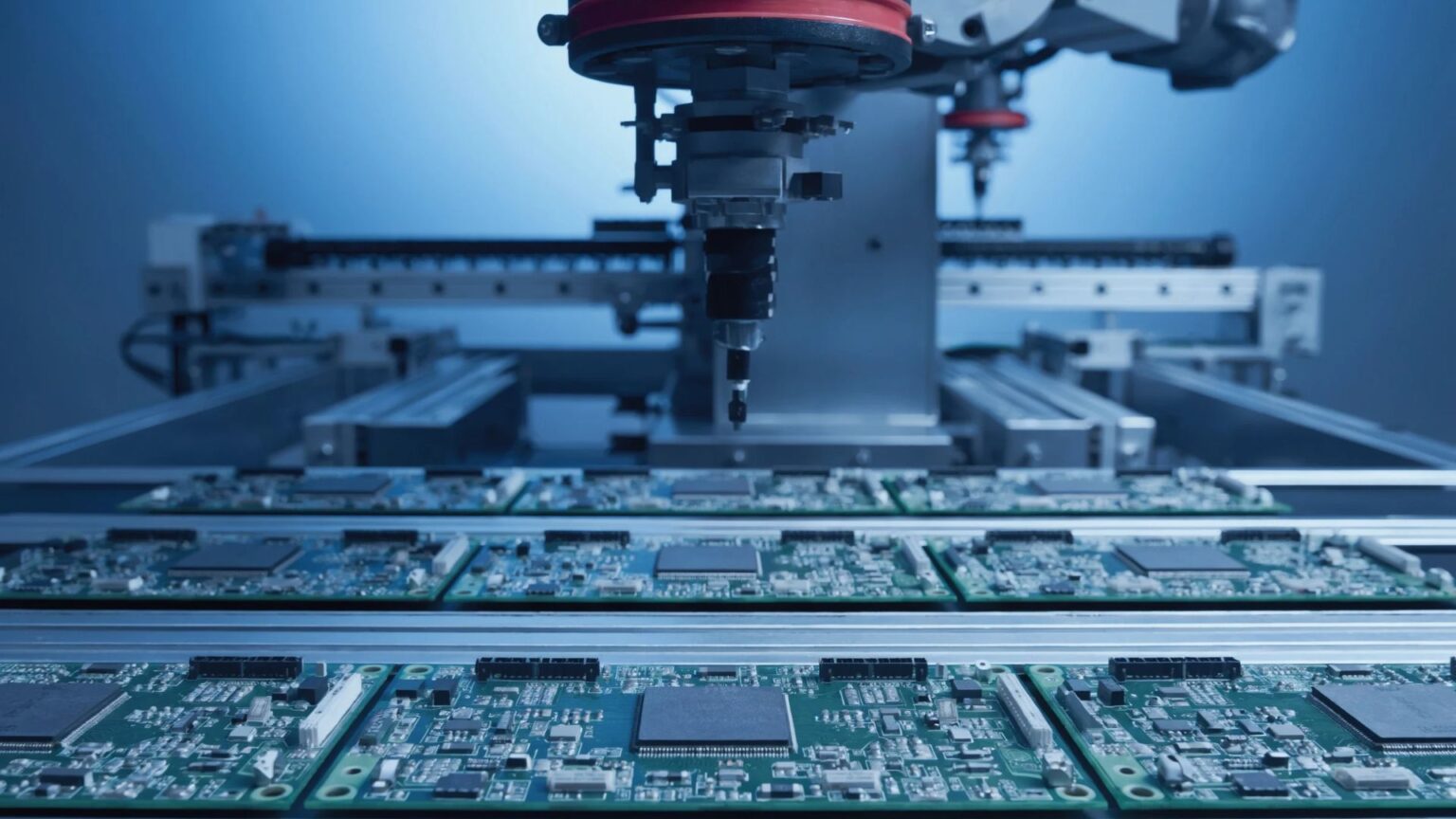
Modern manufacturing is evolving as businesses search for lighter, more flexible, and adaptable electronic components. printed electronics offer an innovative approach to producing electronic circuits, sensors, antennas, and functional devices through specialized printing technologies. Unlike manufacturing methods that depend entirely on conventional circuit fabrication, this approach allows manufacturers to deposit functional materials directly onto suitable surfaces.
From wearable healthcare devices and intelligent packaging to automotive interiors and industrial monitoring systems, printing technology is creating opportunities for new electronic product designs.
Manufacturers can explore thinner components, flexible structures, and more integrated electronic functionality. However, successful implementation requires careful material selection, reliable production methods, and comprehensive performance testing.
Understanding the technology, manufacturing processes, industrial applications, and practical limitations helps businesses make informed decisions about adopting advanced electronic manufacturing solutions.
What Are Printed Electronics?
Printed electronics are electronic components, circuits, and functional structures manufactured by depositing specialized materials onto substrates through printing processes.
These materials may include electrically conductive inks, semiconducting formulations, insulating compounds, and other functional substances.
Manufacturers use these materials to create electronic structures that perform specific electrical, sensing, or communication functions.
Unlike conventional graphical printing, which primarily produces visual content, electronic printing creates patterns designed to perform measurable technical functions.
Common examples include:
- Flexible electronic circuits
- Printed antennas
- Thin film sensors
- Conductive electrodes
- Touch sensitive interfaces
- Flexible heating elements
- Radio frequency identification tags
- Smart packaging components
- Printed photovoltaic structures
The capabilities of individual components depend on material properties, manufacturing accuracy, circuit design, and intended operating conditions.
Printed Electronics Versus Flexible Electronics
Although these terms are frequently used together, they describe different technological characteristics.
Printed electronics refers to the manufacturing process used to deposit functional materials.
Flexible electronics refers to electronic components designed to bend or conform to curved surfaces.
Printed components can be manufactured on rigid or flexible substrates. Similarly, flexible circuits can be produced using conventional manufacturing methods without printing their conductive structures.
How Does Printed Electronics Technology Work?
Electronic printing combines materials science, electrical engineering, and precision manufacturing to produce functional structures.
The manufacturing process generally involves several important stages.
Substrate Selection
A substrate provides the physical surface on which electronic materials are deposited.
Common substrate materials include polyethylene terephthalate, polyimide, paper, textiles, glass, and selected polymer films.
Manufacturers evaluate flexibility, surface quality, thermal resistance, chemical compatibility, and dimensional stability before selecting a suitable substrate.
Functional Ink Deposition
Specialized printing equipment deposits functional inks according to predefined circuit patterns.
These inks may contain metallic particles, conductive polymers, carbon materials, or other substances selected for particular electrical properties.
The deposition process must achieve appropriate material thickness, pattern resolution, and consistency.
Drying and Curing
Printed materials frequently require additional processing to achieve their intended electrical and mechanical characteristics.
Depending on the formulation, manufacturers may use thermal curing, ultraviolet curing, chemical processes, or photonic sintering.
Processing conditions must remain compatible with the selected substrate.
Electrical Testing and Quality Control
After manufacturing, components undergo appropriate testing to evaluate electrical conductivity, resistance, adhesion, dimensional accuracy, and operational reliability.
Additional environmental and mechanical assessments may be necessary for products intended to operate under demanding conditions.
20 Powerful Uses of Printed Electronics Across Modern Industries
Electronic printing supports numerous applications involving sensing, communication, energy management, and product integration.
Some applications are commercially established, while others remain under active research and development.
1. Wearable Healthcare Sensors
Flexible sensors can be integrated into wearable devices that conform to the human body.
These technologies may support temperature monitoring, movement tracking, or measurement of selected physiological signals.
Healthcare applications require appropriate clinical validation, material safety assessments, and consideration of relevant medical device requirements.
2. Smart Medical Patches
Thin electronic patches can combine printed electrodes, sensing elements, and conventional electronic components.
Researchers and manufacturers are exploring these structures for patient monitoring and other medical applications.
Comfort, skin compatibility, signal reliability, and secure information management remain important design considerations.
3. Intelligent Product Packaging
Smart packaging can incorporate printed antennas, identification labels, and sensing components.
These technologies may help businesses provide product information, monitor selected environmental conditions, or support inventory management.
Packaging designers must evaluate manufacturing costs alongside recycling requirements and practical product benefits.
4. RFID Tags and Inventory Management
Radio frequency identification technology allows compatible readers to identify tagged objects through wireless communication.
Printed antennas can form part of RFID tags used in retail, logistics, warehousing, and supply chain management.
Reliable operation depends on antenna design, tag placement, reader compatibility, and surrounding materials.
5. NFC Enabled Products
Near Field Communication technology supports short range wireless interactions between compatible devices.
Manufacturers can incorporate printed antenna structures into labels, access cards, promotional materials, and consumer products.
These applications may provide convenient access to digital information without requiring extensive electronic assemblies.
6. Automotive Interior Controls
Vehicle manufacturers can explore printed circuits for touch sensitive controls, interior lighting interfaces, and integrated electronic surfaces.
Thin electronic structures may help designers reduce the physical space required for certain control systems.
Automotive components must satisfy appropriate reliability, temperature, vibration, and durability requirements.
7. Flexible Heating Elements
Printed resistive materials can generate heat when electrical current passes through them.
These structures may be used in suitable automotive components, industrial equipment, personal comfort products, and other heating applications.
Manufacturers must carefully evaluate temperature distribution, electrical protection, and material stability.
8. Industrial Monitoring Sensors
Industrial facilities frequently require sensors to monitor equipment conditions and operational environments.
Printed sensing structures may support selected measurements involving temperature, pressure, strain, or humidity.
Their performance must be validated against the actual operating conditions of the intended industrial application.
9. Smart Textiles and Connected Clothing
Electronic materials can be integrated into suitable fabrics to create functional textile products.
Potential applications include movement sensing, wearable interfaces, heating structures, and connected clothing.
Textile electronics require particular attention to washing resistance, mechanical deformation, comfort, and electrical safety.
10. Consumer Electronic Devices
Manufacturers can incorporate thin electronic structures into selected consumer products.
Printed circuits may support compact interfaces, antennas, buttons, or sensing components within devices where conventional assemblies occupy excessive space.
The appropriate design depends on product functionality, available manufacturing processes, and performance requirements.
11. Flexible Displays
Printing methods can contribute to manufacturing selected functional layers used in flexible display technologies.
Researchers continue exploring printed materials for electrodes, semiconductor structures, and other display components.
However, not every flexible display is manufactured entirely through printing, and advanced displays often require additional fabrication processes.
12. Printed Photovoltaic Devices
Printed photovoltaic technologies use suitable semiconductor materials to convert light into electrical energy.
These devices may provide opportunities for lightweight energy harvesting structures and specialized product designs.
Efficiency, environmental stability, manufacturing consistency, and operating lifetime remain important challenges for various emerging photovoltaic technologies.
13. Aerospace Electronic Components
Aerospace engineers investigate lightweight and conformable electronic structures for suitable sensing and communication applications.
Printing functional materials onto compatible surfaces may help integrate certain electronic components into complex structures.
Aerospace products require rigorous qualification and environmental testing before operational deployment.
14. Environmental Monitoring Systems
Printed sensing technologies can support selected environmental measurements, including humidity, temperature, and chemical detection.
Researchers may develop compact sensors for agricultural monitoring, industrial environments, and infrastructure assessments.
Calibration and long term stability are essential for obtaining reliable measurements.
15. Agricultural Technology
Agricultural businesses can explore specialized sensing devices for monitoring environmental conditions, storage facilities, and crop related processes.
Flexible or lightweight sensor structures may support applications where conventional equipment is impractical.
The economic value of these devices depends on measurement accuracy, installation requirements, durability, and maintenance costs.
16. Smart Building Infrastructure
Printed sensors and electronic interfaces may support building management applications involving environmental monitoring, occupancy detection, and equipment control.
Suitable components can potentially be integrated into surfaces, control panels, and architectural materials.
Building applications must account for installation conditions, electrical requirements, and long term operational reliability.
17. Electronic Security Labels
Manufacturers can combine printed electronic structures with identification technologies to create product authentication and traceability solutions.
These systems may support verification processes for valuable goods, sensitive documents, and commercial packaging.
Their effectiveness depends on the complete authentication system rather than the electronic label alone.
18. Human Machine Interfaces
Human machine interfaces allow individuals to interact with electronic equipment through controls, buttons, displays, and touch sensitive surfaces.
Printed electrodes and conductive patterns can form part of compact interface assemblies.
These technologies may be suitable for appliances, industrial control panels, automotive interiors, and specialized equipment.
19. Flexible Batteries and Energy Storage
Researchers are investigating printing techniques for producing selected battery electrodes and energy storage structures.
Flexible energy storage technologies could support certain lightweight and compact electronic products.
However, energy capacity, electrical safety, material stability, and manufacturing reliability must be carefully evaluated.
20. Internet of Things Devices
Internet of Things applications combine sensors, communication technologies, and connected software to exchange operational information.
Printed electronics can provide selected sensing elements, antennas, and electrical connections within these devices.
Hybrid designs frequently combine printed structures with conventional semiconductor components to achieve the required processing and communication capabilities.
Main Manufacturing Methods for Printed Electronics
Different printing technologies provide distinct advantages regarding production speed, material compatibility, resolution, and manufacturing costs.
Screen Printing
Screen printing transfers functional material through a patterned mesh onto a substrate.
This approach can produce relatively thick conductive layers and is widely used for suitable electrodes, sensors, and circuit structures.
Print resolution depends on mesh characteristics, ink properties, equipment settings, and substrate conditions.
Inkjet Printing
Inkjet printing deposits small droplets of functional ink onto predefined locations.
Because it uses digitally controlled patterns, manufacturers can modify designs without producing a new physical printing plate for every change.
This makes inkjet technology useful for prototyping, customized structures, and selected precision manufacturing applications.
Flexographic Printing
Flexographic printing uses flexible printing plates to transfer functional materials onto substrates.
The process can support continuous manufacturing and may be suitable for high volume applications involving films, labels, and packaging materials.
Ink transfer consistency and substrate compatibility influence the resulting electrical properties.
Gravure Printing
Gravure printing uses engraved printing cylinders containing small recessed areas that transfer ink onto a substrate.
This method can support continuous manufacturing with consistent material deposition when properly configured.
Initial tooling expenses may make gravure more appropriate for certain high volume production requirements.
Aerosol Jet Printing
Aerosol jet technology directs a focused stream of aerosolized functional material onto a target surface.
It can support selected fine electronic structures and conformal deposition onto complex geometries.
Manufacturers must evaluate equipment costs, material compatibility, deposition speed, and processing requirements.
Materials Used in Printed Electronics Manufacturing
Functional materials determine the electrical and mechanical properties of printed electronic components.
Silver Conductive Inks
Silver based formulations are widely used because silver provides excellent electrical conductivity.
These inks can support conductive tracks, antennas, electrodes, and electrical connections.
Material expenses and processing requirements should be considered during product development.
Copper Conductive Inks
Copper offers good electrical conductivity and may provide cost advantages in certain applications.
However, oxidation can affect its performance. Suitable formulations and processing conditions are necessary to achieve reliable conductive structures.
Carbon Based Materials
Carbon inks can be useful for resistive elements, sensing structures, and selected electronic interfaces.
Graphene and carbon nanotubes are also investigated for specialized applications, although manufacturing consistency and material properties vary.
Conductive Polymers
Conductive polymers provide opportunities for developing flexible electronic structures with particular mechanical characteristics.
Their suitability depends on electrical conductivity, environmental stability, formulation, and intended functionality.
Dielectric and Insulating Materials
Insulating materials separate conductive structures and help prevent unintended electrical connections.
Printed dielectric layers may also form part of capacitors, multilayer circuits, and other electronic devices.
Reliable insulation is essential for maintaining appropriate electrical performance.
Key Benefits of Printed Electronics
Electronic printing offers practical design and manufacturing opportunities when the technology matches the requirements of the intended product.
Lightweight Electronic Structures
Printed components can be manufactured on thin substrates, potentially reducing the weight of certain electronic assemblies.
This characteristic may benefit wearable products, portable equipment, and specialized transportation applications.
Greater Design Flexibility
Electronic printing allows manufacturers to explore circuit patterns and functional structures on different compatible materials.
This flexibility can support curved interfaces, integrated product surfaces, and unconventional electronic designs.
Potential Manufacturing Efficiency
Additive deposition places functional material where it is required rather than relying entirely on processes that remove unwanted material.
Under suitable production conditions, this approach may reduce material consumption and simplify selected manufacturing stages.
Actual efficiency depends on production yield, equipment requirements, processing energy, and material costs.
Opportunities for Large Area Electronics
Printing methods can support electronic structures across relatively large surfaces.
Potential applications include environmental sensing panels, smart packaging, heating elements, and other distributed electronic functions.
Continuous roll to roll manufacturing may improve production efficiency for suitable designs and volumes.
Printed Electronics Versus Conventional Circuit Boards
Traditional printed circuit boards generally use conductive copper patterns on insulating substrates to connect electronic components.
Despite their name, conventional printed circuit boards do not necessarily rely on direct printing of functional conductive materials.
Electronic printing offers an alternative method for creating selected circuit structures, particularly when thinness, flexibility, or surface integration is important.
Conventional circuit boards remain highly suitable for applications requiring established manufacturing standards, complex multilayer connectivity, high electrical performance, and mature supply chains.
Neither approach is universally superior. Engineers should select manufacturing methods according to the product’s technical and commercial requirements.
Understanding Flexible Hybrid Electronics
Flexible hybrid electronics combine printed functional structures with conventional semiconductor devices and other electronic components.
For example, a flexible sensor assembly may contain printed conductive tracks alongside a small integrated circuit responsible for processing measurements.
This approach combines the design opportunities of electronic printing with the established computing capabilities of semiconductor technology.
Challenges Facing the Printed Electronics Industry
Despite promising applications, electronic printing introduces technical and commercial challenges that manufacturers must address.
Electrical Performance Limitations
Printed conductive materials may exhibit higher electrical resistance than conventional bulk metal conductors.
Engineers must evaluate whether the resulting electrical characteristics satisfy the intended application.
Material Compatibility
Functional inks must interact appropriately with their substrates.
Poor adhesion, unsuitable surface characteristics, and incompatible curing temperatures can affect component reliability.
Manufacturing Consistency
Small differences in deposited material thickness, pattern dimensions, or processing conditions can influence electrical performance.
Reliable production requires controlled manufacturing procedures and appropriate inspection methods.
Environmental Durability
Printed components may be exposed to moisture, heat, mechanical stress, chemicals, or repeated bending.
Protective coatings and suitable packaging can help address these conditions, depending on product requirements.
Sustainability Considerations
Although additive manufacturing may reduce certain types of material waste, electronic printing is not automatically environmentally sustainable.
Manufacturers should evaluate ink composition, energy consumption, substrate recyclability, production waste, and end of life management.
A complete lifecycle assessment provides a more meaningful understanding of environmental impact.
How Businesses Can Adopt Printed Electronics Technology
Organizations considering electronic printing should begin with a clearly defined application rather than adopting the technology simply because it is innovative.
Identify the required electrical performance, mechanical characteristics, operating environment, expected production volume, and target manufacturing cost.
Work with qualified materials specialists and electronics manufacturers to develop representative prototypes.
Prototype testing should evaluate electrical conductivity, adhesion, flexibility, environmental resistance, and compatibility with other product components.
Before expanding production, businesses should assess manufacturing yield, supplier reliability, quality control requirements, and long term maintenance responsibilities.
A structured implementation approach helps determine whether electronic printing provides meaningful advantages over existing manufacturing methods.
The Future of Printed Electronics
Electronic printing continues to develop through advances in functional materials, precision deposition equipment, semiconductor integration, and manufacturing automation.
Research organizations such as Fraunhofer and NextFlex are investigating materials and manufacturing processes that can support flexible circuits, integrated sensors, and hybrid electronic devices.
Future developments may improve production consistency, electrical performance, component integration, and manufacturing scalability.
However, widespread commercial adoption will depend on whether emerging solutions satisfy practical requirements involving cost, reliability, durability, and production capacity.
The most promising opportunities are likely to emerge where electronic printing provides functionality or physical design characteristics that conventional manufacturing methods cannot deliver economically.
Frequently Asked Questions
What are printed electronics?
Printed electronics are functional electronic components manufactured by depositing conductive, semiconducting, or insulating materials onto suitable substrates through printing processes.
What materials are used in printed electronics?
Common materials include silver inks, copper formulations, carbon compounds, conductive polymers, dielectric materials, and flexible or rigid substrates.
What are the main applications of printed electronics?
Applications include wearable sensors, RFID tags, smart packaging, automotive controls, flexible circuits, industrial monitoring, and connected devices.
Are printed electronics environmentally friendly?
They may reduce material waste in suitable applications, but environmental benefits depend on materials, manufacturing energy, recyclability, and complete product lifecycle considerations.
Can printed electronics replace traditional circuit boards?
They can replace certain conventional circuit structures, but traditional boards remain necessary for many complex and demanding electronic applications.
What is the future of printed electronics?
Future opportunities include flexible hybrid electronics, advanced sensing devices, intelligent packaging, wearable technology, and improved additive manufacturing processes.
Conclusion
Printed electronics provide an innovative approach to manufacturing flexible circuits, functional sensors, and integrated electronic components across numerous industries. Advances in conductive materials, precision printing, and hybrid electronic manufacturing are expanding practical design opportunities. By prioritizing reliable materials, appropriate production methods, and comprehensive testing, businesses can develop efficient electronic products that address modern technological requirements.
