
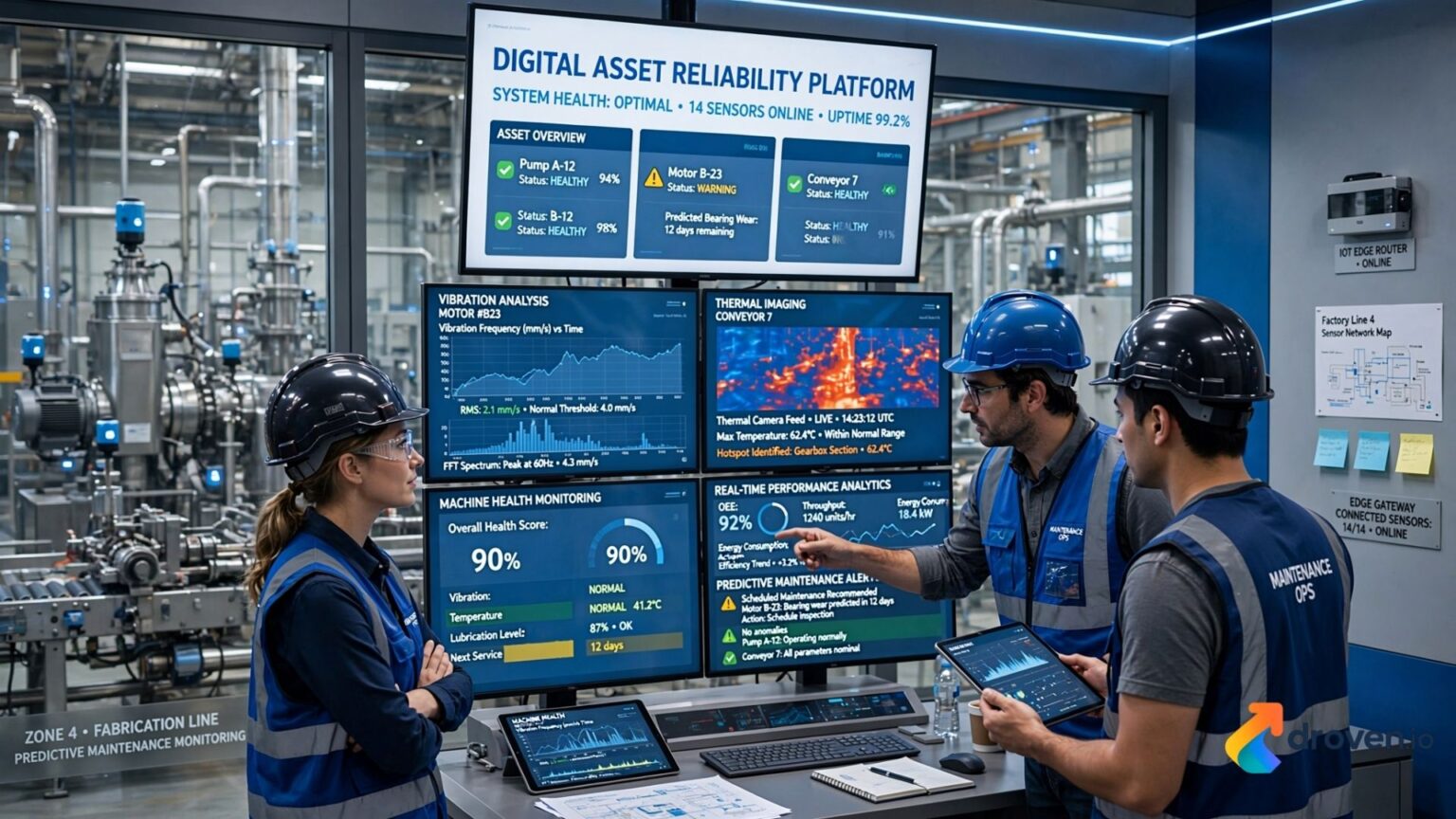
As industries continue to adopt digital transformation, organizations are placing greater emphasis on reducing unplanned downtime, extending equipment life, and improving operational efficiency. Reliability solutions by I-care are designed to help businesses move beyond reactive maintenance by using predictive maintenance, condition monitoring, and data-driven reliability strategies to improve asset performance. Rather than waiting for equipment failures to occur, modern reliability programs focus on identifying potential issues early so maintenance can be planned more effectively.
For manufacturers, energy companies, utilities, mining operations, and other asset-intensive industries, reliability has become a key factor in improving productivity while reducing maintenance costs.
What Are Reliability Solutions by I-care?
Reliability solutions by I-care focus on helping organizations monitor the condition of critical assets and make maintenance decisions based on equipment health rather than fixed maintenance schedules.
These solutions are centered around predictive maintenance and condition monitoring, enabling maintenance teams to identify potential equipment issues before they develop into costly failures.
Depending on operational needs, reliability solutions may support:
- Predictive maintenance
- Condition monitoring
- Asset reliability
- Machine health monitoring
- Vibration analysis
- Lubrication management
- Reliability engineering
- Maintenance optimization
The exact services and technologies vary depending on customer requirements and implementation.
Understanding Predictive Maintenance
Reliability Solutions by I-care and Predictive Maintenance
Predictive maintenance is a maintenance strategy that uses equipment condition data to determine when maintenance should be performed.
Unlike reactive maintenance, which responds after equipment fails, or preventive maintenance, which follows fixed schedules, predictive maintenance aims to identify developing problems before they cause unexpected downtime.
Predictive maintenance programs often rely on:
- Sensor data
- Equipment inspections
- Vibration monitoring
- Temperature monitoring
- Oil analysis
- Ultrasonic testing
- Motor condition analysis
Maintenance decisions are based on equipment condition rather than time alone.
Why Asset Reliability Matters
Industrial organizations depend on reliable equipment to maintain production schedules and operational efficiency.
Improved asset reliability may help organizations:
- Reduce unexpected failures
- Improve equipment availability
- Increase operational efficiency
- Extend equipment life
- Improve maintenance planning
- Reduce production interruptions
Actual outcomes depend on implementation, operating conditions, and maintenance practices.
Key Components of Reliability Solutions
Condition Monitoring
Condition monitoring involves collecting information about equipment performance while machines remain in operation.
Common monitoring methods include:
- Vibration analysis
- Infrared thermography
- Ultrasonic inspection
- Oil analysis
- Electrical testing
These techniques help maintenance teams evaluate machine health over time.
Vibration Analysis
Vibration analysis is widely used to identify developing mechanical problems.
It may help detect:
- Bearing wear
- Shaft misalignment
- Imbalance
- Mechanical looseness
- Gear defects
Early detection allows maintenance teams to investigate issues before major failures occur.
Oil Analysis
Lubricants can provide valuable information about equipment condition.
Oil analysis may identify:
- Metal wear particles
- Contamination
- Lubricant degradation
- Moisture
- Equipment wear trends
Regular analysis supports informed maintenance decisions.
Infrared Thermography
Thermal imaging allows maintenance personnel to identify abnormal heat patterns that may indicate equipment issues.
Applications include:
- Electrical systems
- Motors
- Bearings
- Mechanical equipment
- Process systems
Temperature changes often provide early warning signs of developing problems.
Benefits of Reliability Solutions by I-care
Organizations implementing reliability-focused maintenance programs may experience several operational advantages.
Reduced Unplanned Downtime
Detecting equipment problems early can help maintenance teams schedule repairs before unexpected breakdowns occur.
Reducing unplanned downtime may improve production continuity.
Improved Maintenance Planning
Condition-based information allows maintenance activities to be planned more effectively.
Instead of replacing components based only on calendar schedules, maintenance can often be prioritized according to equipment condition.
Longer Equipment Life
Proper monitoring and timely maintenance may contribute to extending the operational lifespan of machinery.
Equipment longevity depends on many factors including operating conditions, maintenance quality, and equipment design.
Better Resource Allocation
Maintenance teams can prioritize work based on equipment condition, helping allocate labor and spare parts more efficiently.
Industries That Benefit
Reliability solutions are widely used across asset-intensive industries.
Examples include:
- Manufacturing
- Mining
- Oil and gas
- Food processing
- Chemical production
- Power generation
- Water treatment
- Pulp and paper
- Cement
- Transportation
The specific reliability strategy depends on operational requirements.
The Role of Digital Technology
Modern reliability programs increasingly use digital technologies to support maintenance decisions.
Examples include:
- Industrial sensors
- Wireless monitoring
- Cloud-based data platforms
- Machine learning
- Advanced analytics
- Remote monitoring
These technologies provide maintenance teams with greater visibility into asset health.
Reliability Engineering
Reliability engineering focuses on improving equipment performance throughout its lifecycle.
Key objectives include:
- Failure prevention
- Root cause analysis
- Maintenance optimization
- Continuous improvement
- Risk reduction
Reliability engineering supports long-term operational performance.
Data-Driven Maintenance Decisions
One of the major advantages of predictive maintenance is the ability to base maintenance activities on measurable data rather than assumptions.
Maintenance teams can analyze:
- Equipment trends
- Historical performance
- Failure patterns
- Inspection results
- Sensor readings
Using data supports more informed maintenance planning.
Building a Reliability Culture
Technology alone is not enough.
Successful reliability programs often involve:
- Employee training
- Standardized maintenance procedures
- Continuous monitoring
- Cross-functional collaboration
- Ongoing performance reviews
A reliability-focused culture supports continuous operational improvement.
Future of Industrial Reliability
Industrial maintenance continues to evolve with advances in digital technology.
Emerging trends include:
- Artificial intelligence
- Predictive analytics
- Digital twins
- Industrial Internet of Things (IIoT)
- Automated condition monitoring
- Cloud-connected maintenance platforms
Organizations adopting these technologies may gain greater insight into equipment performance and maintenance planning.
FAQs
What are reliability solutions by I-care?
Reliability solutions by I-care focus on predictive maintenance, condition monitoring, and asset reliability to help organizations monitor equipment health and optimize maintenance activities.
What is predictive maintenance?
Predictive maintenance uses equipment condition data to identify potential problems before failures occur, allowing maintenance to be scheduled based on asset condition rather than fixed intervals.
Which industries benefit from reliability solutions?
Manufacturing, mining, oil and gas, utilities, food processing, chemical production, transportation, and other asset-intensive industries commonly use reliability solutions.
How does condition monitoring improve maintenance?
Condition monitoring collects equipment health data through techniques such as vibration analysis, oil analysis, and thermography to help identify developing issues early.
Why is asset reliability important?
Improved asset reliability can support higher equipment availability, reduce unexpected downtime, optimize maintenance planning, and contribute to more efficient industrial operations.
Conclusion
Reliability solutions by I-care demonstrate how predictive maintenance and condition monitoring can help organizations transition from reactive maintenance toward a more proactive, data-driven approach. By monitoring asset condition, analyzing equipment performance, and supporting informed maintenance decisions, these reliability strategies can help improve operational efficiency, reduce unplanned downtime, and optimize maintenance resources. As digital technologies continue to advance, predictive maintenance and asset reliability are expected to remain central components of modern industrial maintenance programs.
