

What size solar generator you need for home backup depends on two numbers: how much power your essential appliances draw at once, and how long you want them to run during an outage. A small unit may cover phones, lights, a modem, and a mini fridge, while a larger system can support refrigerators, sump pumps, microwaves, and even central air in some cases. The right choice starts with your real backup goals, not guesswork. By estimating running watts, surge watts, and battery capacity in watt-hours, you can choose a solar generator that keeps critical loads powered without overspending on capacity you may never use.
How Much Solar Generator Power Does Your Home Need?
Typical Wattage Requirements for Essential Home Appliances
Most homes can estimate backup needs by listing must-run appliances and their typical wattage. LED lights may use 10 to 15 watts each, a Wi-Fi router about 10 to 20 watts, and a laptop 50 to 100 watts. A full-size refrigerator often runs at 150 to 300 watts but may need 600 to 1,200 starting watts. Microwaves usually draw 1,000 to 1,500 watts, sump pumps often need 800 to 1,500 watts with higher startup surges, and space heaters commonly use 1,500 watts. Portable air conditioners can range from 1,000 to 2,000 watts. If you only want essentials, total demand may stay under 2,000 watts. Adding kitchen loads, pumps, or cooling quickly pushes the required output much higher.
Solar Generator Sizes for Basic, Partial, and Whole-Home Backup
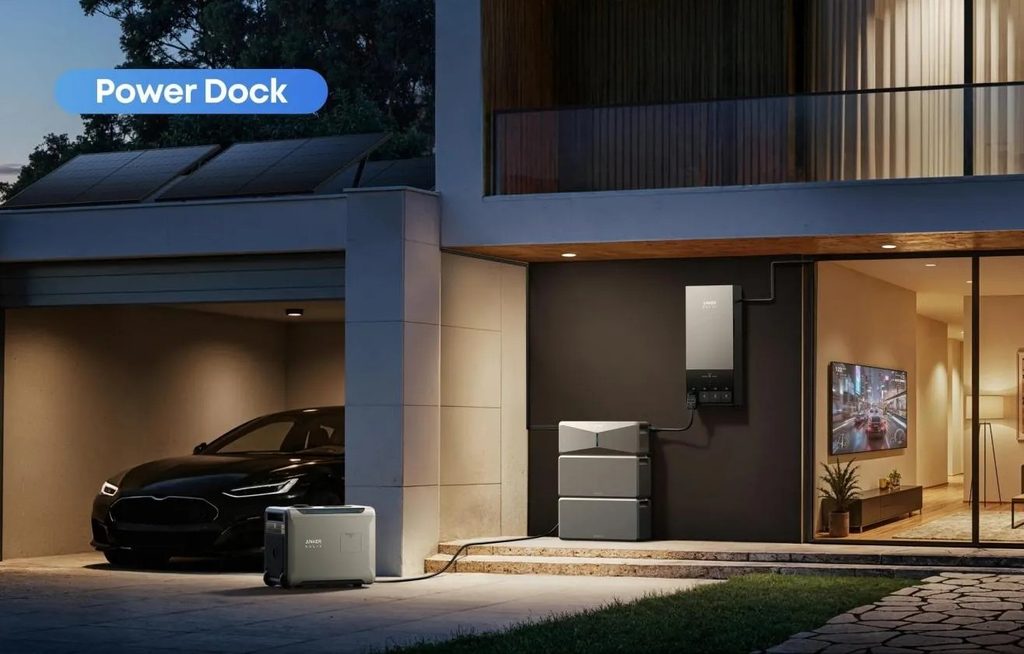
A basic home backup solar generator usually provides 1,000 to 2,000 watts of output with enough battery capacity for lights, charging, internet, and small electronics. Partial-home backup often starts around 2,000 to 4,000 watts, which can support a refrigerator, television, modem, lights, and selected kitchen or pump loads. Whole-home backup generally requires a split-phase 120/240V system with much higher output and expandable batteries. For larger loads, the Anker SOLIX E10 Whole-Home Backup is designed for that category, with 120/240 VAC split-phase power, 7,680W continuous output, up to 10,000W turbo backup output for 90 minutes, and battery expansion from 6 to 90kWh, depending on system configuration and household demand.
How to Calculate the Right Solar Generator Size
Step 1: Add Up Running Watts and Starting Watts
Start by making a list of the appliances you want to run at the same time during an outage. Record each item’s running wattage, then identify any devices with motors or compressors, such as refrigerators, freezers, sump pumps, and air conditioners. These often need extra startup power for a few seconds. Add the running watts for all simultaneous loads, then make sure your solar generator can also handle the highest expected surge. For example, if your refrigerator uses 200 running watts and 1,000 starting watts, and your other active loads total 800 watts, your generator should safely support at least 1,800 watts of surge and about 1,000 watts of continuous output, preferably with headroom for reliability.
Step 2: Calculate Battery Capacity (Wh) Based on Backup Hours
After sizing output, calculate battery capacity based on how long you want backup power to last. Use this formula: total running watts × backup hours = watt-hours needed. If your essential loads average 500 watts and you want 10 hours of runtime, you need about 5,000Wh of stored energy. For a 1,200-watt load over 8 hours, target roughly 9,600Wh. Add extra capacity to cover inverter losses and changing appliance cycles, especially with refrigerators and pumps. A practical buffer helps avoid draining the battery too quickly. If you expect overnight outages or want to support more circuits, choose an expandable system so you can increase storage instead of replacing the entire solar generator later.
How to Choose a Solar Generator for Reliable Home Backup
Match Generator Capacity to Your Backup Priorities and Budget
Choose your solar generator by deciding what absolutely must stay on first, then matching that list to output and battery size. If your priorities are lights, phones, internet, and refrigeration, a mid-size unit may be enough. If you want to cover pumps, cooking appliances, laundry circuits, or HVAC, move up to a higher-capacity system with 120/240V capability. Budget matters, but undersizing often leads to frustration during outages. It is usually smarter to buy a system with modest headroom than one that runs at its limit. Also consider recharge options, battery lifespan, installation space, and whether future expansion matters for your household.
Plan Your Backup Setup With Anker SOLIX Solar Power Solutions
When planning a long-term backup setup, focus on flexibility as much as raw power. If you’re looking for the best solar generator for home backup, consider an expandable system that can start with essential loads and grow with your needs over time. Anker SOLIX solar power solutions are built with that approach in mind, giving homeowners options for larger home backup planning rather than one fixed capacity. For households preparing for more demanding outages, features such as fast switchover, solar charging support, and scalable battery storage can make backup power more practical day to day. Mapping your critical circuits in advance, estimating realistic runtime, and leaving room for future energy needs will help you build a more dependable home backup system.
Conclusion
The right solar generator size for home backup comes down to output, battery capacity, and runtime. For basic essentials, many homes can start in the 1,000 to 2,000 watt range. For partial-home backup, 2,000 to 4,000 watts is often more realistic. For whole-home coverage, especially with 120/240V appliances, you need a much larger split-phase system with expandable storage. The most effective way to choose is to total your running watts, account for starting surges, and multiply average load by the number of backup hours you want. That process gives you a clear target instead of a guess. Once you know your numbers, you can choose a solar generator that protects key appliances and fits your home more confidently.
