
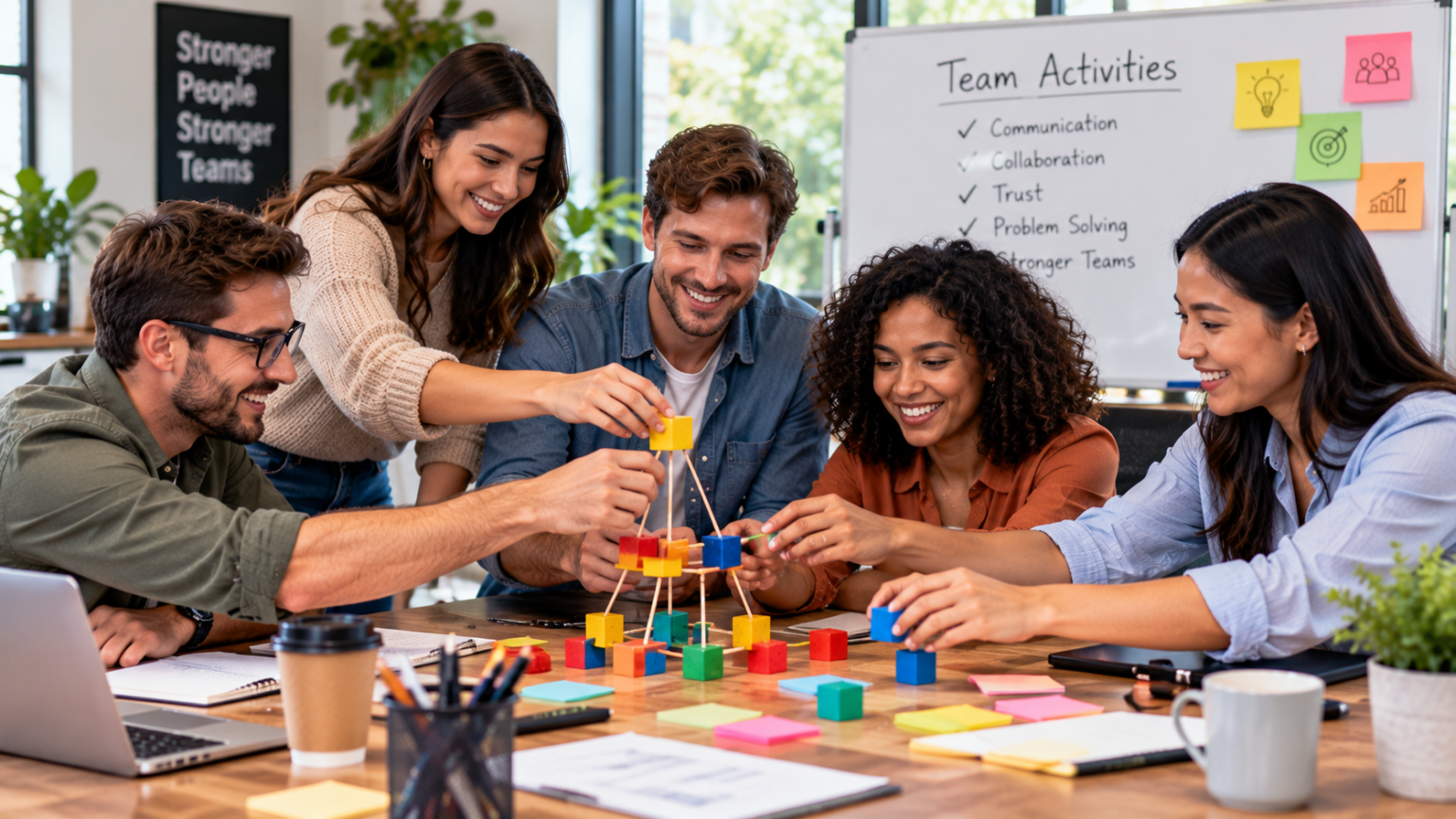
Many teams struggle to work well together and miss goals. Research shows team activities improve communication and trust. This post will explain which activities work and how to run them.
Read on to boost your team’s teamwork.
The Role of Team Activities in Enhancing Collaboration
Team activities create safe spaces for open communication. They help break down silos and build cohesion. Activities like workshops and problem-solving challenges force teams to share ideas.
Leaders can use these events to model inclusive leadership and empowerment.
Regular events boost trust and engagement across groups. Improved trust leads to higher productivity and better collaboration on projects. Short, focused tasks increase teamwork, encourage synergy, and sharpen communication skills.
The same principle extends across departments. When sales and marketing teams collaborate on lead generation, the payoff shows up directly in pipeline and revenue.
Key Benefits of Team Activities
Team activities bring many advantages to the workplace. They help team members communicate better and build strong bonds.
Improved Communication Among Team Members
Group activities open lines of communication. They give members clear chances to speak and listen. Role-play and structured feedback drills improve active listening and reduce misunderstandings.
These exercises boost collaboration and support stronger teamwork.
Leaders can set short, regular huddles after activities. Small groups practice giving direct, respectful feedback. Clear rules and simple goals create better clarity and higher engagement.
Improved communication lifts cohesion and raises productivity.
Increased Trust and Rapport
After improving communication, teams build trust more easily. Shared tasks let members see strengths and weaknesses.
Leaders set clear goals and model openness. This lifts cohesion, engagement and productivity while boosting teamwork, collaboration, synergy and empowerment.
Enhanced Problem-Solving Skills
Increased trust and rapport among team members can lead to better problem-solving skills. Team activities create a safe space for sharing ideas. Members feel more comfortable expressing their thoughts.
This openness helps teams tackle challenges together.
Working through tasks as a group fosters creative solutions. Different perspectives come together, enhancing the team’s ability to address issues. A strong team dynamic encourages everyone to contribute unique insights, leading to effective resolutions and improved collaboration in the workplace.
Boosted Team Morale and Engagement
Team activities can lift morale and boost engagement. They give team members a chance to connect beyond work tasks. This connection creates a positive atmosphere. Happy teams communicate better and feel more motivated.
Activities help team members share ideas freely. They build trust and strengthen bonds between coworkers. Engaged employees show higher productivity levels. The energy from successful team events inspires everyone to contribute more actively at work.
Examples of Effective Team Activities
Team activities can take many forms. They can include fun icebreakers or challenging problem-solving tasks that bring people together and boost cooperation.
Icebreaker Exercises
Icebreaker exercises help team members connect quickly. They create a friendly atmosphere and break down barriers.
- Introduce Yourself: Each member shares their name and something interesting about themselves. This helps everyone learn who is on their team.
- Two Truths and a Lie: Each person states two true things and one false statement about themselves. The group guesses which one is the lie, sparking laughter and conversation.
- Human Bingo: Create bingo cards with fun facts in the squares, like “has traveled to three countries.” Players mingle to find teammates who match the facts.
- What’s Your Bucket List?: Members share one item from their bucket list. This activity reveals personal goals and dreams, encouraging deeper conversations.
- Memory Sharing: Each person shares a positive memory related to work or teamwork. These stories build connections and foster a sense of community.
- Office Scavenger Hunt: Teams search for specific items around the office within a set time limit. This promotes collaboration while adding an element of fun.
- Quick Art Challenge: Provide paper and markers for everyone to draw something that represents them in 60 seconds. Sharing these drawings creates laughter and joy among participants.
- Speed Networking: Team members pair up for quick conversations lasting only a few minutes each before rotating partners. This exercise helps form new relationships quickly.
Each exercise is simple yet effective in promoting communication, trust, and cohesion among team members.
Problem-Solving Challenges
Problem-solving challenges boost teamwork. They help teams work together to solve issues.
- Teams face real-life problems in these activities. Members brainstorm solutions together and share ideas.
- Engaging in challenges sharpens critical thinking skills. Team members learn to analyze situations and find effective answers.
- Collaboration becomes essential during these tasks. Teams rely on each other’s strengths to tackle problems.
- Healthy competition can motivate team members. A bit of rivalry encourages everyone to give their best effort.
- Success in solving challenges builds confidence among team members. Achieving goals together strengthens their bond and trust.
- Debriefs after the activity help reinforce lessons learned. Teams discuss what strategies worked well and what could improve next time.
These activities lead smoothly into outdoor team-building events, where teams can apply their newfound skills in a fun setting.
Outdoor Team-Building Events
Outdoor team-building events enhance teamwork and spirit. They help people connect outside the office.
- Fresh air and fun: Being outdoors engages the senses and lifts spirits. It breaks routine and brings energy to the team.
- Shared experiences: Group activities create memorable moments. These shared experiences build stronger bonds among team members.
- Communication enhancement: Outdoor tasks require clear communication. Teams learn to express ideas better under pressure while having fun.
- Increased trust: Completing challenges together strengthens trust. Team members rely on each other, which fosters a sense of safety.
- Problem-solving in nature: Challenges outside require quick thinking and teamwork. Teams develop new strategies and boost creative problem-solving skills.
- Strengthened cohesion: Working as a unit in a different setting enhances relationships. Team members feel more connected after facing challenges together.
- Enjoyment boosts engagement: Fun activities increase engagement at work later on, too. Happy teams often perform better in daily tasks.
- Inclusive participation: Outdoor events can include everyone, regardless of their abilities or backgrounds, leading to broader engagement within the group.
- Leadership development: These events provide opportunities for individuals to step up as leaders during activities, showcasing their strengths while guiding their peers.
- Health benefits: Physical activity outdoors improves overall health and wellness among team members, creating a happier workplace culture focused on well-being.
One effective option for fostering collaboration is to organize an escape room for team building, where members can work together to solve puzzles and enhance their problem-solving skills.
Collaborative Innovation Workshops
Collaborative Innovation Workshops encourage teamwork. They allow team members to share ideas and solve problems together.
- Team members brainstorm new ideas in a safe space. This freedom helps people think creatively and express themselves.
- Structured group activities guide discussions. These actions keep everyone focused on achieving common goals.
- Diverse teams bring different skills to the table. This mix leads to unique solutions that strengthen collaboration.
- Workshops boost communication among members. Open dialogue allows for clearer understanding and fewer misunderstandings.
- Participants develop problem-solving skills by tackling real challenges during workshops. This experience builds confidence as they face future tasks.
- The environment encourages trust among team members. Working closely together forms stronger bonds within the group.
- Feedback plays a critical role in these workshops. Constructive criticism helps employees grow and leads to better teamwork.
- A fun atmosphere increases engagement during sessions, making learning enjoyable for everyone involved.
These workshops serve as useful tools for enhancing cohesion at work, leading to improved productivity and synergy within teams.
Tips for Implementing Team Activities Successfully
Choose activities that match your team’s goals. Make sure everyone takes part. Check how these activities help teamwork and communication.
Want to know more? Keep reading!
Align Activities with Team Goals
Team activities must support the goals of your team. Each activity should connect to specific objectives. This focus helps build teamwork and boosts communication.
Choose tasks that fit the skills and needs of your group. Clear goals enhance engagement too. Team members feel more invested in activities that matter to them. High participation leads to improved trust and cohesion among team members, which drives productivity forward.
Stronger bonds form as teams work for the same purpose.
Effective collaboration often arises from well-aligned tasks, making progress toward shared aims easier for everyone involved in upcoming projects and challenges.
Encourage Participation from All Members
Encouraging everyone to take part in team activities is key for success. Each member brings unique skills and ideas. When people feel included, connections build among the group. This connection improves teamwork and communication.
Make sure activities suit all personalities and work styles. Offer different roles so everyone can contribute. A mix of tasks keeps members engaged and motivated too. People are more likely to join in when they see their input valued.
Doing this leads to better collaboration as a whole team works together for common goals. With strong participation, teams can tackle challenges effectively with shared strength and creativity.
Evaluate the Impact of Activities on Collaboration
Team activities create important connections. They help shape how team members work together. To see the true value of these events, one must look at their outcomes on collaboration.
Activities can boost communication and trust among members. High levels of interaction lead to better teamwork and cooperation. Team members learn to rely on each other more. This builds a safer atmosphere for sharing ideas and solving problems together.
Monitoring these changes shows if the activities reach their goals, such as improved productivity or stronger engagement within the group.
Conclusion
Team activities are a great way to boost collaboration. They can improve communication and build trust among members. Engaging in fun challenges helps solve problems together. With strong teamwork, productivity increases and morale improves.
Embrace these activities to create a more connected workplace.
