
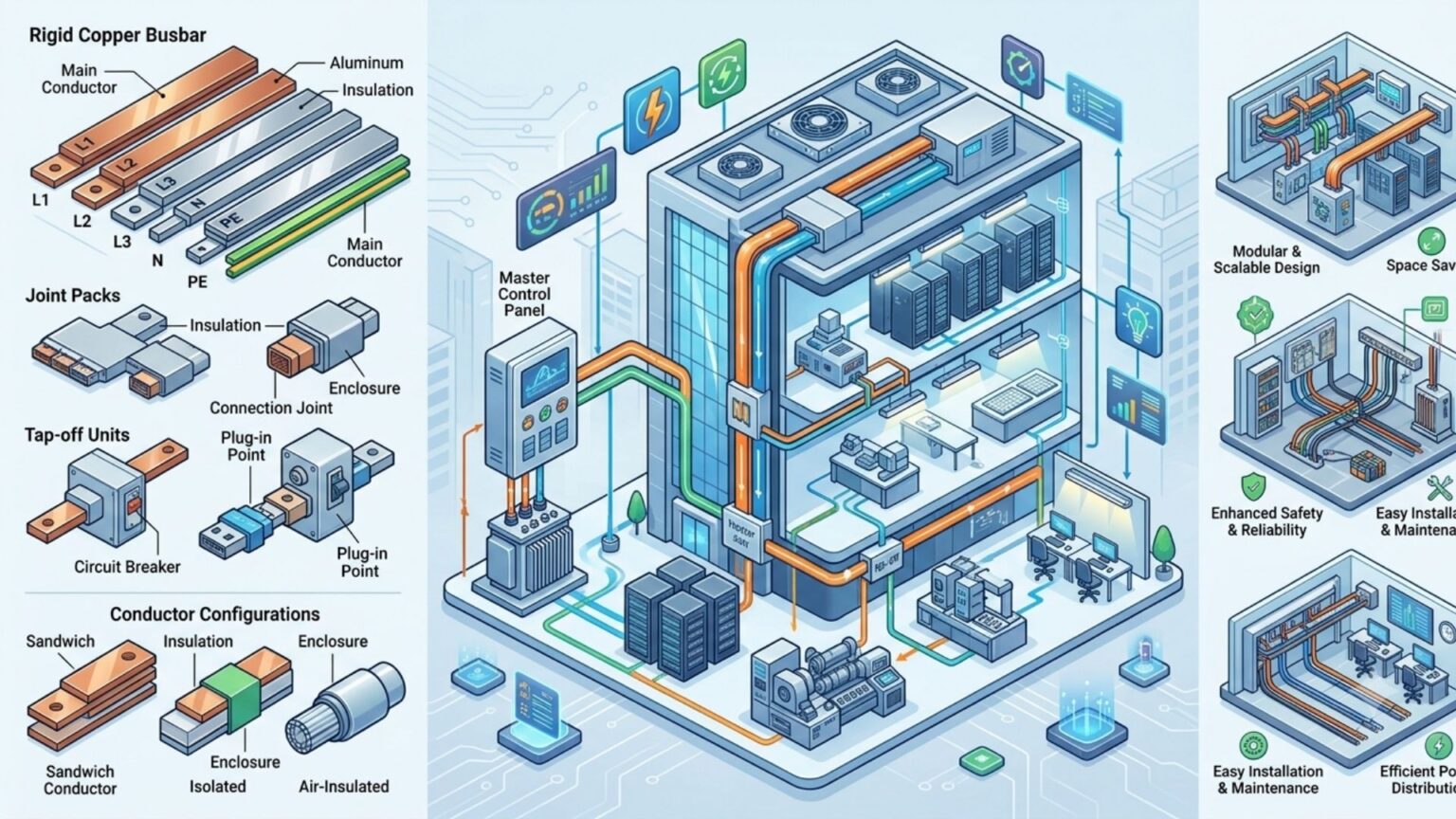
Efficient power distribution is essential for the safe and reliable operation of electrical installations. Whether in manufacturing facilities, commercial buildings, data centres, or industrial plants, electrical systems must deliver power efficiently while supporting future expansion and simplifying maintenance. As electrical infrastructure has evolved, busbar systems have become a preferred alternative to conventional cable-based distribution in many applications.
Designed to carry high electrical currents with low impedance, busbar systems provide an organised method of distributing power while improving accessibility and reducing wiring complexity. Their robust construction and modular design make them suitable for a wide variety of low-voltage and medium-voltage electrical installations.
For engineers, electricians, and facility managers evaluating busbar systems, understanding their construction, benefits, and applications is essential for selecting the right solution for modern power distribution. Busbars provide a low-impedance path for electrical current and are widely used in switchgear, distribution boards, motor control centres, and industrial power systems to simplify high-current power distribution.
What Is a Busbar?
A busbar is a metallic conductor, typically manufactured from copper or aluminium, that serves as a central connection point for distributing electrical power.
Instead of using numerous individual cables to connect electrical equipment, a busbar provides a common conductor from which multiple circuits can draw power.
This approach creates a cleaner electrical layout while reducing the number of cable connections required throughout the installation.
How Busbar Systems Work
A busbar system receives electrical power from an incoming supply and distributes it to multiple outgoing circuits.
Power flows through the busbar, allowing connected devices such as circuit breakers, switches, and protective equipment to access the required electrical supply.
Because the conductor has a large cross-sectional area, it can safely carry substantial current while minimising electrical resistance and heat generation.
This makes busbars particularly effective in installations where multiple high-current circuits operate simultaneously.
Common Types of Busbars
Different electrical installations require different busbar configurations.
Solid Busbars
Solid busbars are rigid conductors commonly installed inside switchboards and electrical distribution panels.
They provide excellent mechanical strength and are suitable for permanent installations.
Flexible Busbars
Flexible busbars consist of multiple laminated conductive layers.
They are designed to accommodate vibration, thermal expansion, or movement between connected equipment.
Comb Busbars
Comb busbars simplify the connection of multiple miniature circuit breakers within distribution boards.
They reduce installation time while providing consistent electrical connections.
Busbar Trunking Systems
Busbar trunking distributes electrical power over longer distances within commercial and industrial buildings.
Tap-off units allow additional circuits to be added without extensive rewiring.
RS Hong Kong supplies solid, flexible, comb-style, and three-phase busbar solutions together with accessories such as tap-off units and busbar trunking components for a wide range of electrical installations.
Advantages of Busbar Systems
Compared with conventional cable installations, busbars offer several practical benefits.
These include:
- High current carrying capacity.
- Reduced voltage drop.
- Improved heat dissipation.
- Simplified installation.
- Easier maintenance.
- Reduced wiring complexity.
- Better space utilisation.
- Greater flexibility for future expansion.
These advantages have contributed to their widespread use in modern electrical infrastructure.
Typical Applications
Busbar systems are used across many industries where reliable power distribution is essential.
Manufacturing Facilities
Industrial production equipment often requires large amounts of electrical power distributed efficiently across multiple machines.
Commercial Buildings
Office towers, shopping centres, and mixed-use developments rely on busbars to distribute power safely throughout the building.
Data Centres
Reliable electrical distribution supports uninterrupted operation of servers, networking equipment, and cooling systems.
Switchgear and Distribution Boards
Busbars provide organised electrical connections between incoming power supplies, circuit breakers, and outgoing circuits.
Renewable Energy Installations
Solar and energy storage systems frequently use busbars to manage high-current connections between major electrical components.
Choosing the Right Busbar
Selecting an appropriate busbar involves evaluating several technical requirements.
Important considerations include:
- Current carrying capacity.
- Operating voltage.
- Material selection.
- Cross-sectional size.
- Number of electrical phases.
- Available installation space.
- Environmental conditions.
- Future expansion requirements.
Matching these characteristics to the application helps ensure long-term safety and reliable performance.
Copper or Aluminium?
Copper and aluminium are the two most commonly used busbar materials.
Copper offers:
- Higher electrical conductivity.
- Excellent mechanical strength.
- Long service life.
- Superior corrosion resistance.
Aluminium provides:
- Lower overall weight.
- Lower material cost.
- Good conductivity.
- Easier handling for large installations.
The choice depends on the project’s electrical requirements, installation environment, and budget.
Safety and Maintenance
Although busbar systems are designed for long-term operation, routine inspection remains important.
Recommended maintenance practices include:
- Checking connection tightness.
- Inspecting for signs of overheating.
- Looking for corrosion or contamination.
- Verifying insulation integrity.
- Monitoring thermal performance.
Regular inspections help maintain safe operation while reducing the likelihood of unexpected electrical failures.
Supporting Future Expansion
One reason busbars remain popular is their modular nature.
As facilities expand, additional circuits or equipment can often be connected more easily than with traditional cable installations.
This flexibility reduces future installation work while supporting changing operational requirements.
For businesses planning long-term growth, scalable electrical infrastructure offers significant practical advantages.
Conclusion
Modern electrical installations demand safe, efficient, and flexible methods of distributing power. Busbars provide a practical solution by simplifying electrical layouts, improving current carrying capability, and supporting easier maintenance compared with traditional cable-based systems.
Whether used in industrial plants, commercial buildings, switchgear, or data centres, busbar systems continue to play a vital role in reliable power distribution by combining high electrical performance with installation flexibility and long-term operational efficiency. RS Hong Kong offers busbar products from manufacturers including Schneider Electric, Siemens, ABB, Eaton, Legrand, and other recognised brands to support a wide range of electrical distribution applications.
