
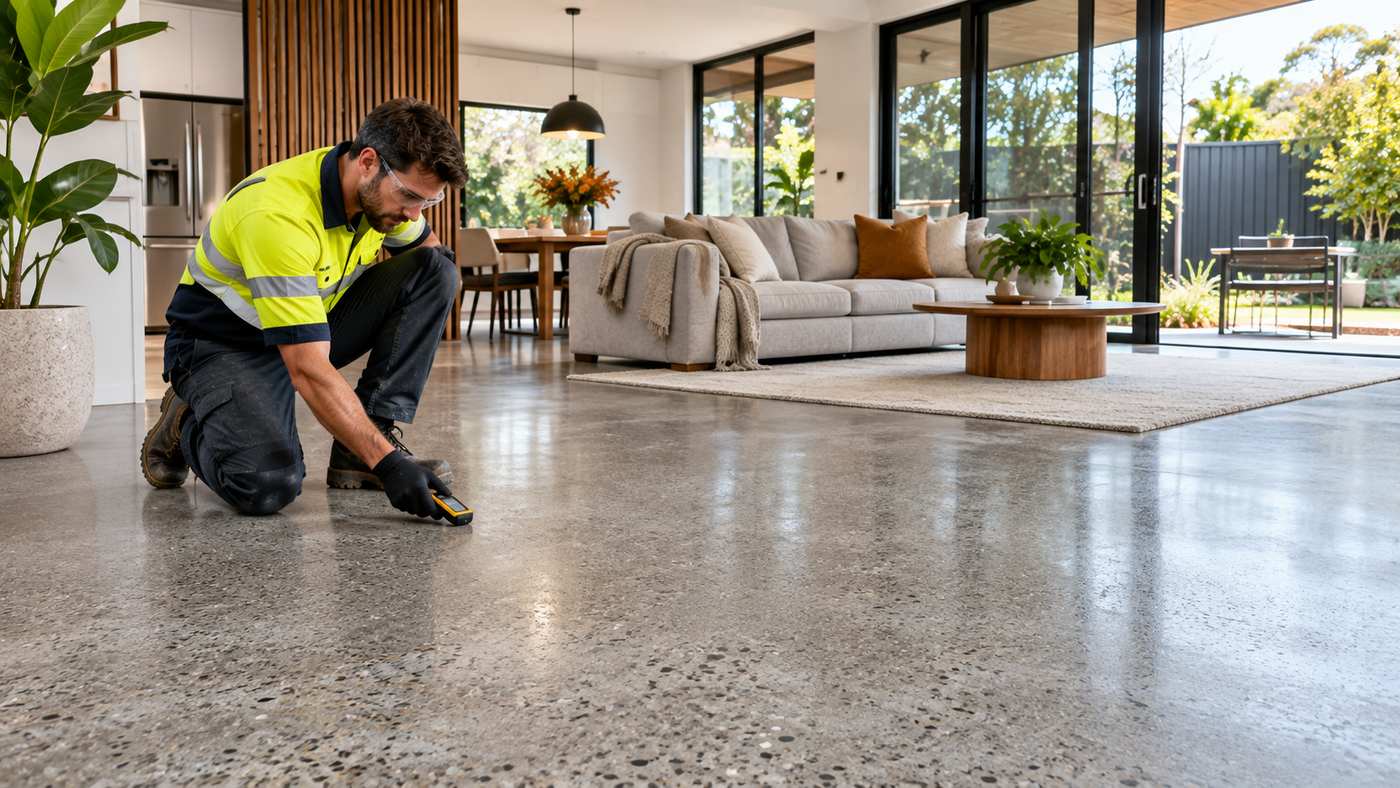
Concrete flooring has become a popular design choice for Australian homes, retail spaces, offices, and commercial properties. Once associated mainly with warehouses and industrial buildings, exposed concrete is now widely appreciated for its contemporary appearance, versatility, and practical performance.
Among the available finishing methods, grind and seal offers a way to transform existing concrete into a more attractive and easier-to-maintain surface. By mechanically preparing the concrete and applying a protective coating, flooring specialists can create finishes ranging from understated matte surfaces to more reflective, decorative floors.
For homeowners renovating a Melbourne property or business owners upgrading a commercial interior, understanding the differences between concrete flooring systems is important.
Not every concrete slab is suitable for every finish, and factors such as surface condition, moisture, traffic, and maintenance expectations can influence the final result.
This guide explains how the process works, its main benefits, available finishes, installation considerations, and practical maintenance advice.
What Is Grind and Seal Concrete Flooring?
Grind and seal is a concrete finishing method that involves mechanically grinding the surface of a concrete slab before applying a topical protective sealer.
The grinding stage removes surface imperfections, existing coatings, and unwanted material while preparing the concrete for the selected finish.
Depending on the project, the contractor may expose some of the aggregate within the slab or create a smoother appearance with minimal aggregate exposure.
Once the required surface preparation is complete, an appropriate sealer is applied.
This coating helps protect the concrete and influences the final sheen.
How the Process Works
The installation generally begins with an assessment of the existing slab.
A flooring professional checks the surface for cracks, contamination, previous coatings, and other conditions that could affect the result.
Specialised grinding machines fitted with diamond abrasives are then used to prepare the concrete.
The grinding sequence depends on the desired appearance and the condition of the floor.
After grinding, the surface is cleaned and prepared for the sealer.
The selected coating is applied according to the manufacturer’s requirements, including appropriate preparation and curing conditions.
Why the Sealer Matters
The protective coating is a defining feature of a grind and seal floor.
Unlike mechanically polished concrete, which develops its finish through progressive diamond polishing, this system obtains much of its final surface appearance from the applied coating.
Different sealers offer different characteristics, including sheen, resistance to certain stains, maintenance requirements, and suitability for particular environments.
The selected product should match the floor’s intended use.
Seven Benefits of Grinding and Sealing Concrete
The method offers several advantages for residential and commercial properties.
1. Contemporary Appearance
One of the biggest attractions of concrete flooring is its ability to complement modern interiors.
The natural variations of concrete create a surface that is visually different from manufactured tiles or timber-look products.
A grind and seal finish can highlight those variations while creating a more consistent overall presentation.
It works particularly well with industrial, minimalist, contemporary, and warehouse-inspired interiors.
2. Multiple Finish Options
Property owners are not restricted to one appearance.
Depending on the existing concrete and coating system, finishes may range from matte to satin or gloss.
Aggregate exposure can also influence the design.
A lightly ground floor may retain more of the original concrete appearance, while deeper grinding can reveal additional stone within the slab.
This flexibility allows flooring professionals to develop finishes suitable for different spaces.
3. Practical Surface Protection
A suitable sealer can help limit the penetration of certain liquids and contaminants.
This is useful in kitchens, retail interiors, and other areas where spills may occur.
However, sealed concrete is not completely stain-proof or damage-proof.
The level of protection depends on the coating, exposure conditions, and maintenance practices.
Spills should still be cleaned promptly.
4. Easier Routine Cleaning
A properly finished concrete floor can be relatively straightforward to maintain.
Routine cleaning generally involves removing loose dirt and using cleaning products compatible with the selected sealer.
The continuous surface can also reduce the number of grout lines found in tiled flooring.
This may make day-to-day cleaning more convenient.
5. Suitable for Different Property Types
The system can be considered for a wide range of spaces.
Residential applications may include living rooms, kitchens, hallways, and renovated interiors.
Commercial applications can include showrooms, shops, studios, and suitable warehouse-style environments.
However, flooring requirements differ.
A decorative residential floor may not require the same coating performance as a workshop exposed to chemicals, machinery, or heavy equipment.
6. Potentially Cost-Effective Installation
A grind and seal system can sometimes cost less than a full mechanically polished concrete installation.
This is because the process generally requires fewer progressive polishing stages.
However, actual project expenses depend on slab condition, grinding requirements, repairs, coating selection, and site access.
The lowest initial cost does not necessarily mean the lowest lifetime cost.
Future resealing and maintenance should also be considered.
7. Reusing Existing Concrete
Where the slab is suitable, upgrading an existing concrete surface can reduce the need to install an entirely new floor covering.
This may avoid some additional flooring materials and associated removal work.
Nevertheless, the environmental impact of the project depends on the products used, preparation requirements, waste handling, and expected service life.
Grind and Seal Versus Mechanically Polished Concrete
These two finishes are often confused because they can produce visually similar results.
However, their installation methods and maintenance requirements differ.
Mechanically Polished Concrete
Mechanically polished concrete is refined through a sequence of increasingly fine diamond abrasives.
The process may also involve chemical densifiers that improve the concrete surface’s characteristics.
The final appearance develops through mechanical refinement rather than relying primarily on a topical film-forming coating.
A mechanically polished floor may have different long-term maintenance requirements from a sealed floor.
The Grind and Seal Method
With grind and seal, the concrete is ground to the required level before a protective coating is applied.
The sealer provides the final surface finish and much of the protection against staining.
Because the coating is exposed to everyday use, it can gradually wear and may require renewal.
Which Finish Should You Choose?
The right solution depends on budget, the condition of the slab, desired appearance, and expected traffic.
For a decorative residential interior, a sealed finish may offer an attractive balance between appearance and upfront expenditure.
For other environments, a mechanically polished floor may better suit the maintenance and durability requirements.
A flooring specialist should assess the application rather than recommending a particular finish based solely on appearance.
Choosing a Concrete Floor Finish in Melbourne
Melbourne property owners have access to several decorative concrete flooring options.
Different finishes suit different design preferences and operational needs.
Homeowners considering professional grind and seal flooring can explore the Urban Warehouse finish offered by Urban Concrete Floors.
The Melbourne-based company describes a process involving diamond grinding followed by the application of a topical concrete coating.
Its flooring information also explains the distinction between mechanically polished concrete and sealed finishes.
Assess the Existing Slab
Before selecting a finish, consider whether the concrete is structurally suitable.
Existing cracks, stains, repairs, coatings, and moisture conditions can affect the outcome.
Some marks may remain visible after grinding because they extend beneath the surface.
A contractor should explain which imperfections are likely to remain and whether additional preparation is necessary.
Consider the Intended Space
A living room and a commercial warehouse have different flooring requirements.
The amount of foot traffic, likelihood of spills, cleaning practices, and exposure to equipment should influence the system selection.
The coating should be appropriate for those conditions.
Discuss Visual Expectations
Concrete is a naturally variable material.
Aggregate distribution, colour differences, and existing slab characteristics may prevent two floors from looking identical.
Homeowners should ask to see actual project examples and understand the limits of achieving a completely uniform finish.
Common Types of Concrete Surface Finishes
The appearance of a finished concrete floor depends on grinding depth, aggregate exposure, and coating characteristics.
Minimal Aggregate Exposure
A light grind may retain a relatively uniform cementitious appearance.
This finish can complement minimalist spaces where a restrained industrial look is preferred.
However, existing surface variations may still be visible.
Partial Aggregate Exposure
Further grinding can reveal some of the stones within the concrete.
The resulting appearance often combines the surrounding cement matrix with scattered aggregate.
This creates natural texture and visual interest.
Full Aggregate Exposure
A deeper grind may expose a more substantial proportion of the aggregate.
The final appearance depends on how the slab was poured and the distribution of stone within it.
Achieving a particular exposure level requires sufficient concrete depth and suitable conditions.
Matte, Satin, and Gloss
The sealer influences the final sheen.
Matte finishes can create a softer, more understated appearance.
Satin finishes offer moderate reflectivity.
Gloss finishes can provide a more reflective surface, although visible scratches and wear may become more noticeable.
The choice should balance aesthetics, maintenance, and safety.
The Installation Process Explained
Understanding the installation stages can help property owners prepare for the work.
Initial Inspection
The contractor evaluates the slab and identifies potential problems.
These may include existing coatings, adhesive residue, cracks, surface damage, or moisture.
The inspection helps determine whether additional preparation or repairs are necessary.
Surface Preparation
Furniture, equipment, and other obstacles must be removed from the work area.
Grinding equipment is then used to remove unwanted surface material and establish the desired finish.
Appropriate dust-control measures are important because concrete grinding can generate respirable crystalline silica.
Professional contractors should use suitable engineering controls and follow applicable workplace safety requirements.
Repairs and Additional Grinding
Visible cracks and defects may need to be addressed before sealing.
Repairs can remain visible in the finished floor, especially when their colour or texture differs from the surrounding concrete.
Additional grinding may be performed to refine the surface.
Cleaning and Coating Application
After grinding, the floor must be properly cleaned.
Any remaining dust, moisture, or contamination can affect coating adhesion.
The sealer is then applied according to the product manufacturer’s instructions.
Some systems require multiple coats or additional preparation stages.
Curing and Handover
The coating needs appropriate curing time before the floor can be returned to normal use.
The required period varies by product, temperature, humidity, and application conditions.
Property owners should follow the contractor’s instructions for foot traffic, furniture placement, cleaning, and full-service use.
What Affects Installation Costs?
Concrete flooring prices vary between projects.
Although homeowners often request a standard square-metre rate, an accurate quote requires an assessment of several factors.
Floor Size
Larger areas may allow more efficient use of equipment and labour.
Small projects can still involve significant setup and preparation costs.
Existing Surface Condition
A relatively clean and level slab may require less preparation than a floor containing coatings, damaged areas, or stubborn adhesive residues.
Extra repairs increase labour and material requirements.
Grinding Depth
The desired level of aggregate exposure influences the grinding process.
Deeper exposure may require additional work and suitable slab conditions.
Sealer Selection
Different coating systems have different material costs and installation requirements.
The intended environment helps determine the appropriate coating.
Site Access
Stairs, narrow entrances, occupied properties, and difficult equipment access can affect project planning.
Commercial sites may also require work outside normal operating hours.
Maintenance and Lifecycle Costs
The initial installation price is only part of the financial decision.
A topical coating may need renewal as it wears.
Ask contractors about expected maintenance obligations and the factors that influence resealing intervals.
Maintaining a Sealed Concrete Floor
Proper maintenance helps preserve the appearance and performance of the finished surface.
Remove Dirt Regularly
Dust, sand, and grit can contribute to surface wear.
Regular sweeping or vacuuming helps prevent abrasive particles from being dragged across the floor.
Use cleaning equipment appropriate for the coating.
Choose Compatible Cleaning Products
Many sealed concrete floors are best cleaned using suitable pH-neutral products.
Strong acids, aggressive alkaline cleaners, and incompatible chemicals may damage certain coatings.
Always follow the flooring contractor’s care instructions.
Clean Spills Promptly
Sealers can improve resistance to certain stains, but they do not eliminate every risk.
Oil, food, chemicals, and other contaminants should be removed promptly using an approved cleaning method.
Protect High-Traffic Areas
Furniture pads can reduce damage caused by moving chairs and tables.
Entrance mats help capture dirt before it reaches the floor.
Avoid dragging heavy objects across the coating.
Monitor Surface Wear
Over time, high-traffic areas may show signs of dullness, scratching, or coating deterioration.
Contact the installer if the surface begins wearing unevenly.
An assessment can determine whether cleaning, local maintenance, or resealing is appropriate.
Is This Flooring Suitable for Kitchens and Bathrooms?
Concrete floors can work in various residential spaces, but suitability depends on the specific system.
Kitchens
In kitchens, floors may be exposed to food spills, oils, cleaning products, and regular foot traffic.
A suitable sealer and consistent cleaning routine are important.
Homeowners should ask about stain resistance and compatible cleaning procedures.
Bathrooms and Wet Areas
Wet areas present additional requirements involving waterproofing and slip resistance.
A decorative sealer alone should not be assumed to provide a compliant waterproofing system.
Australian building requirements and relevant standards must be considered.
The contractor should explain whether the proposed flooring system is appropriate for the location.
Slip Resistance
Glossy surfaces can become slippery when wet, depending on their texture and coating characteristics.
Where slip resistance is important, discuss the applicable classification and testing requirements.
Aesthetics should not override safety considerations.
Potential Drawbacks to Consider
Although grind and seal offers many benefits, it is not the best solution for every property.
Coating Wear
Topical sealers are exposed to abrasion from foot traffic, furniture, and other activities.
Eventually, some coatings require maintenance or renewal.
Visible Concrete Imperfections
Grinding does not guarantee the removal of every stain, crack, or colour variation.
The finished appearance depends partly on the condition and composition of the underlying slab.
Moisture Problems
Excessive moisture within concrete can affect the performance of some coating systems.
Appropriate moisture assessment and product selection are important.
Maintenance Requirements
A sealed floor may be straightforward to clean, but it still requires care.
Using unsuitable chemicals or ignoring damage can shorten coating life.
Questions to Ask a Flooring Contractor
Before approving a concrete finishing project, request clear information about the proposed system.
Ask what grinding depth is planned and what level of aggregate exposure can realistically be achieved.
Discuss how existing cracks and stains will be treated.
Find out which sealer will be used and why it suits the application.
Request details about curing time, slip resistance, maintenance, and expected coating renewal.
A written quote should explain the scope of surface preparation, repairs, coating application, and any exclusions.
It is also useful to ask for photographs of completed projects with comparable slab conditions.
Frequently Asked Questions
How long does a grind and seal concrete floor last?
The concrete itself can remain serviceable for many years, but the protective coating may require maintenance or renewal. Its performance depends on traffic, sealer type, cleaning practices, and environmental conditions.
Is grind and seal cheaper than polished concrete?
It can have a lower initial installation cost than mechanically polished concrete, but this is not guaranteed. Slab condition, preparation requirements, and coating selection affect pricing. Long-term maintenance costs should also be considered.
Can existing concrete floors be ground and sealed?
Many existing concrete slabs can be treated, provided their condition is suitable. Cracks, previous coatings, contamination, and moisture issues may require additional attention.
Is grind and seal flooring slippery?
Slip resistance depends on the surface texture, sealer, and whether the floor is dry or wet. Contractors should recommend an appropriate system based on the intended use and relevant Australian requirements.
Conclusion
Grind and seal concrete flooring offers Australian homeowners and businesses an attractive way to enhance existing concrete surfaces while retaining their natural character.
The process combines mechanical surface preparation with a protective coating, creating a range of decorative possibilities for residential and commercial environments.
Its suitability depends on the condition of the slab, desired appearance, traffic levels, budget, and maintenance expectations.
Understanding the differences between sealed and mechanically polished concrete is essential before choosing a flooring system.
With professional installation, appropriate product selection, and consistent maintenance, grind and seal can provide a practical, contemporary flooring solution that complements many Australian interiors.
The best results begin with a realistic assessment of the existing concrete and a clear discussion of the desired finish, performance requirements, and long-term care.
