
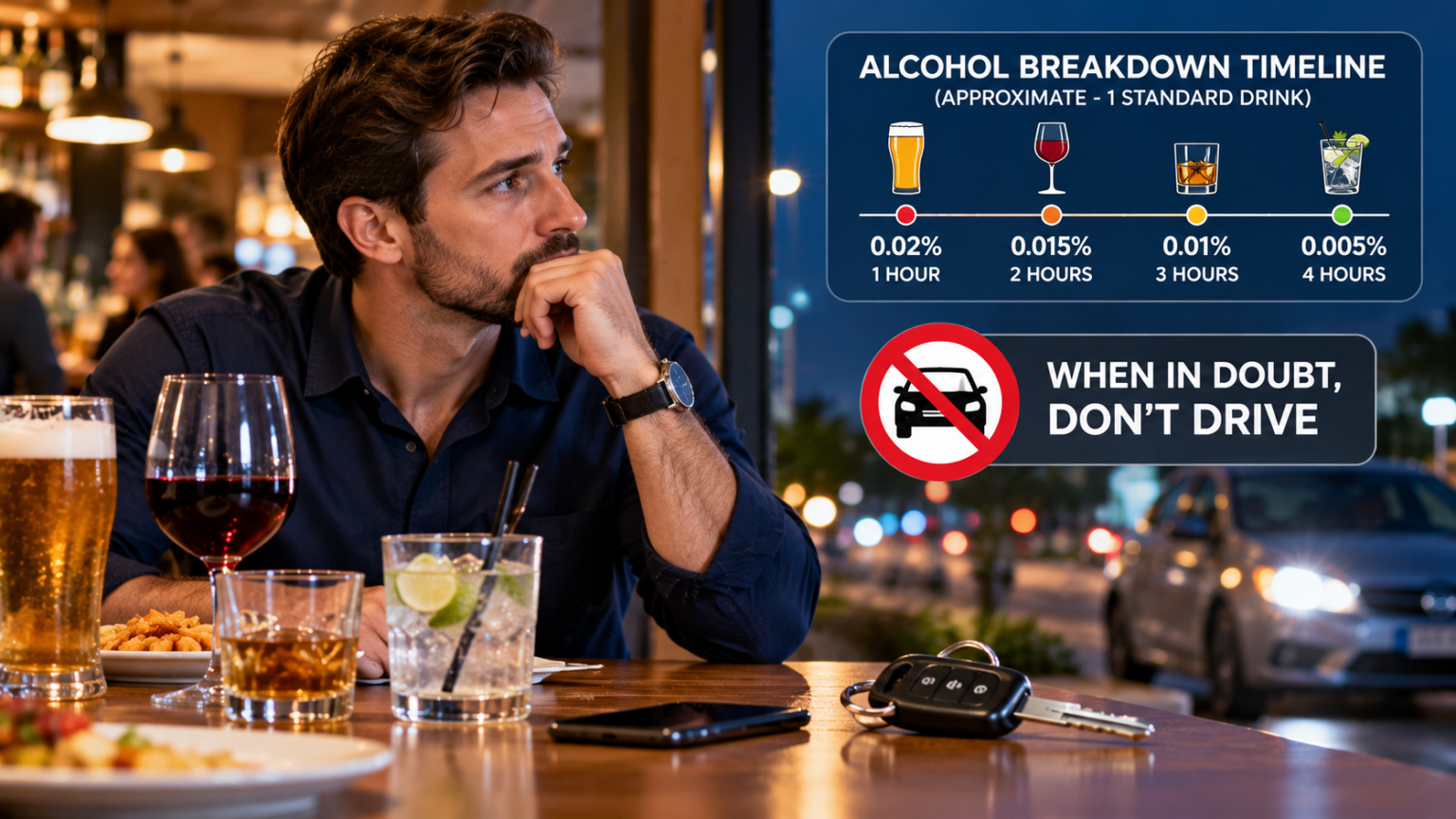
A widespread source of confusion among drivers is determining when body alcohol levels drop enough to drive safely. Misunderstandings surrounding metabolism rates, sobering techniques, and physiological clearance lead many individuals to operate motor vehicles while still impaired. Examining the science of blood alcohol concentration clearance reveals why waiting extended periods is essential.
Understanding Blood Alcohol Concentration Dynamics
Blood Alcohol Concentration measures the mass of alcohol present within a specific volume of blood. Impairment begins long before a driver feels visibly intoxicated, affecting cognitive processing, peripheral vision, reaction speeds, and physical tracking abilities.
Alcohol Absorption vs. Elimination Phase
When a person drinks alcohol, the substance enters the stomach and small intestine, absorbing directly into the bloodstream. Absorption happens rapidly, often within thirty to ninety minutes depending on stomach contents. Conversely, alcohol elimination occurs much more slowly. While absorption is influenced by drink strength and food intake, elimination relies almost entirely on liver enzyme processing speed.
Biological Rates of Alcohol Metabolism
The human body metabolizes alcohol through specialized liver enzymes, primarily alcohol dehydrogenase. On average, the body clears alcohol at a standard rate of approximately 0.015 percent BAC drop per hour. Expressed another way, the human body takes about one hour to clear one standard alcoholic beverage, defined as:
- 12 ounces of standard beer (5% alcohol content)
- 5 ounces of wine (12% alcohol content)
- 1.5 ounces of 80-proof distilled spirits (40% alcohol content)
Because body chemistry varies, clearance rates range between 0.010 and 0.020 percent BAC per hour. Nothing speeds up this enzymatic process.
Debunking Common Sobering Myths
Numerous popular remedies claim to accelerate alcohol elimination. Scientific research consistently proves these methods completely ineffective at lowering blood alcohol levels.
The Cold Shower Fallacy
Taking a cold shower creates sudden sensory stimulation, making an intoxicated person feel more alert temporarily. However, cold water has zero impact on liver enzyme production or blood alcohol clearance. A driver coming out of a cold shower remains just as impaired as before stepping under the water.
Coffee and Energy Drink Misconceptions
Caffeine acts as a central nervous system stimulant. Consuming dark coffee or high-caffeine energy drinks can mask alcohol-induced drowsiness, creating a state of false alertness sometimes referred to as “wide-awake drunkenness.” Caffeine does not lower BAC or restore impaired coordination and reaction times.
Exercise and Excessive Hydration
Sweating through intense exercise or drinking gallons of water cannot flush alcohol out of the bloodstream quickly. Less than ten percent of absorbed alcohol escapes through breath, sweat, and urine combined. The remaining ninety-plus percent must be processed through hepatic oxidation over time.
Variables That Influence Alcohol Processing
No single universal formula predicts alcohol retention, as individual physiological factors cause significant rate variations.
Biological Sex and Body Composition
Biological sex influences alcohol processing due to enzyme distribution and body tissue composition. Women generally have lower levels of stomach alcohol dehydrogenase and higher average body fat percentages than men. Because fat tissue holds less water than muscle, alcohol concentrates more densely in female bloodstreams, yielding higher BAC levels for equal consumption.
Food Intake and Meal Timing
Consuming a heavy meal before drinking delays gastric emptying, slowing alcohol passage into the small intestine where rapid absorption occurs. Drinking on an empty stomach triggers rapid absorption spikes, creating higher peak BAC levels that take much longer to decay completely.
Age, Health, and Medication Interactions
Metabolic efficiency gradually slows with age. Additionally, underlying liver health issues or prescription medications can interfere with hepatic function, delaying clearance and compounding cognitive impairment.
Consulting a DUI lawyer in Utah helps individuals charged with driving offenses understand how biological metrics, test timelines, and absorption rates are evaluated under legal standards.
Practical Guidelines for Safe Post-Drinking Travel
Calculating exact BAC levels at home is difficult and unreliable. Digital mobile calculators and personal handheld breathalyzers offer approximate estimates, but they lack calibration accuracy and cannot account for physiological nuances.
The only completely safe approach is allowing ample time for complete clearance. If you consume multiple drinks during an evening event, wait several hours or sleep through the night before getting behind the wheel. When planning your schedule, remember that residual alcohol can keep your BAC over legal limits the following morning. If you are uncertain about your sobriety level, choose an alternate ride option every time.
